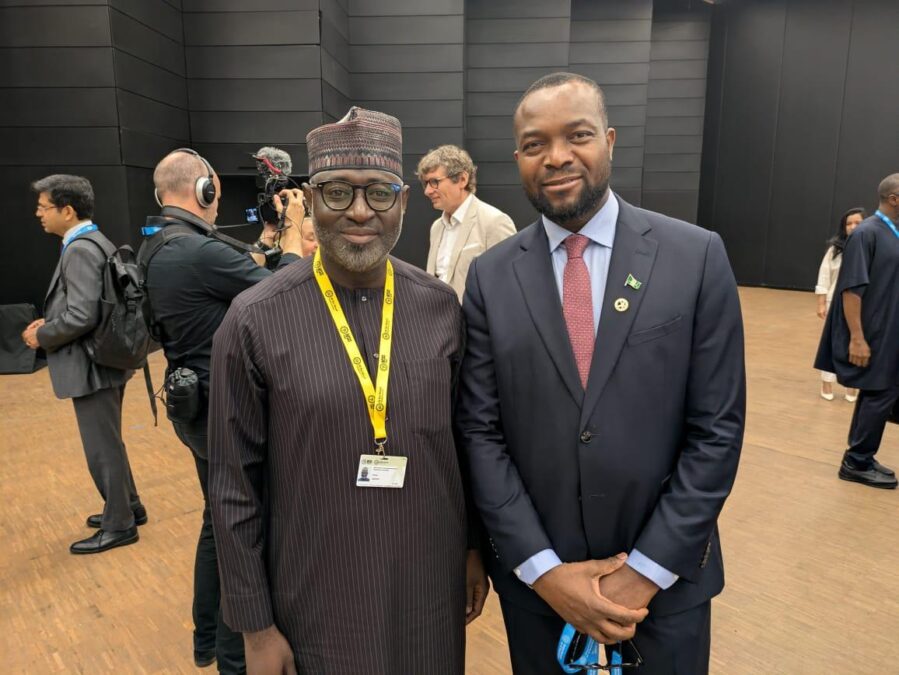
The West Africa Telecommunications Regulators Assembly (WATRA) is moving to transform global recommendations on submarine cable resilience into a coordinated regional strategy, as West African regulators seek to prevent a repeat of the internet outages that crippled businesses, banking services and government operations across the region last year.
The push follows the publication of recommendations by the Working Groups of the International Advisory Body on Submarine Cable Resilience, a global initiative established by the International Telecommunication Union (ITU) and the International Cable Protection Committee (ICPC) to strengthen the resilience of the submarine cable networks that carry more than 95 percent of global internet traffic.
Read also: West Africa’s $150bn digital economy at risk without cable resilience
Aliyu Yusuf Aboki, executive secretary of WATRA and a member of the International Advisory Body, said West Africa is now well positioned to translate the global recommendations into practical regional measures after the lessons learnt from the widespread submarine cable disruptions of March 2024.
“The March 2024 disruptions were an important wake-up call for our region. They demonstrated that submarine cable resilience is not simply a technical or telecommunications issue. When connectivity is disrupted, the consequences extend to businesses, financial transactions, public services, trade, jobs and livelihoods across our economies,” Aboki said.
The March 2024 outages, triggered by multiple submarine cable failures off the West African coast, disrupted internet connectivity across several African countries, including Nigeria, Ghana, Côte d’Ivoire, Liberia and Benin. Banks experienced service interruptions, fintech platforms struggled to process transactions, airlines faced operational challenges, while businesses and government agencies were forced to rely on limited backup connectivity.
The incident exposed how heavily West Africa’s rapidly expanding digital economy depends on a handful of undersea cables linking the continent to Europe and the rest of the world. It also highlighted the limited redundancy within regional networks, leaving countries vulnerable whenever one or more major cable systems fail.
WATRA is advocating a regional approach that recognises submarine cable resilience as an economic priority.
According to Aboki, every expansion of digital services increases the importance of protecting the infrastructure supporting them.
“West Africa’s digital economy is growing rapidly and becoming increasingly important to economic growth, productivity and employment. We therefore have to ensure that, as we scale digital opportunity, we are not also scaling vulnerability,” he said.
The recommendations developed by the International Advisory Body call for closer coordination between governments, regulators and cable operators, faster permitting for emergency repairs, stronger incident reporting and information sharing, improved access to repair vessels and spare parts, periodic resilience exercises, and greater investment in network redundancy and route diversity.
For West Africa, many of these proposals align with discussions already underway within WATRA since last year’s disruptions.
Aboki credited the Nigerian Communications Commission (NCC) with helping to elevate submarine cable resilience to a regional regulatory priority immediately after the March 2024 outages.
“The Nigerian Communications Commission deserves particular recognition for its early leadership following the March 2024 outage. The NCC helped ensure that submarine cable resilience quickly became an important issue for discussion and cooperation among West African regulators,” he said.
He noted that because submarine cable systems serve multiple countries simultaneously, no single nation can build resilience on its own.
“An incident affecting submarine cable infrastructure can simultaneously affect connectivity and economic activity across several countries. Our response must therefore combine national action with stronger regional cooperation,” he said.
Nigeria also played a prominent role in shaping the global recommendations through Bosun Tijani, the minister of Communications, Innovation and Digital Economy, who served as co-chair of the International Advisory Body alongside Sandra Maximiano, chair of Portugal’s communications regulator, ANACOM.
The global recommendations arrive at a critical time for Africa, where digital payments, e-commerce, cloud computing, artificial intelligence, financial technology and digital public services are expanding rapidly. While governments have focused heavily on increasing broadband access, experts argue that protecting existing digital infrastructure has become equally important.
The growing number of hyperscale data centres being developed across Nigeria and other African markets is also expected to increase demand for resilient international connectivity, making submarine cable protection a strategic issue for investors.
Aboki said WATRA intends to work with its member regulators, governments, industry players, the ITU, ICPC and other partners to convert the recommendations into practical regional initiatives.
“The recommendations provide a strong basis for the next phase of our work. The priority now must be to examine how these global recommendations can be translated into practical actions appropriate to the West African context,” he said.
He added that the reports should not be viewed as the end of the process but as the beginning of a broader regional effort to strengthen preparedness, improve coordination and accelerate recovery whenever cable disruptions occur.
“The publication of these reports should not be regarded as the end of the process. The real measure of their success will be the extent to which their recommendations improve preparedness, reduce disruption, accelerate recovery and strengthen the infrastructure supporting our digital economies,” Aboki said.
Read also: Nigerian earns recognition for advancing trade, investment, private-sector collaboration
For WATRA, the challenge now extends beyond safeguarding telecommunications infrastructure. It is about protecting the economic backbone of a region where millions of people increasingly rely on uninterrupted digital connectivity for banking, commerce, logistics, education, healthcare and government services.
As West Africa’s digital economy continues to expand, regulators believe building resilience into the infrastructure beneath the Atlantic Ocean may prove just as important as expanding the broadband networks on land.


Join BusinessDay whatsapp Channel, to stay up to date
Open In Whatsapp