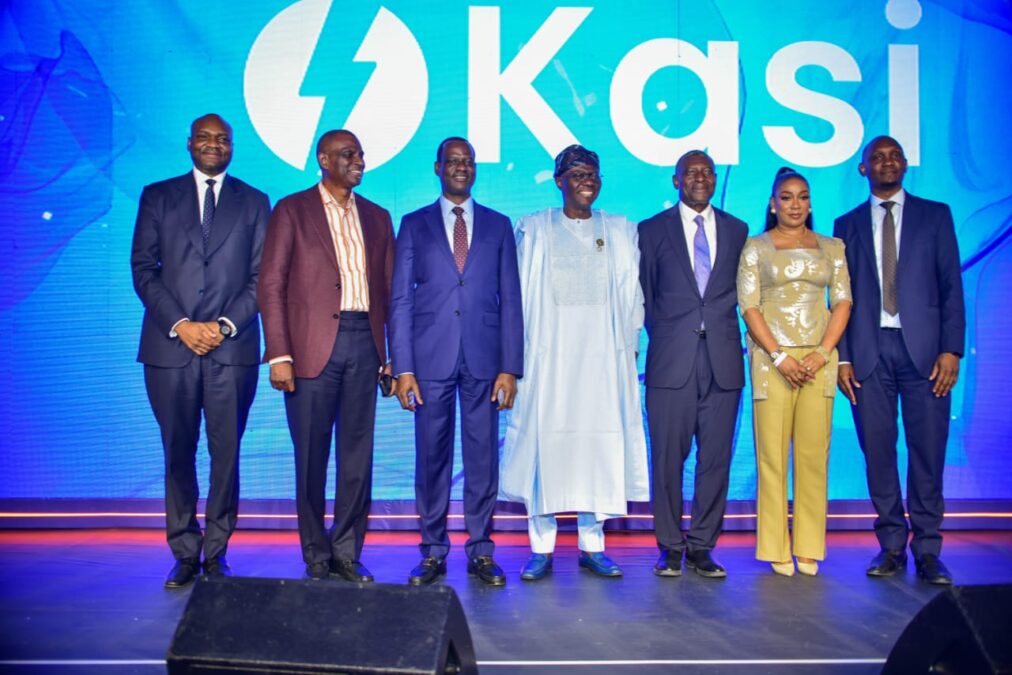
Kasi Cloud is intensifying efforts to reduce the estimated $850 million spent annually by local enterprises on foreign cloud infrastructure, as it commissioned West Africa’s first hyperscale-ready, AI-capable data centre campus in Lagos, a move expected to strengthen the country’s digital sovereignty and keep critical data infrastructure investments within the economy.
The commissioning ceremony of the Kasi Lekki Campus on Tuesday marked the transition of the facility from construction phase into operational readiness, positioning Nigeria to host sensitive financial, enterprise, and government workloads locally instead of relying heavily on offshore cloud providers operating under foreign jurisdictions.
Located on about four hectares in the Maiyegun area of Lekki, Lagos, the facility sits adjacent to six major subsea cable landing stations, including Equiano and 2Africa, giving it strategic connectivity advantages for cloud computing, artificial intelligence, enterprise hosting, and accelerated computing services.
Read also: Kasi Cloud launches AI-ready Lagos facility as Africa fights for digital sovereignty
Kasi Cloud Datacenters said the campus is designed to scale to approximately 100 megawatts of critical IT capacity when fully developed, while the first building, LOS1, has already been engineered for high-density AI workloads and enterprise cloud operations with sub-50 milliseconds latency for local workloads.
Johnson Agogbua, founder and chief executive officer of Kasi Cloud Datacenters, at the event, said the project was designed to reverse years of capital flight driven by dependence on foreign-owned cloud platforms.
According to him, African data and digital activities have historically enriched foreign economies because the continent lacked institutional-grade sovereign infrastructure capable of supporting modern AI and hyperscale computing demands.
He said, “Kasi was founded on the belief that Africa deserves world-class sovereign digital infrastructure built for the AI era. For too long, Africa’s data has powered someone else’s economy. Today, that changes.”
Agogbua explained that the facility would provide Nigerian enterprises, financial institutions, and government agencies with an indigenous alternative aligned with Nigeria’s National Cloud Policy 2025, which mandates in-country hosting for sensitive government and financial data.
The event drew top government officials and industry stakeholders, including Babajide Sanwo-Olu, Lagos state governor; Taiwo Oyedele, minister of Finance and Coordinating Minister of the Economy and Aminu Umar-Sadiq, managing director and chief executive officer of the Nigerian Sovereign Investment Authority,
Sanwo-Olu described digital infrastructure as central to Lagos’ ambition of sustaining its position as Nigeria’s commercial and technology hub.
The governor, who also presided over the groundbreaking ceremony of the project in 2022, said world-class infrastructure remained essential for economic transformation, human capital development, and long-term competitiveness.
The commissioning of LOS1 also aligns with the Federal Government’s Renewed Hope Agenda, which identifies technology and digital infrastructure as major drivers of economic diversification, job creation, and innovation.
Oyedele’s presence at the ceremony highlighted growing federal interest in strengthening Nigeria’s digital economy through indigenous infrastructure capable of supporting local cloud adoption, fintech expansion, AI development, and enterprise digitisation.
Also speaking, Umar-Sadiq said the sovereign wealth fund considered digital infrastructure a strategic national asset capable of accelerating innovation and strengthening Nigeria’s position in the global digital economy.
“We expect that the transformative impact of this infrastructure on the domestic tech space will reposition Nigeria,” he said.
NSIA, one of Kasi Cloud’s foundational investors, had earlier described the company in its 2025 annual report as a strategic indigenous hyperscale infrastructure platform advancing Nigeria’s digital ecosystem.
Mark Adams, co-founder of Kasi Cloud Datacenters, said Nigeria and Lagos in particular were becoming strategically important to global cloud, AI, and content companies seeking expansion opportunities across emerging markets.
Read also: Why cloud infrastructure is becoming central to trust in Nigerian elections
According to him, Africa represents one of the world’s fastest-growing long-term digital infrastructure markets, while Lagos is increasingly positioned to become the continent’s digital gateway.
Industry analysts believe the project could significantly improve local cloud adoption, reduce latency challenges, support AI innovation, and strengthen compliance with the Nigeria Data Protection Act 2023 and other emerging digital regulations.
The facility was also designed as a carrier-neutral platform connected to multiple subsea cable systems and supported by hybrid gas, solar, and battery storage infrastructure with N+1 redundancy and a power usage effectiveness target of 1.6 or lower.
Kasi Cloud Datacenters said the campus would now proceed through phased commissioning, systems integration, and customer readiness activities ahead of full commercial operations.
The development comes as African governments increasingly push for data sovereignty policies aimed at ensuring sensitive national, financial, and citizen data remain hosted within domestic borders amid rising global concerns over cybersecurity, digital dependence, and AI governance.


Join BusinessDay whatsapp Channel, to stay up to date
Open In Whatsapp