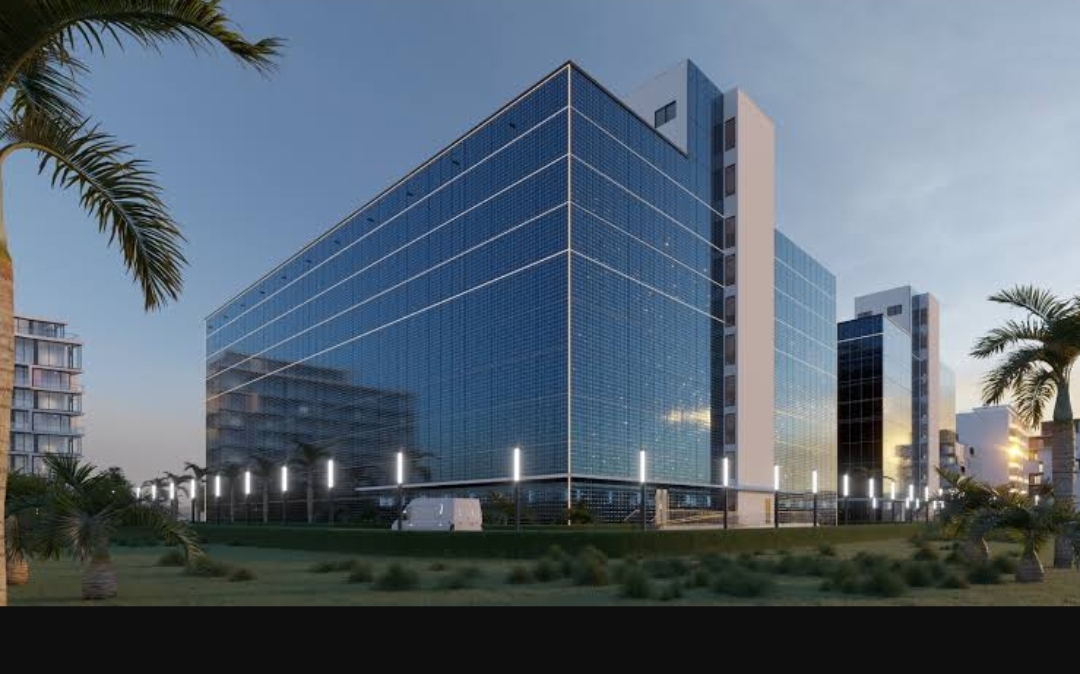
Kasi Cloud has launched a new AI-ready data centre facility in Lagos, positioning itself at the centre of Africa’s growing push for digital sovereignty as governments, startups and businesses race to secure control over data, artificial intelligence infrastructure and cloud computing capacity.
The facility backed by both international and local institutional investors, underscoring growing confidence in Africa’s digital infrastructure market despite concerns over power shortages and operating costs.
Johnson Agogbua, founder of Kasi Cloud and the company’s chief executive office told BusinessDay that the company had secured major backing from U.S.-based partners as well as the Nigeria Sovereign Investment Authority (NSIA), Nigeria’s sovereign wealth fund.
Read also: Nigeria eyes $1.9bn data centre boom amid 90% offshore data risk
“We are proud to have partners in the U.S. that have invested massively in us. We are also proud to have NSIA as an investor in Kasi. It is a strong vote of confidence that infrastructure of this scale must exist in Nigeria,” he said.
He disclosed that the company expects to continue raising capital as the business expands, describing digital infrastructure as a long-term investment cycle. “You raise capital, deploy the capital, optimise the assets, expand, raise more capital and continue growing,” he added.
The company did not disclose the total amount invested in the Lagos project but executives said hundreds of millions of dollars are already being spent within Nigeria’s wider digital infrastructure ecosystem as operators race to meet rising cloud and AI demand.
The facility, known as LOS1, comes at a time when concerns are rising across Africa over where the continent’s data is stored, who controls the infrastructure powering AI systems, and whether African economies risk becoming dependent consumers in the next global technology revolution.
Agogbua said Africa must move quickly to avoid missing another major technological shift after largely missing the industrial revolution. “The future will be written by AI and AI-related systems. The problem is that those digital brains do not reside in Africa,” he affirmed.
The Lagos facility represents one of the boldest local bets yet on Africa’s emerging AI infrastructure market. Kasi Cloud said the site was designed from the beginning to support hyperscale cloud providers, AI workloads and high-density computing systems that require large amounts of electricity and cooling capacity. The company said the campus has been prepared to scale up to 100 megawatts of critical IT load over time, although the current deployment is being rolled out in phases.
Africa’s cloud and AI infrastructure market remains significantly underdeveloped compared with the United States, Europe and parts of Asia, despite rapid growth in internet use, digital payments and mobile connectivity.
Global cloud providers such as Amazon Web Services, Google and Microsoft have expanded their presence across Africa in recent years, but much of the continent’s computing infrastructure and data hosting still relies heavily on foreign-owned systems.
Industry executives and policymakers increasingly argue that this dependence could become a strategic weakness as AI systems begin to shape finance, healthcare, education, agriculture and national security. Agogbua said the issue goes beyond commercial data hosting. “Our data does not reside with us. We do not control where it lives. The real question is: where will the brains that power the future reside?” he asked.
The debate around digital sovereignty has intensified globally as countries seek greater control over data flows, AI models and strategic computing infrastructure. Governments across Europe, Asia and the Middle East have accelerated investments in domestic cloud systems, semiconductor manufacturing and AI capacity. African governments are now beginning to confront similar questions, especially as demand for AI computing power surges worldwide.
Kasi Cloud’s approach reflects a broader shift in the continent’s technology ambitions, from being mainly consumers of digital services to attempting to build foundational infrastructure locally. The company said its Lagos campus includes a 132kV power substation and infrastructure capable of supporting multiple large-scale data halls. The first deployment phase includes a 5.5-megawatt data hall and 7.5 megawatts allocated to the ground floor ecosystem layer.
The facility was also designed to support GPU deployments needed for AI systems, although at a limited scale initially through advanced air-cooling systems. The upper floors are targeted at hyperscale and wholesale cloud operators looking to expand into African markets without building entirely from scratch. “What we are building is not just a data centre. We are building infrastructure for the future economy,” Agogbua explained.
Citing estimates from the National Information Technology Development Agency (NITDA), Agogbua said Nigeria may ultimately require roughly 1.9 gigawatts of data centre infrastructure to become adequately digitised, adding that current national supply remains below 30 megawatts. “That gap represents enormous headroom for growth,” he said.
Kasi Cloud executives said the project was designed not only to support Nigerian demand but also to position Lagos as a regional digital hub serving West Africa. They argued that if Africa fails to build local AI and cloud infrastructure, the continent risks remaining dependent on foreign-controlled systems during what many industry executives see as the next major technological revolution.
“Cloud and AI are becoming the infrastructure of future economies. Africa cannot afford to sit outside that transformation,” Agogbua stated.
The company is also betting on growing demand from local startups, financial technology firms, telecom operators and businesses seeking lower latency and local data residency options.
Nigeria, Africa’s most populous country, has become one of the continent’s biggest digital markets, driven by fintech growth, mobile adoption and a young technology workforce. But infrastructure shortages remain a major constraint. Power supply remains unreliable, fibre connectivity is uneven outside major cities, and large-scale computing infrastructure is still limited compared with global markets.
Agogbua said solving those structural challenges requires long-term investment and local talent development.
Read also: Who will finance Africa’s data centres? IFC’s Isiadinso to lead debate
He said Kasi Cloud established an internal academy years ago to train engineers locally after facing doubts that Nigerian teams could design and manage hyperscale infrastructure projects.
“Most data centres here are designed and built by foreign companies for Africans. Kasi is different. From the name to the engineers running it, this is Nigeria and Africa represented properly,” he said.
The company said its engineers handled major parts of the final infrastructure design and deployment, although international consultants also participated in parts of the project.
Beyond infrastructure, Agogbua argued that Africa risks losing cultural and linguistic influence in the AI era if local developers and researchers are not involved in building future AI systems.
“If those building the models are all in San Francisco, Munich or Shanghai, then African languages and perspectives risk being lost,” he said.
That concern is becoming more common across Africa as global AI systems increasingly dominate digital platforms, search tools, content creation and online commerce.
Analysts say African countries face a difficult balancing act. Building AI-ready infrastructure requires billions of dollars in investment, stable electricity supply, policy support and technical expertise. At the same time, the continent cannot afford to remain outside the next phase of global digital development.
Kasi Cloud’s Lagos facility may still represent a relatively small part of the global AI infrastructure market, but its significance lies in what it signals: a growing determination among African technology firms to compete not only in software and digital services, but also in the physical infrastructure powering the AI economy.
For Agogbua, the issue is ultimately about long-term economic control. “We may have missed large parts of the industrial era. But we still have an opportunity to leapfrog into the future through digital technology,” he affirmed.

Join BusinessDay whatsapp Channel, to stay up to date
Open In Whatsapp