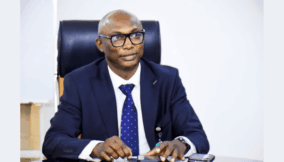
Agege Local Government, one of the densely populated suburbs of Lagos State, is witnessing a facelift, occasioned by the emergence of Abdul Ganiyu Vinod Obasa as its chairman, about seven months ago. In an interview with BusinessDay’s Wasiu Alli, Obasa said he’s betting on infrastructural upgrades, improved security, data gathering, and various subsidies to bridge the inequality among residents and pull as many people out of poverty. Excerpts:
It’s been less than a year since you assumed the chairmanship role of Agege Local Government. As a young person under 35, how has the experience been?
Coming from the private sector, going to the public sector is always very different. Since coming here, it’s been a very great experience. We have one of the most brilliant and most hard-working, diligent sets of people I’ve met here in the local government setup.
We’re all working together as a team to make sure we move the community forward. We’re very much trying to make sure that all of the various sectors are tackled and we’re able to make a difference across each of the centres that is within our purview here at the local government. We’re here to bring the process of government to the grassroots. We’re here to make life easier.
When I was coming in, one of my mindsets was to improve the overall quality of life of our residents here at the local government. I see myself more or less providing service for the residents that live here. We can’t do everything the way we want at the beginning, but for them to see that there’s a plan and we’re building blocks to what we’re trying to achieve.
People can see what we’re doing in the last 6, 7, 8 months that we’ve been here. They can see that we have a plan and we’re following it thoroughly.
Read also: Obasa’s son becomes Agege LG boss after chairman’s resignation
Before your emergence, what were the needs of the Agege residents, and to what extent have you been able to meet them?
For us within this community, this is a place where I’ve lived 30 years of my life. I understand the nitty-gritty. One of the first things was the environment. It was about dumping refuse on the road. Our streets were dirty. People have this negative connotation about Agege. It was something we needed to change. There’s a lot we’ve done within that short period of time. If you go to Alfa Nla Capitol Road, the median used to be full of dirt. Now we have grass and trees and plants right in that median. It looks beautiful now. If you go to Oba Ogbunji, on the right and left sides, there used to be a place where it was just mechanics, and they would drop dirt. Now it’s green; the walls are painted all the way from PensCinema all the way to the end of Oba Ogbunji.
We are solving drainage issues. There are five major areas that didn’t have drainage. If you go to Kadiri Street or Bode Thomas Street, or if you go to Okunola, these are places where we now have construction present, and they are now providing drainages to those places. We are now sweeping our inner streets. We’ve employed about 250–300 sweepers to sweep our inner streets. From around 7 o’clock to 8 o’clock, you can see that they’ve been swept on a day-to-day basis. We just bought a tipper as well that will help us move dirt from the drainage to the dump site.
What infrastructural projects have you undertaken so far, and how do you ensure sustainability?
In my time being here, 7 months, we’ve done 12 roads. We’ve done Ajakaiye, Elitana, Adegbola, Imam Ojoku, and Alowonnle. A lot of these roads connect inner streets and make life easier for people. In terms of education, we renovated 17 school blocks across the local government. If you go to Keke Nursery and Primary School, Isa Williams, Dopemu Salvation Army, or Ifeoluwa Nursery and Primary School, you see our impact there.
Education is an important part. We are recruiting 50 teachers in the month of April to further strengthen the quality of education for our nursery and primary schools. We are putting ICT rooms in our schools. We are creating a library. If it’s just an hour a week, they need to read. We have done two seven-a-side pitches now. One is at Keke Nursery and Primary School and the other at Dopemu Nursery and Primary School. This year, we have seven roads that we are going to start, especially in the Ward D area in Morikaz.
Security continues to be a major concern. What measures are you taking to address this pain point?
We are the only local government that has its own local security outfit. Agege crime fighters, we call them ‘paramole’. They go around the community and gather intelligence. We have installed about 600 streetlights. All of the major roads in and out of this community have streetlights. All of our new streets that we constructed have streetlights. Before the end of the month, we also have CCTV in strategic areas. About 25 will be installed in high-risk areas within this community.
Read also: Agege, Surulere top list of areas with worst air quality in Lagos
Drug abuse, especially among the youths, has become a menace. What are your administration’s ways of curbing it?
We are working with the NDLEA. We are making sure they come in to enforce. We are big on youth inclusion and youth empowerment. We have upgraded our skill acquisition centres. There is a place for fashion design, beauty, leather works, music studios, and podcast studios. We’ve trained about 100 youths on moviemaking and cinematography. The best 25 will go and join Kunle Afolayan Film Academy.
We have a 60-computer room centre where you can learn software skills. There is a space for drones and drone simulation. We have a place for phone repairs and gadget assembly.
We just signed with the Lagos Development Trust Fund for N180 million a year at 9% per annum to fund small and medium enterprises within this community. You can get as much as N1 million. The money keeps revolving around the community.
We have N100 million in the aggregate economy that we started with. We disbursed N30 million as grants to 1,000 youths that we trained in various skills.
You introduced resident cards. What do you intend to achieve with this?
The last census was in 2006. What’s the data? How do you plan as a government? We have a food subsidy programme we do on a monthly basis. It covers about 3,000 to 5,000 people. Why would we allow people that are not within that social class to come and enjoy it? There must be systems in place to segregate the people that need to enjoy this. We have health boots that we are bringing into our community. We’ve deployed 10 now. You can check your blood pressure and blood sugar, treat malaria and buy subsidised medicine.
If you have the card, once you tap it, it brings you updates. Enjoy the service. We are going to build two new hospitals this year. They will be modern health complexes. One will be privatised. One will be run as a primary health centre. Agege residents can have a cheaper, subsidised rate if they fall within a certain cadre. In terms of security, shouldn’t we know the people that live in a certain street and house within our community? It serves as a way of security architecture and intelligence for the community.
You were recently elected as the vice president of Young Elected Local Officials across Africa. How do you intend to leverage this continental reach for residents in Agege?
I was voted the president of young elected local officials across United Cities and Local Governments in West Africa. It was a feat that was very exciting. It’s to build a network of young African leaders, leaders that will take charge of this continent over the years. We discussed empowerment, skill acquisition, and the creative economy.
One of my plans is to host young elected local officials from West Africa in Lagos next year to deliberate and look for ways to move our region forward.
Read also: Agege cinema culture, lifestyle rekindle with Heritage multiple screens, offerings
What sustainable measures are put in place to safeguard this infrastructure?
We have told the residents that the projects are theirs. You live here. You own it. Take charge of it. The engineering departments within local government have a budget on a monthly basis for maintenance. If a screw loosens or a door handle breaks, the engineers go there immediately and solve those problems. We are working with the NSCDC in all of the government infrastructure we are building.
How has the Bola Tinubu-led Renewed Hope Agenda impacted local government activities?
The Renewed Hope Agenda is something I buy into 100%. ASUU strikes have become something of the past. We used to have a tax-to-GDP ratio of six or seven percent. The new tax laws were enacted. We were in a country where the black market spot rates were running up and down. But now, it is closing up. These are massive economic reforms. Once you get your fundamentals right, the multiplier effect takes place. The president has been able to do a lot. But criticism is part of governance.

Join BusinessDay whatsapp Channel, to stay up to date
Open In Whatsapp