…as the Board generates N2,39 billion in 3years.
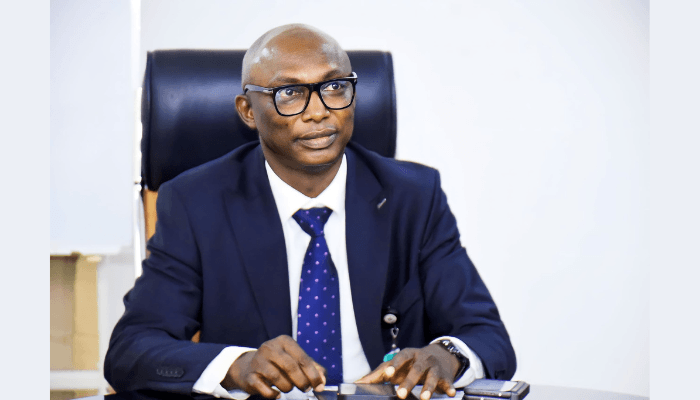
Jerry Adams is the current Executive Chairman of Kaduna State Internal Revenue Service (KADIRS). He had his university education at Ahmadu Bello University Zaria, Kaduna State and is currently pursuing his PhD in Public Governance and Leadership at the University of Abuja. Professionally, Adams is a tax expert with over 26 years of professional experience spanning different sectors. In this interview with Benjamin Agesan, BusinessDay Correspondent, at the KADIRS headquarters in Kaduna, Adams discusses the state’s revenue growth, tax reforms, the role of technology in revenue collection, the impact of security on revenue generation and the agency’s strategy for sustaining IGR growth. Excerpts:
Can you tell us how much revenue Kaduna State has generated within the three years of Governor Uba Sani’s administration compared to previous years?
Before Governor Uba Sani came into office in 2023, the highest revenue ever generated by Kaduna State was N58 billion.
In 2023, we crossed the N60 billion mark and generated N62 billion. In 2024, we generated N71 billion, and in 2025, we generated N86 billion.
As of today, in the first five months of 2026, we have generated about N50 billion, which shows that we are trending towards about N120 billion by the end of 2026, making it #2,39 billion in three years. So, that is where we are, and that is where we are going.
What key factors have driven the growth in Internally Generated Revenue (IGR) in Kaduna State?
First of all, it is the political will of His Excellency, the Governor of Kaduna State, Senator Dr. Uba Sani.
Secondly, it is the support the service has received from the Governor.
Thirdly, it is the collaboration between the service and all ministries, departments and agencies.
Another important factor is the commitment of the executive management, the management team, and the entire staff of the service.
Most importantly, taxpayers now trust the government of Senator Uba Sani. They trust the process, and they can see what their taxes are being used for.
Because of that, they willingly pay their taxes, resulting in a significant increase in tax compliance.
If you have been following developments, you will notice that we no longer carry out enforcement exercises as frequently as before because compliance has improved tremendously.
This is because people trust the process; they believe the Governor is doing well, and they voluntarily fulfill their tax obligations. That is the key reason for the growth we are recording.
“We have also dealt firmly with illegal revenue collectors and non-state actors responsible for unauthorised collections. Some have been arrested and prosecuted. With the implementation of the new tax law, Kaduna State will continue to enforce tax administration strictly in line with the provisions of the law.”
What is your revenue target for this year, and how confident are you of achieving it?
Our target for this year is around N110 billion. However, based on our current performance, we are already trending towards about N120 billion. By God’s grace, we are confident of achieving the target and even surpassing it, all things being equal.
What major reforms has the Board introduced to improve tax administration, compliance and revenue collection?
When Governor Uba Sani came into office, he directed us to introduce key reforms that would improve revenue generation. This was necessary because he inherited a heavily indebted state. Kaduna was second only to Lagos in terms of indebtedness.
Because of the huge deductions from the state’s allocation from the Federation Account, we had to rely more on Internally Generated Revenue.
To improve revenue, we focused on technology, blocking leakages and ensuring taxpayers complied with existing tax laws.
One of the Governor’s first major policy initiatives was the Financial Inclusion Executive Order.
Before then, millions of people were excluded from the financial system. Through that executive order, over 2.5 million people were brought into the financial system. They were registered, supported and given access to grants and other social intervention programmes from both the Federal Government and the Kaduna State Government.
This helped many people grow their businesses, encouraged the expansion of Small and Medium Enterprises (SMEs), and ultimately increased revenue.
Secondly, we relied heavily on technology. One of our major innovations was the introduction of the Pay Kaduna Portal, which serves as a single window that aggregates all government revenue.
What measures are being implemented to curb tax evasion without overburdening compliant taxpayers?
The Kaduna State Internal Revenue Service has adopted the Pareto 80/20 Principle, which means concentrating our resources where they will produce the greatest results. We focus on the 20 percent of taxpayers who account for about 80 per cent of the state’s internally generated revenue, rather than placing additional burdens on ordinary citizens.
Since Governor Senator Uba Sani assumed office, no new taxes or levies have been introduced. Instead, our strategy has been to expand the tax base horizontally by bringing more eligible taxpayers into the system. Before 2023, the emphasis was largely on vertical growth, which eventually reached the point of diminishing returns. We therefore shifted to widening the tax net, and this strategy has continued to yield positive results.
Multiple taxation remains a concern for residents and businesses. How is the Board addressing this challenge?
Multiple taxation is a national challenge, not one peculiar to Kaduna State. Through collaboration with local governments and other Ministries, Departments and Agencies (MDAs), stakeholder engagement and continuous public sensitisation, we have significantly reduced the problem.
We have also dealt firmly with illegal revenue collectors and non-state actors responsible for unauthorised collections. Some have been arrested and prosecuted. With the implementation of the new tax law, Kaduna State will continue to enforce tax administration strictly in line with the provisions of the law.
What support does the Board provide for Small and Medium Enterprises (SMEs)?
Our primary responsibility is tax administration, not business development. Agencies such as the Kaduna State Enterprise Development Agency (KADEDA), KADIPA and the Ministry of Business, Innovation and Technology are responsible for supporting SME growth.
Our role is to educate SMEs on their tax obligations and ensure compliance with the law. Indirectly, however, the taxes we collect fund infrastructure, security, healthcare and other public services that create a better environment for businesses to thrive.
How does the agency ensure taxpayers are treated fairly, professionally and transparently?
We operate a 24-hour customer service line through which taxpayers can report complaints or seek clarification. We also have 33 tax offices across the state and are opening three additional offices, bringing the total to 36, to improve accessibility.
We have an effective grievance redress mechanism that resolves complaints promptly. In addition, our Head of Corporate Communications regularly participates in radio programmes where taxpayers can call in to ask questions or lodge complaints. Our goal is to make our services transparent, accessible and responsive.
How has the current economic climate affected revenue generation in Kaduna State?
Economic challenges naturally affect tax collection because businesses and individuals face financial pressures. While the economy has slowed the pace of revenue growth, it has not stopped our progress.
The current economic challenges did not begin with this administration, and the government is implementing measures to improve the economy. From what we have observed, there is steady economic growth, which is reflected in the consistent increase in Kaduna State’s Internally Generated Revenue (IGR). We remain optimistic that the future is promising.
Which sectors contribute the most to Kaduna State’s revenue, and where do you see the greatest growth potential?
Pay-As-You-Earn (PAYE) remains the largest contributor to our revenue. However, we also see enormous potential among High Net Worth Individuals (HNWIs). For many years, many wealthy individuals were outside the tax net. Today, some individuals in Kaduna State pay as much as ₦10 million annually in taxes.
Using data from institutions such as the Nigerian Financial Intelligence Unit (NFIU) and the Joint Tax Board (JTB), we are identifying more eligible taxpayers and improving compliance. We are also generating substantial revenue through back-duty tax audits.
How has increased revenue translated into better infrastructure and public services?
One of the major reasons for increased tax compliance is the trust Governor Uba Sani has built among taxpayers. People can see that their taxes are being used responsibly.
Across the state, rural roads are being constructed, making it easier for farmers to transport produce to markets. Healthcare has also improved significantly, with all 255 Primary Healthcare Centres upgraded, while many rural hospitals have been renovated and equipped.
The state has also upgraded three modern skills acquisition centres located in Zaria, Samaru and Rigachikun. These centres have world-class equipment and are designed to equip thousands of young people with employable skills.
Security has also improved considerably through investments in peace-building, inclusive governance and equitable distribution of development projects. All these projects are funded largely through internally generated revenue.
What do you consider your greatest achievements as Chairman?
My greatest achievement is the deployment of technology, particularly the Pay Kaduna Portal. It has blocked revenue leakages, simplified tax payments through a single digital platform and significantly improved transparency in tax administration.
Another major achievement is staff capacity development. We have motivated our workforce through a reward-and-accountability system. High-performing staff are recognised, while poor performance is addressed appropriately.
Finally, we have successfully expanded Kaduna State’s tax base, leading to unprecedented revenue growth.
What has been your greatest challenge?
Challenges are part of leadership. What matters is the ability to manage them effectively. When we assumed office, we faced funding constraints, inadequate infrastructure and limited work tools. With the Governor’s support, we received over 100 laptops, which greatly enhanced automation and service delivery.
There were also broader challenges inherited by the administration, including security concerns and financial limitations. Although these cannot be resolved overnight, we have made steady progress and remain grateful for the Governor’s consistent support.
What motivates you to improve revenue generation?
My greatest motivation is the confidence Governor Uba Sani reposed in me by appointing me to this office. I see it as a trust that I must not betray.
Secondly, we are committed to helping the Governor deliver on his campaign promises. Development requires funding, and increasing internally generated revenue is critical to providing the resources needed for infrastructure and public services.
What advice would you give taxpayers, businesses and investors?
Paying taxes is a civic responsibility and a legal obligation. Anyone who deliberately evades tax is breaking the law and is liable to sanctions.
No nation develops without tax revenue. Even countries with limited natural resources have achieved remarkable development through efficient taxation.
I encourage all eligible taxpayers to comply voluntarily. By paying taxes, citizens become stakeholders in governance and are better positioned to demand accountability from the government.
While the majority of taxpayers are complying, we will continue to pursue tax evaders in accordance with the law. I also maintain a strict distinction between personal relationships and official responsibilities. Friends and family members are expected to comply with the law just like everyone else.
I appreciate His Excellency, Governor Senator Uba Sani, for the confidence he has placed in me by appointing me Chairman of the Kaduna State Internal Revenue Service.
We remain committed to justifying that confidence and supporting the Governor’s vision for Kaduna State. His administration has recorded significant achievements within three years, and I believe even greater progress will be achieved in the years ahead as the state continues on its path of sustainable growth and development.

Join BusinessDay whatsapp Channel, to stay up to date
Open In Whatsapp