For decades, Nigeria embodied one of the oil industry’s greatest contradictions. Africa’s largest crude producer exported millions of barrels of crude oil every day while importing much of the petrol, diesel and aviation fuel consumed at home.
Despite producing crude, the country depended on foreign refineries to satisfy domestic demand, exposing the economy to fuel shortages, foreign exchange volatility and one of the world’s most expensive fuel subsidy regimes.
Successive governments sought to break that cycle. Billions of dollars were spent rehabilitating the country’s four state-owned refineries in Port Harcourt, Warri and Kaduna, whose combined installed capacity stands at 445,000 barrels per day (bpd).
Refinery turnaround maintenance became a recurring feature of government budgets, yet utilisation remained negligible for years. For context, over the past two decades, Nigeria has spent an estimated $18 billion to $25 billion on rehabilitating and maintaining its state-owned refineries, with some estimates citing total spending over the last 30 years surpassing $20 billion.
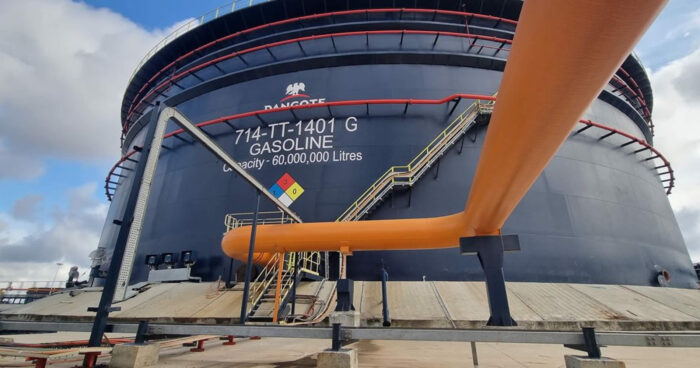
The commissioning of the 650,000-bpd Dangote Petroleum Refinery has begun to change that equation. More than simply ending Nigeria’s dependence on imported fuel, the refinery is reshaping trade flows across Africa, creating new export opportunities, strengthening energy security and repositioning Nigeria within the global refining industry.
However, its long-term significance lies beyond fuel production. It represents a test of whether large-scale private industrial investment can succeed where decades of public intervention failed.
Unlike conventional refineries built primarily to meet domestic demand, Dangote was conceived as an integrated energy and petrochemicals complex capable of competing in international markets.
Alongside petrol and diesel, it produces aviation fuel, liquefied petroleum gas, polypropylene and other high-value petroleum products, allowing it to diversify revenue streams while serving markets across Africa and beyond. That integrated model places it closer to global refining hubs in India, South Korea and the Middle East than to Nigeria’s ageing state-owned facilities.
The project also reflects a broader industrial philosophy that has defined the Dangote Group for more than three decades. Rather than pursuing short-term commercial opportunities, the company has consistently invested in sectors where Nigeria depended heavily on imports, building domestic production capacity in cement, sugar, salt and fertiliser before extending the same strategy to petroleum refining. The refinery is the largest and most ambitious expression of that approach.
Its journey, however, was far from straightforward. Rising construction costs, foreign exchange shortages, engineering complexity, supply chain disruptions and repeated delays fuelled scepticism about whether the project would ever become operational. Yet its completion demonstrates the role of patient capital in addressing structural economic challenges that often lie beyond the investment horizon of both governments and private financiers.
The refinery’s economic significance is best understood through Nigeria’s longstanding refining deficit. For decades, every increase in crude oil prices boosted export earnings while simultaneously raising the country’s fuel import bill. Every depreciation of the naira inflated the cost of importing refined products, placing pressure on foreign exchange reserves and feeding domestic inflation. Local industries bore the consequences through higher logistics and energy costs, while households endured recurring fuel scarcity and price volatility.
By processing crude domestically, the refinery retains more value within the Nigerian economy. Reduced dependence on imported petroleum products lowers foreign exchange demand, strengthens supply security and creates opportunities for industries ranging from manufacturing and logistics to petrochemicals and maritime services. Reliable fuel supplies also improve planning certainty for businesses and reduce exposure to disruptions in international supply chains.
Its influence is already extending beyond Nigeria’s borders. As Africa’s largest refinery and one of the world’s biggest single-train refining facilities, Dangote is beginning to reshape regional petroleum trade. Instead of relying predominantly on European refiners, countries across West and Central Africa are increasingly sourcing refined products from Nigeria, while exports are reaching markets in Europe and beyond.
One of the refinery’s most significant opportunities lies in aviation fuel, a market that has received less public attention than petrol but may prove even more lucrative.
According to Amaar Khan, Jet Fuel Analyst at Argus Media, the refinery’s planned expansion from about 700,000 bpd currently to 1.45 million bpd within the next 30 months could make Dangote the world’s largest producer of jet fuel.
“Argus understands that the doubling of capacity at the existing Dangote refinery will be proportionally similar to current output. This indicates that jet fuel output at Dangote will roughly double upon completion of the expansion and potentially become the largest jet fuel producer in the world,” Khan said.
That outlook carries significant implications for Europe. Air travel demand continues to recover while refining capacity across the continent continues to shrink. Five European refineries have permanently shut down in the past two and a half years, limiting the region’s ability to meet growing aviation fuel demand.
“Dangote’s jet fuel exports could become increasingly important to Europe in the coming years,” Khan noted. “Jet fuel demand is set to increase year-on-year in line with air travel demand, while Europe is unlikely to add new refining capacity.”
Recent geopolitical tensions have further strengthened that opportunity. Disruptions around the Strait of Hormuz tightened global supplies of aviation fuel, leaving importing regions competing for limited cargoes. Although prices have eased from wartime peaks, Argus estimates they remain about 50 per cent above pre-conflict levels at roughly $1,200 per tonne.
“Without flows through the Strait of Hormuz, the world is still undersupplied on jet fuel,” Khan said. “Jet fuel prices are expected to remain elevated for the rest of the year at least, even if the strait reopens.”
Domestically, Dangote has already become the backbone of Nigeria’s aviation fuel market. Following an agreement reached with local airlines in 2024 and endorsed by the federal government, Nigeria has relied almost exclusively on locally produced jet fuel since late 2024, reducing dependence on imports while improving supply reliability.
The refinery’s influence extends beyond aviation. It has reinforced Nigeria’s ambition to become Africa’s refining hub at a time when several large refining projects elsewhere on the continent have stalled. Dangote’s reported interest in developing another refinery in either Kenya or Tanzania further illustrates its strategy of building an integrated African refining network capable of supplying regional demand.
The federal government increasingly sees the refinery as a strategic national asset rather than merely a private investment. During a visit to the Lekki complex in July 2026 alongside Heineken Lokpobiri, the minister of state for petroleum resources (oil), and officials of the Nigerian Upstream Petroleum Regulatory Commission (NUPRC), Ekperikpe Ekpo, the minister of state for petroleum resources (gas), described the facility as “a source of national pride and one of Nigeria’s most transformative industrial investments.”
“The federal government will continue to provide the policy and regulatory support needed to maximise its contribution to the country’s energy security, industrialisation and economic growth,” Ekpo said.
Yet the refinery’s success should not obscure the challenges that remain. Its competitiveness ultimately depends on reliable access to crude oil under Nigeria’s domestic supply obligations, efficient logistics, transparent regulation and stable market conditions.
As global refining margins fluctuate and energy markets become increasingly competitive, sustaining high utilisation rates will require consistent feedstock supply and policies that encourage rather than distort investment.
The Dangote Refinery illustrates what that transition looks like in practice. It reinforces an important economic truth: sustainable prosperity is created not by exporting potential but by converting potential into finished products with higher value. This is perhaps the greatest contribution of the Dangote brand over the past three decades.
It also communicates confidence in Nigeria’s future at a time when global investment conversations often focus on the country’s challenges. It sends a powerful signal that world-class industrial assets can be conceived, built and operated on Nigerian soil by Nigerian enterprise. Such signals matter because confidence is itself an economic asset.
In an era increasingly defined by short-term thinking, the refinery offers a different template, one rooted in patience, execution and long-term commitment. It is a reminder that the greatest investments are those that solve enduring problems while creating lasting value for generations.
For Nigeria, that may prove to be the refinery’s greatest contribution. Beyond the steel, pipelines and processing units lies something even more valuable: renewed confidence that bold ideas, pursued with discipline and resilience, can reshape a nation’s economic future.

Join BusinessDay whatsapp Channel, to stay up to date
Open In Whatsapp