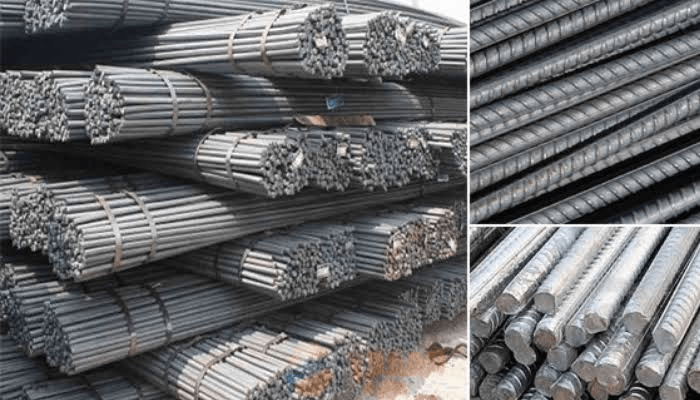
From a position of strength following the establishment of the Ajaokuta and Aladja steel companies in the early 1980s, and a host of small producing companies, Nigeria has become a net importer of steel products.
The collapse of the Ajaokuta and Aladja steel mills spelt a challenge for several industries that relied on steel for their operations.
While efforts are said to be on to revive the moribund steel companies, Nigeria now imports about $4.0 billion worth of steel products annually, which makes up about 70 per cent of its steel needs, according to 2025 figures.
China remains Nigeria’s leading supplier of steel products while significant imports also come from India, the United Arab Emirates, and the United Kingdom just as Belgium, Germany, the United States of America, and Italy also supply specialized steel bars, industrial parts and structural materials.
Boosting local steel production to about 10 million metric tonnes annually under President Bola Tinubu’s Renewed Hope Agenda could significantly reduce steel imports, according to Abubakar Audi, Minister of Steel Development.
Speaking in Kaduna in 2025 while on a visit to the National Steel Raw Material Exploration Agency (NSRMEA), Audi said “Once our plans are fully implemented in the next five years, we will achieve all our objectives.”
In March this year while addressing the German-Nigeria Economic Forum in Dortmund, Germany, he outlined Nigeria’s strategic vision to advance her steel and minerals sector value chain and called for investments.
The Niger Delta region has been renowned for its vast oil and gas wealth, but a new industrial revolution is taking shape – one that could redefine Delta State’s economic future and alter Nigeria’s dependence on foreign steel.
This is because the Tyro Group has invested $100 million in Delta Wires Industrial Limited, its flagship company operating within the Kwale Free Trade Zone (KFTZ).
Though it does not have any detailed annual tonnage of steel, Delta Wires Industrial Limited is projected to generate $42 million in annual revenue with its core facility that houses a mid-section steel mill and seamless pipe production lines that target the oil and gas industry.
With the $100 million investment, the project is believed to rank among the most significant private sector industrial developments currently underway in Delta State, as apart from steel manufacturing, the project is designed to stimulate industrialisation, expand access to cleaner energy, create jobs, facilitate technology transfer, and deepen regional trade.
The Tyro Group is a diversified conglomerate that is driving industrial and economic transformation across West Africa, ranging from mining to manufacturing, energy, engineering, and trade-enabled services.
It is a human-centered industrial conglomerate that committed to building resilient infrastructure, enabling efficient supply chains, and advancing energy and manufacturing across Africa.
Tyro Group balances engineering precision with long-term stewardship, partnering with institutions and governments to create measurable social and economic value.
So, the decision to invest in Delta State was driven by clear economic fundamentals due, partly to the abundance of natural gas reserves to provide stable electricity for intensive manufacturing, as reliable power supply is unarguably one of the biggest challenges facing industrial growth in Nigeria.
An unnamed company official speaking on the choice of the Kwale Free Trade Zone for the siting of Delta Wires Industrial Limited, said “Power is not merely an auxiliary component of production; it is a critical input. To secure reliable and sustainable power, we need to be close to the source of gas.”
Undoubtedly, the location offers more advantages as it provides investors with infrastructure, regulatory incentives, and access to major transport corridors linking the South-South, South-East, and Northern markets with proximity to key seaports to serve export markets across West Africa.
Another boost is the 10 per cent equity stake of the Delta State Government in the project, which signals confidence in the facility’s viability in the long term and significantly helps to minimise investment risks.
In part, the project highlights the commitment of the Delta State Government to transforming the state into a major industrial destination through policy support, investing in critical infrastructure and creating a business-friendly environment to attract investors.
The vision behind Tyro Group extends beyond conventional manufacturing because the company aims to address Nigeria’s steel deficit and reduce dependence on imported construction materials from Asia and Europe.
Upon completion, the facility is expected to produce a broad range of steel products essential to infrastructure and housing development, including wires, nails, mesh, barbed wire, reinforcement bars, structural sections, channels, angles, flats, and I-beams.
One of its most notable innovations is the planned production of structural steel sections of up to 300 millimetres, a capability that remains rare within Nigeria’s manufacturing sector.
Industry observers believe this could significantly reduce import dependence while supporting investments in roads, bridges, housing estates, industrial parks, and other large-scale infrastructure projects.
Construction work has reached an advanced stage, with the first phase approximately 85 per cent complete, as production lines for nails, wires, mesh, and barbed wire are scheduled for commissioning in August, marking the commencement of commercial operations.
This local production is expected to reduce the cost of steel and significantly reduce the cost of manufactured and other products that are dependent on imported steel products such as housing.
At a recent real estate investment summit in Port Harcourt, Rivers State, industry experts said the cost of imported steel is one of the factors pushing up the cost of housing in Nigeria.
At the investment summit, experts said Nigeria already has the human capacity for mass production of affordable housing for the middle-and low-income bracket, but there is need for local production of housing materials to reduce costs.
They believed that the revival of local steel industries and other industries that produce housing materials from electrical products to bathroom and kitchen wares would go a long way in reducing housing costs.
The exchange rate makes the costs of imported building materials to triple, which ultimately affects the costs of housing, so the summit concluded that with local production coupled with the availability of a local workforce, affordable housing for low-income earners will be a thing of the past.
Steel also finds wide use in the construction of bridges, spare parts, auto industry, furniture and a host of other products, so Tyro Group’s investment could be a welcome game changer for the nation.
A second phase of the group’s plan is the introduction of structural steel manufacturing alongside facilities for the production of Compressed Natural Gas (CNG) and Liquefied Petroleum Gas (LPG) cylinders.
However, Tyro Group’s broader industrial strategy is to simultaneously develop gas infrastructure aimed at accelerating the transition from diesel to a cleaner, more affordable energy source across the Niger Delta.
It will access over 300 million standard cubic feet of gas daily within its operational area through a joint venture arrangement with the Nigerian National Petroleum Company Limited (NNPCL) Gas.
The plans include the establishment of a medium-scale LNG-to-CNG mother station supported by daughter stations in Asaba, Kwale, and Warri, which will be linked through virtual pipeline systems using specialised gas transportation trucks.
The company is also exploring technical partnerships with Egypt’s GasTec to support generator conversion programmes and expand gas adoption among commercial and industrial consumers.
The long-term objective is to democratise access to gas by making storage cylinders locally available and removing barriers that have slowed the transition from diesel-powered energy systems.
Through its Gas-to-Power initiative, Tyro Group is developing a dedicated 50MW power source to anchor the next-generation data centre infrastructure.
It will support high-performance computing systems, including artificial intelligence (AI) workloads, cloud services, and global Bitcoin mining operations.
The project is being delivered in a strategic partnership with US-based Baylis Digital Africa LLC by leveraging their international expertise in digital infrastructure, blockchain, and data centre optimisation.
By capitalising on Delta State’s vast natural gas reserves to provide scalable, low-cost energy, the second phase could catapult Tyro Group as a leading industrial and digital hub poised to compete in the global technology sector.
Beyond its industrial ambitions, the project is expected to deliver substantial economic benefits because at full capacity, the project is expected to generate approximately 1,500 direct jobs and more than 5,000 indirect jobs in logistics, distribution, maintenance, retail, and support services.
The investment is also being designed with environmental sustainability in mind, as it includes a comprehensive water recycling system to be integrated into the facility to minimise waste and optimise resource utilisation.
In addition, the company has concluded plans to plant about 3,500 coconut trees around the industrial complex to reduce carbon emissions and improve air quality.
The company is developing modern residential accommodation for 500 workers within the industrial estate that is being designed to standards comparable to a three-star hotel.
The accommodation is expected to improve staff welfare, boost productivity, and facilitate knowledge transfer between expatriate specialists and their Nigerian professionals.
For host communities, the project represents a direct opportunity to participate in the region’s industrial future. Tyro Group has already prioritised local employment, receiving more than 122 applications from host communities ahead of wider recruitment.
As steel structures rise across the Kwale landscape and new energy infrastructure take shape, Delta Wires Industrial Limited is positioning itself as more than a manufacturing company.
The company is emerging as a catalyst for industrial transformation, economic diversification, and sustainable development in Delta State.
If successfully delivered, the project could stand as one of the most compelling examples of how strategic private-sector investment, supported by government partnership and local participation, can unlock long-term economic growth in Delta State and across Nigeria.
So, when Delta Wires Industrial Limited comes on stream in August, its output, in addition to those of similar concerns all over the country, will go a long way towards reducing Nigeria’s over dependence on imported steel products.

Join BusinessDay whatsapp Channel, to stay up to date
Open In Whatsapp