Mauritius Commercial Bank plans to deploy $1 billion over the next four years to finance trade and industrial projects across Africa, as business leaders push for stronger regional integration and less dependence on exports of raw materials.
The funding initiative, announced during the Africa CEO Forum, is aimed at helping African businesses trade more with one another and build regional manufacturing networks that can keep more value within the continent.
Read also: Nigeria lags as Mauritius tops Africa’s economic freedom
Thierry Hebraud, chief executive officer of Mauritius Commercial Bank, said the programme would provide favourable financing for companies involved in intra African trade and regional value chains.
“We have just launched an envelope of $1 billion for the next four years, which will favor the intra trade Africa financing with specific and favorable conditions for our clients developing their intra trade,” Hebraud said, according to African Economic Inc.
The announcement comes at a time when African governments and businesses are intensifying calls for faster implementation of the African Continental Free Trade Area, which aims to create a single market across the continent and strengthen internal supply chains.
Hebraud said Africa’s long term economic transformation plans remain strong despite growing global uncertainty linked to conflict in the Middle East and rising energy prices.
“We have to disconnect what is going to happen in the next quarters from Africa’s long term transformation agenda,” he said.
Read also: Mauritius launches golden visa for HNIs investing at least $1 million in fintech, AI, others
He warned that disruptions in global oil and gas markets could push inflation higher across African economies over the coming year. But he argued that Africa remains strategically positioned because of its vast reserves of critical minerals, agricultural resources and renewable energy potential.
Africa holds around 30 percent of the world’s critical minerals and rare earth resources, according to Hebraud, while the Democratic Republic of the Congo produces about 74 percent of global cobalt supply.
Hebraud said African economies must shift away from the long standing pattern of exporting raw materials while importing finished products.
“Africa is exporting raw materials and importing finished products. That model needs to change,” he said.
Read also: Why $188 million green finance facility matters for Nigeria’s solar push
The bank said its financing strategy will focus on sectors considered essential for regional trade and industrial growth, including manufacturing, agriculture, energy and logistics infrastructure.
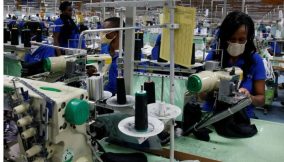
Hebraud pointed to textile trade between Madagascar and South Africa as an example of the kind of regional value chains African lenders and investors should support more aggressively.
He also stressed the importance of expanding rail networks, logistics corridors and energy infrastructure to improve trade links across the continent.
Renewable energy projects such as solar, hydro and geothermal power are expected to remain central to the bank’s financing plans, alongside selective support for oil and gas infrastructure.
Hebraud said development finance institutions would continue to play a major role in funding large infrastructure projects because many African commercial banks still struggle to access long term capital and foreign currency financing.
Business leaders at the forum said stronger infrastructure, simpler cross border trade rules and wider access to finance will be critical if Africa is to accelerate industrialisation and reduce its reliance on external markets.

Join BusinessDay whatsapp Channel, to stay up to date
Open In Whatsapp