African markets are navigating a rapidly shifting global landscape as a tentative US-Iran peace agreement eases fears of a prolonged Middle East conflict, helping lift global equities and push oil prices lower. While the deal has improved investor sentiment and alleviated concerns over energy supply disruptions, its impact remains uneven across Africa, where countries continue to struggle with capital flow volatility, financing pressures, and the need to sustain economic growth amid geopolitical uncertainty.
Here are the stories shaping the week
Foreign investors flee South African assets as Iran war rattles global markets
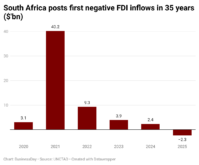
Foreign investors are withdrawing money from South African assets as the Middle East war triggers a global flight to safety, increasing pressure on the rand and exposing Africa’s biggest economy to heightened financial market volatility. In its half-year financial stability review report, released last week, the South African Reserve Bank (SARB) warned that the country’s vulnerability to volatile capital flows has increased as non-resident investors sell domestic assets and shift funds toward traditional safe-haven markets.
Why it matters: South Africa remains one of Africa’s most globally integrated financial markets, making it particularly sensitive to shifts in international investor sentiment. Sustained capital outflows could weaken the currency, increase borrowing costs and complicate efforts to stimulate economic growth, while serving as a warning sign for other emerging African markets vulnerable to external shocks.
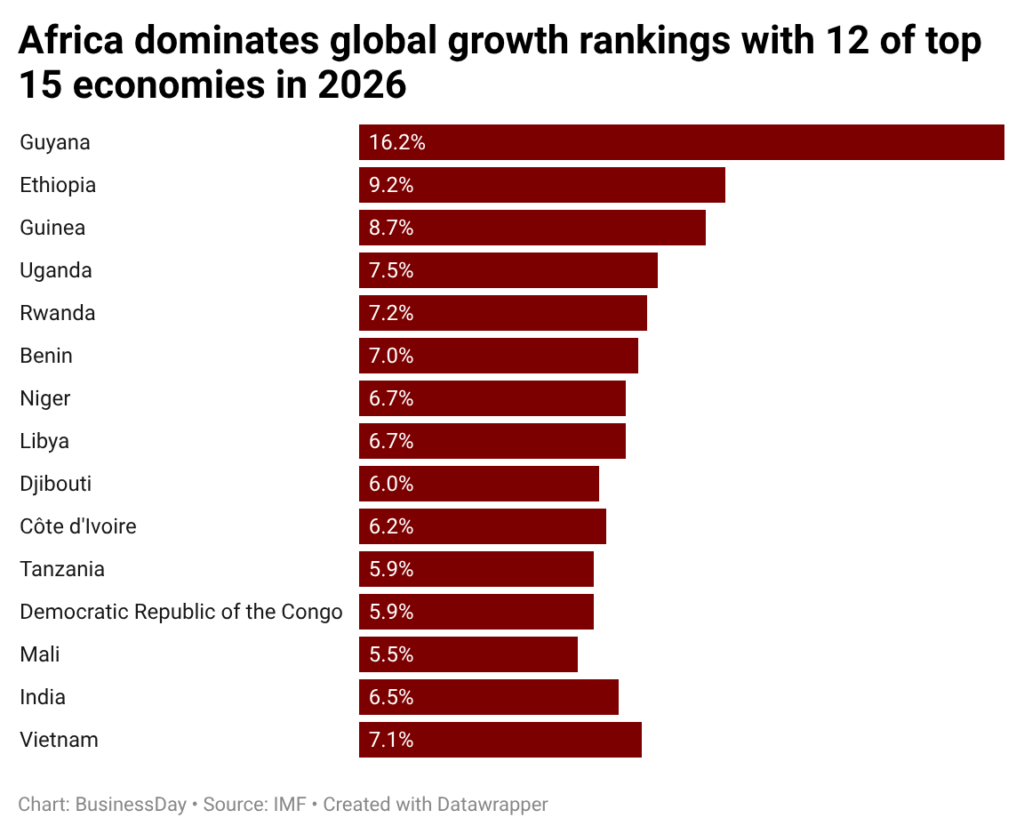
Africa still dominates global growth rankings despite IMF downgrades
Africa continues to dominate the list of the world’s fastest-growing economies despite a wave of downward revisions to global growth forecasts caused by the escalating conflict in the Middle East and rising geopolitical uncertainty. The International Monetary Fund (IMF), in its April 2026 World Economic Outlook report, projects that several African economies will remain among the world’s fastest-growing this year, led by Ethiopia, Guinea, Uganda, Rwanda, Benin and Côte d’Ivoire.
Why it matters: The rankings reinforce Africa’s position as one of the world’s most dynamic growth regions, highlighting expanding investment opportunities across infrastructure, manufacturing, agriculture and services. Strong growth prospects could help attract foreign capital even as global economic uncertainty weighs on investor confidence elsewhere.
World’s first trillionaire was born in Africa, but built his fortune abroad
Elon Musk entered the history books on Friday as the world’s first trillionaire, a development that places Africa at the centre of one of the most significant wealth-creation stories of the modern era, even though the fortune itself was largely built outside the continent. The South Africa-born entrepreneur crossed the $1 trillion net worth threshold after the Nasdaq debut of SpaceX, the rocket and satellite company he founded in 2002.
Why it matters: While Musk’s fortune was built largely in the United States, his achievement reignites debate about Africa’s ability to nurture and retain world-class entrepreneurial talent. The milestone also underscores the importance of innovation ecosystems, capital markets and technology investment in creating globally competitive businesses.
AFC approves $600m for Dangote fertiliser expansion in Nigeria, Ethiopia
The Africa Finance Corporation (AFC) has approved a $600 million financing facility for Dangote Group to support a major fertiliser expansion programme that aims to transform Africa’s agricultural landscape, strengthen food security and reduce the continent’s dependence on imported fertilisers. The financing, which will be provided to Greenview Fertilizer Corp., Dangote Group’s fertiliser holding company, forms part of a wider investment programme valued at about $7 billion.
Why it matters: The project could substantially reduce Africa’s reliance on imported fertilisers, improve food security and support agricultural productivity across the continent. It also highlights the growing role of African development finance institutions in funding large-scale industrial projects with continent-wide economic impact.
Tanzania raises spending to $23.8bn as donor funding falls
Tanzania has unveiled a 62.3 trillion shilling, equivalent to $23.8 billion, national budget for the 2026/27 fiscal year, increasing government spending by 10 percent as it moves to finance more of its development ambitions with money generated at home amid a decline in foreign assistance. Presenting the budget in Dodoma, Khamis Omar, the finance minister, said the government would maintain its focus on expanding major infrastructure projects, improving public services and strengthening domestic revenue collection to support long-term economic growth.
Why it matters: The budget reflects a broader trend across Africa as governments seek to reduce dependence on external assistance and strengthen domestic financing capacity. Tanzania’s success in raising local revenues will be closely watched as countries across the continent navigate tighter global aid flows and rising development financing needs.
Chart of the Week

Join BusinessDay whatsapp Channel, to stay up to date
Open In Whatsapp