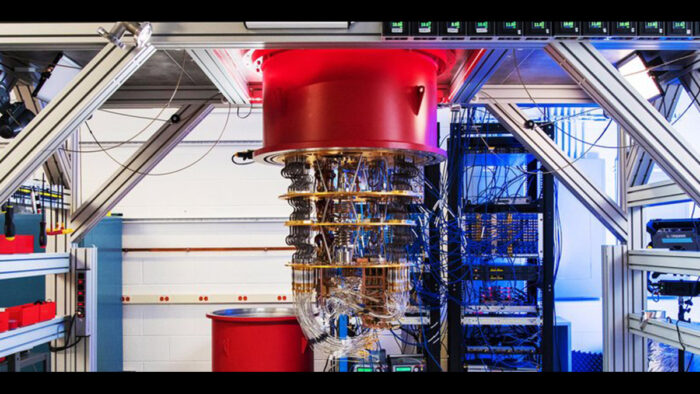
Google has launched Research Program at the Intersection of Life Sciences & Quantum AI (REPLIQA), a $10 million initiative designed to apply quantum computing and artificial intelligence to biological research, with a long-term focus on improving understanding of human biology and health.
The program announced by Google Quantum AI aims to revolutionise the understanding of complex biological processes at the molecular level, such as protein folding and cellular reactions to drugs.
Google.org is committing $10 million to fund research at five leading institutions, which are Harvard University, the Massachusetts Institute of Technology, the University of California, San Diego, the University of California, Santa Barbara, and the University of Arizona.
Google said the programme is intended to build a shared scientific ecosystem around quantum science, AI, and life sciences.
Google Quantum AI and Google.org lead the program, as Google said classical computers often struggle to simulate such interactions accurately, while quantum technologies operate according to the same physical principles that govern molecules.
The initiative, highlighted in recent developments, focuses on using advanced computing technologies to tackle problems in life sciences that are difficult or impossible to solve with traditional systems.
Read also: Macron pivots to private sector partnerships in Africa with €23bn trade deal
These include modelling molecular interactions, understanding protein folding, and simulating how biological systems respond to drugs and diseases. The approach is driven by the use of quantum computing, which operates using qubits that can exist in multiple states at once, enabling far more complex calculations than classical computers.
Reports say that this can improve the accuracy and speed of biological simulations, particularly in areas such as drug discovery and genomics.
Artificial intelligence is also playing a central role, helping to process large biological datasets and identify patterns that would be difficult for humans or conventional systems to detect.
When combined with quantum computing, AI models could help unlock new insights into cellular behaviour and disease mechanisms. The initiative reflects a broader global trend in which major research institutions and technology organisations are investing in quantum-enabled biomedical research.
Read also: Google, Apple’s recent update ends unsecured texting on mobile privacy move
Similar programs, including those led by health and science agencies, are exploring how quantum algorithms and hybrid systems can be applied to clinical and translational research challenges. The convergence of biology, quantum science, and AI marks a significant shift in how future medical and scientific discoveries may be made.


Join BusinessDay whatsapp Channel, to stay up to date
Open In Whatsapp