A new report released by Crypto Bootcamp Community (CBC) has linked Africa’s growing Bitcoin adoption movement to the continent’s deep financial exclusion crisis, revealing that an estimated 57 percent of adults in sub-Saharan Africa still remain outside the formal banking system.
The report, titled Bitcoin Pizza Day in Africa: Community Impact Report 2022–2026, documents how grassroots Bitcoin education and community-driven adoption campaigns have expanded rapidly across Africa over the last four years, particularly in countries struggling with inflation, currency devaluation, costly remittances, and limited access to banking services.
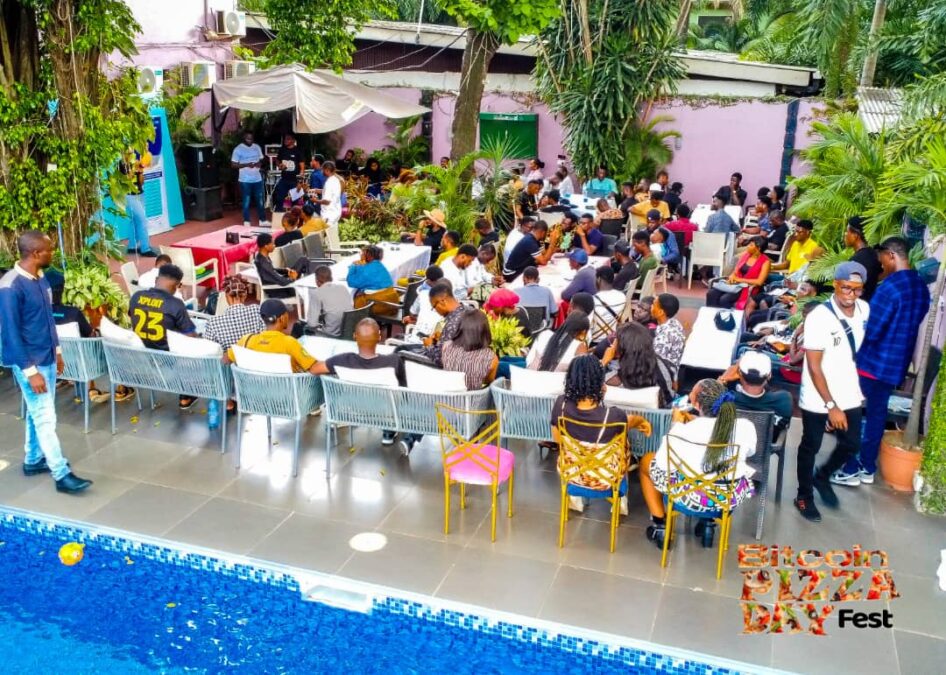
According to the report, Crypto Bootcamp Community’s Bitcoin Pizza Day Hangout, first organised on May 22, 2022, across 18 cities in Nigeria, Kenya, Ghana and Uganda, was Africa’s first formally organised, multi-city, multi-country Bitcoin Pizza Day celebration.
The organisation stated that no publicly documented record exists of any organised Bitcoin Pizza Day event on the continent before its inaugural programme in 2022.
Read also: Nigeria’s crypto funding doubles to $43m on stablecoin boom in 2025
Since then, the initiative has expanded from 18 cities in four countries to more than 40 cities across 16 countries, including participation from communities in the United Arab Emirates and the United States.
CBC said cumulative participation across all editions exceeded 50,000 people through over 94 organised events between 2022 and 2025.
The report comes amid rising cryptocurrency adoption across Africa, especially in Nigeria, which ranked first globally for peer-to-peer cryptocurrency trading volume in the Chainalysis Global Crypto Adoption Index for 2021 and 2023.
Obinna Iwuno, founder of Crypto Bootcamp Community, said the initiative was built around the idea that Africa should be central to global conversations around Bitcoin utility because of the continent’s economic realities.
“Bitcoin Pizza Day Hangout was built on a straightforward conviction: that the first proof of Bitcoin’s utility as money belonged to Africa as much as to anyone. A continent where hundreds of millions of people remain outside the formal banking system, where currencies devalue, where remittances are taxed; this is the continent that should be celebrating Bitcoin’s utility most loudly,” he said.
He added that the movement has now grown beyond CBC’s direct coordination, with independent communities across Africa and outside the continent now organising their own annual Bitcoin Pizza Day events. “That is the only outcome that ever mattered,” Iwuno stated.
The report described the programme as Africa’s first informal large-scale Bitcoin circular economy activation at community level.
It also highlighted the financial sacrifices behind the project, revealing that Iwuno personally financed nearly 60 percent of the programme’s total costs, including liquidating parts of his personal Bitcoin holdings to support the first edition in 2022 and subsequent events.
Founded in Nigeria in 2020, Crypto Bootcamp Community started as a WhatsApp group with just 16 members before growing into what it describes as Africa’s largest grassroots blockchain and crypto education network with over 10,000 members across several African countries.
Beyond the events themselves, CBC said the initiative has helped produce a new generation of African Bitcoin community leaders.
Read also:The Hidden Cost Nigerians Pay When Converting Crypto — Puexchange Fixes It
Among those mentioned in the report are Brindon Mwiine in Uganda and Kester Ejikeme in Nigeria.
The report also acknowledged support from several crypto firms, donors and community partners over the four-year period.
Sponsors and supporters listed include Binance, Tether, Yellow Card, Quidax, Roqqu, PlanB Network, Asset Chain and several African blockchain communities.
CBC noted that its focus is now shifting from large public adoption events to broader blockchain economic integration initiatives, including technical education, policy engagement, crypto-native business support and blockchain transition programmes for professionals.
The organisation said the full report contains detailed data tables, contributor profiles, ecosystem analysis, media documentation and financial architecture records covering all four editions of the programme.
Africa’s growing interest in Bitcoin and blockchain technology is increasingly being driven by real-life economic pressures rather than speculative investment alone.
With inflation, cross-border payment challenges and banking access gaps continuing across several African economies, grassroots crypto education movements are gradually positioning Bitcoin as an alternative financial tool for millions excluded from conventional financial systems.


Join BusinessDay whatsapp Channel, to stay up to date
Open In Whatsapp