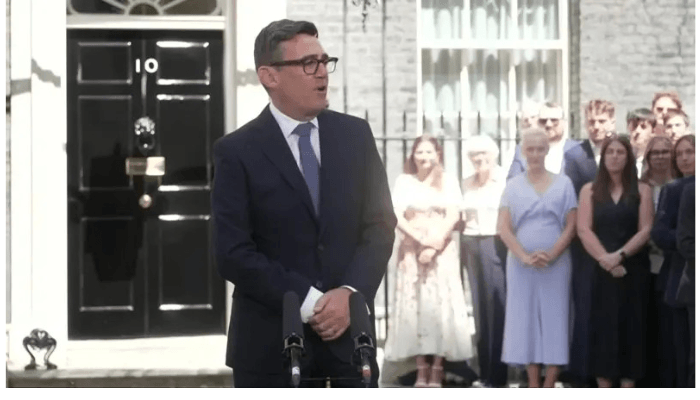
Britain has thrown its weight behind the United States’ military posture against Iran after newly sworn-in Prime Minister Andy Burnham authorised the use of UK military bases for potential American strikes, signalling continuity in London’s security alliance with Washington as fears of a wider Middle East conflict intensify.
The approval comes as US President Donald Trump warned that Iran’s heavily fortified Pickaxe Mountain nuclear facility could be targeted, escalating pressure on Tehran amid mounting concerns over its nuclear ambitions.
According to Bloomberg, Burnham approved the use of British military facilities for any future US operations against Iran, maintaining the policy adopted by his predecessor, Keir Starmer. The UK government continues to classify any such military action as “defensive,” arguing that it is intended to counter threats posed by Iran’s advancing nuclear programme.
The decision marks Burnham’s first major foreign policy move since taking office and underscores London’s commitment to its long-standing defence partnership with Washington despite the change in government. British military installations, particularly those in Cyprus and other strategic locations, have historically served as critical logistical hubs for US-led operations across the Middle East.
The move coincides with increasingly hawkish rhetoric from President Trump, who warned that Iran’s Pickaxe Mountain nuclear site, believed to be one of the country’s most heavily fortified underground facilities, could become a target if Tehran continues its nuclear activities. The warning has fuelled concerns that diplomacy may be giving way to renewed military confrontation.
Read also: Nigeria’s hidden hunger drains economy as experts push mandatory bouillon fortification
Although British officials have not disclosed the operational details of the approval, they insist any cooperation with the United States would be consistent with the UK’s national security interests and its obligations to key allies.
The Burnham administration’s decision also signals policy continuity from the Starmer government, which supported close military coordination with the United States during previous periods of heightened tensions with Iran.
Iran has consistently denied seeking nuclear weapons, insisting that its nuclear programme is designed solely for peaceful civilian purposes. Tehran has repeatedly warned that any attack on its territory or strategic facilities would trigger a forceful response and could destabilise the wider Middle East.
The latest developments come as diplomatic efforts to revive international nuclear agreements remain stalled, leaving tensions between Iran and Western powers at one of their highest levels in years.
Read also: Reps probe alleged N2bn found in mining marshals commander’s account
Security analysts say Britain’s approval reinforces the strength of the transatlantic alliance but also raises the stakes for London, which could become more deeply involved should any US military action against Iran trigger a broader regional conflict. With both Washington and Tehran hardening their positions, concerns are mounting that the crisis could escalate beyond diplomacy into open confrontation.

Join BusinessDay whatsapp Channel, to stay up to date
Open In Whatsapp