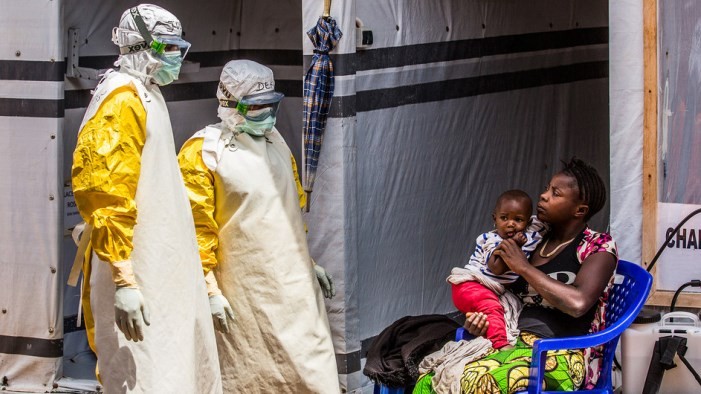
Health authorities are racing to contain a fast-growing Ebola outbreak in the eastern part of the Democratic Republic of the Congo after the virus spread into neighbouring Uganda and triggered a global health emergency declaration by the World Health Organisation (WHO).
The outbreak is linked to the rare Bundibugyo strain of Ebola, a version of the virus for which there is currently no approved vaccine or specific treatment. Health experts and the WHO say that, while this strain may not be the deadliest form of Ebola, the speed of transmission, spread into urban areas, and weak healthcare systems in conflict-hit regions are raising fears of a wider regional crisis.
What is happening in Congo?
The outbreak began in Ituri Province in eastern Congo, where health officials reported clusters of unexplained deaths, including several health workers. The Congolese government officially declared the outbreak on May 15.
According to WHO hundreds of suspected infections and at least 131 deaths have already been reported, although the exact figures continue to change as surveillance expands.
Uganda has also confirmed imported cases connected to Congo, including one death in Kampala.
What is the Bundibugyo strain?
Ebola is not a single virus. Scientists have identified several species of the virus, including the Zaire, Sudan and Bundibugyo strains. The current outbreak is caused by the Bundibugyo virus, first identified in Uganda in 2007.
Unlike the Zaire strain, the type behind some previous major outbreaks, there is no licensed vaccine specifically approved for Bundibugyo Ebola. Existing Ebola vaccines such as Ervebo were developed mainly for the Zaire strain and may offer limited protection.
How deadly is the Bundibugyo strain?
Health experts say the Bundibugyo strain is generally considered less deadly than the Zaire strain of Ebola, but it still carries a very high fatality risk.
According to the World Health Organisation (WHO), previous Bundibugyo outbreaks recorded fatality rates ranging from about 30% to 50%. That means between three and five out of every 10 infected people could die, depending on the strength of the healthcare response and how quickly cases are detected.
By comparison, the Zaire strain responsible for the 2014–2016 West Africa outbreak has recorded fatality rates of up to 70% to 90% in some outbreaks, making it the deadliest known Ebola species.
The Sudan strain has historically recorded death rates of about 40% to 60%, while the Reston strain, found mostly in animals, has not been known to cause deaths in humans.
While Bundibugyo Ebola may appear “less lethal” on paper, health experts warn that a 30–50% fatality rate is still extremely dangerous.
Why is the Ebola strain spreading so fast?
Health experts say several factors are driving the rapid spread of the Bundibugyo Ebola strain across eastern Congo and into neighbouring Uganda, despite Ebola traditionally being harder to transmit than airborne viruses like COVID-19.
One major factor is the outbreak’s location in eastern Democratic Republic of the Congo, a region affected by years of armed conflict, displacement and weak healthcare infrastructure.
The virus has also reached densely populated urban centres, including Goma, increasing the risk of wider community transmission.
Health officials are additionally worried about delayed diagnosis and under-reporting. Early Ebola symptoms, such as fever, fatigue and headache can resemble malaria, typhoid or other common illnesses, meaning infected persons may continue interacting with others before receiving treatment.
Another challenge is the lack of a licensed vaccine specifically approved for the Bundibugyo strain. While vaccines exist for the deadlier Zaire strain, experts say protection against Bundibugyo Ebola may be limited, reducing one of the key tools previously used to quickly ring-fence outbreaks.
The infection of healthcare workers has further complicated response efforts, raising concerns about shortages of protective equipment, overstretched hospitals and weak infection-control systems in affected areas.
Why are global health bodies worried?
Global health agencies like the WHO are worried because the outbreak combines several high-risk factors at once; cross-border spread, urban transmission, weak healthcare systems and the absence of a licensed vaccine specifically approved for the Bundibugyo strain.
Cases moving from eastern Congo into Uganda have increased fears that the virus could spread more widely across the region before authorities fully contain transmission chains.
How does Ebola spread?
Ebola spreads through direct contact with the bodily fluids of an infected person, including blood, vomit, sweat and saliva. People can also become infected through contaminated surfaces or unsafe burial practices.
Symptoms often include fever, weakness, vomiting, diarrhoea and, in severe cases, bleeding. Early treatment and supportive care can improve survival chances.
The virus does not spread through casual airborne contact like influenza or COVID-19. Health experts say outbreaks can usually be contained through rapid testing, isolation of cases, contact tracing and safe burials.

Join BusinessDay whatsapp Channel, to stay up to date
Open In Whatsapp