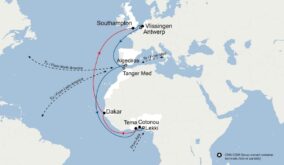
A.P. Miller-Maersk, the second-largest shipping company, has announced that its WAF6 service, which connects the Middle East and West Africa through the Mediterranean, will now transit via the Red Sea.
“WAF6 is solely operated by Maersk and is a service that connects the Middle East, Mediterranean and West Africa. It will now transit via the Red Sea between Salalah and West Mediterranean”, the company wrote in an advisory to customers.
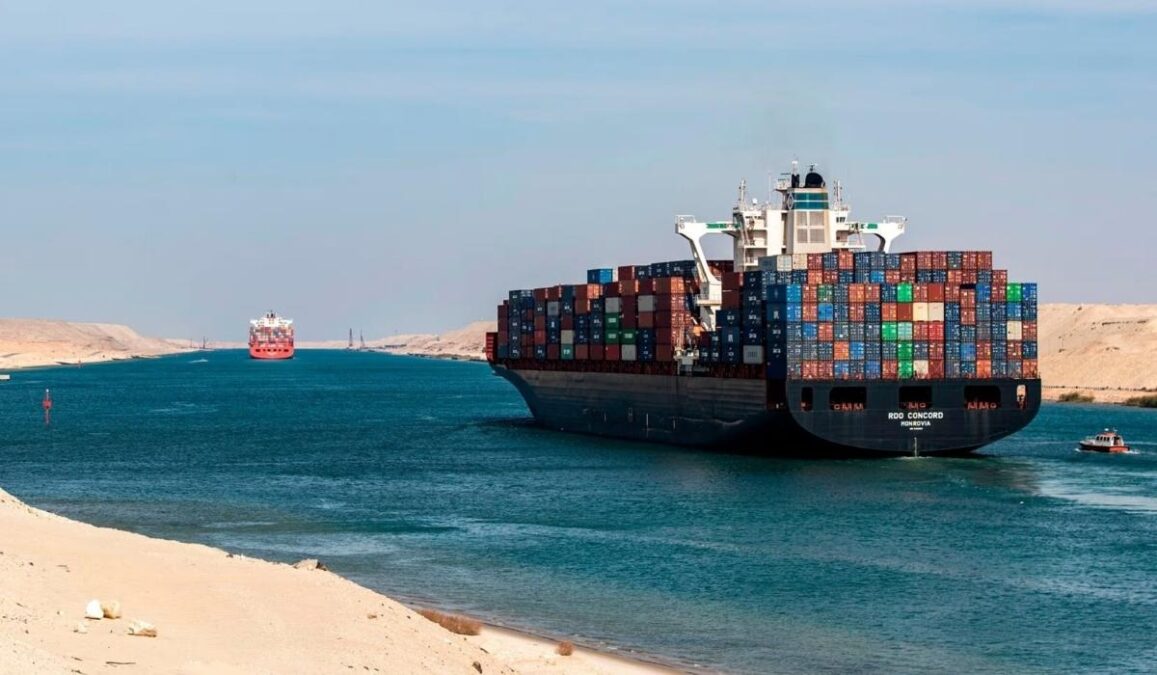
“This marks another step towards a gradual return to the trans-Suez corridor,” the company said. Shipping lines had avoided this lane due to heightened tensions in the Middle East and threats of attacks from Iran-backed Houthi groups in Yemen. Vessels resorted to transit through the Cape of Good Hope, which added weeks of delay for shippers in West Africa.
Simultaneously, Maersk and Hapag-Lloyd had announced a resumption of sailings under their Gemini joint network, AE15 service, which connects Asia, the Mediterranean and Europe, and reduces the duration of the passage by four weeks
The new change to the WAF6 route cuts in half a month-long transit through the South African corridor offering a shorter alternative for Nigerian shippers.
BusinessDay’s calculations show that Nigeria’s total trade volume across all designated Middle Eastern territories amounts to about $9 billion annually, according to information from the Observatory of Economic Complexity (OEC), national ministries of foreign trade, and official government announcements regarding bilateral economic pacts.
Nigeria primarily imports refined petroleum products, industrial machinery, transportation equipment, and plastics from the Middle East. Because Nigeria has historically faced domestic fuel refining shortfalls and a developing manufacturing sector, it relies heavily on the Gulf nations and Turkey to supply heavy industrial goods and processed energy. Though recent domestic refining capacities particularly from the Dangote refinery are filling in these gaps.
Maersk said it will continue to monitor the security situation in the Middle East region very closely for future actions.
“The safety of the crew, the vessels, and customers’ cargo remains the highest priority. Should the security situation change in the Red Sea, which may necessitate reverting individual sailings or the wider structural change of the service back to the Cape of Good Hope route,” the advisory noted.

Join BusinessDay whatsapp Channel, to stay up to date
Open In Whatsapp