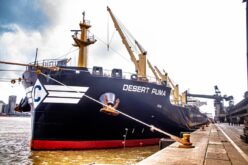
Vessel traffic through the Strait of Hormuz, the narrow waterway that carries more than 20 percent of global oil and gas trade, fell to eight on July 16, the lowest level in three weeks, according to maritime intelligence firm Kpler.
The decline from 15 confirmed crossings a day based on MarineTraffic vessel-tracking data earlier suggests commercial operators remain cautious despite ongoing diplomatic efforts to ease tensions in the Gulf, with military developments continuing to shape routing decisions across one of the world’s busiest maritime chokepoints.
Kpler reported that seven of the eight vessels transited via the Iranian route. Activity was evenly divided between low-risk and sanctioned vessels, while no shadow fleet crossings were recorded. Commercial and non-commercial movements were also evenly split, with west-east traffic dominating the day’s transits. Half of all vessels crossing were Iranian-flagged.
Kpler said three laden voyages carrying dual-purpose petroleum products (DPP) and liquefied petroleum gas (LPG) were recorded, although none of the cargoes were transported by Iranian-flagged vessels.
The intelligence firm noted that the Iranian route has accounted for the overwhelming majority of crossings for four consecutive days. The only non-Iranian movement on July 16 was one Dark or Unknown transit, while there were no crossings via the Omani route.
According to the International Maritime Organization’s (IMO) incident tracker, a new physical incident involving the tanker Belma (IMO 9289491) was verified on July 15 in the Persian Gulf. The vessel sustained damage, although no pollution was reported.
The latest incident has reinforced concerns among shipping companies already grappling with rising war-risk insurance premiums, higher operating costs and increasing risks to crews operating in the region.
Analysed data also showed vessel activity had already weakened sharply between July 10 and July 12, with confirmed crossings declining by around 52 percent compared with the previous week.
During that period, operators increasingly shifted toward Iranian and Dark routing while activity along the internationally recognised IMO and Omani corridors fell to minimal levels, reflecting what Kpler described as a preference for routes perceived to offer greater security despite their operational complexities.
Although the IMO had not confirmed any new physical attacks between June 27 and the Belma incident, renewed exchanges between Washington and Tehran, together with recent warnings from Iran’s Islamic Revolutionary Guard Corps (IRGC), have continued to weigh on commercial confidence.
The maritime intelligence firm also noted that while Pakistan, Qatar and Egypt continue backchannel mediation efforts aimed at keeping negotiations alive, the ceasefire framework has effectively broken down, leaving military developments rather than diplomacy as the primary driver of commercial shipping decisions.
The United States has intensified enforcement measures targeting Iran-linked shipping. The US Central Command (CENTCOM) said American forces redirected two compliant commercial vessels and disabled one non-compliant tanker attempting to sail toward an Iranian port.
The result has been an increasingly selective operating environment in which crossings are largely limited to vessels willing to accept Iranian routing or the heightened enforcement risks associated with the conflict.
Fresh security incidents reported on Friday stressed the fragile situation.
The United Kingdom Maritime Trade Operations (UKMTO) reported an attack on a tanker, the unauthorised boarding of another vessel and a third ship that was subjected to interaction as part of ongoing military activity in the region.
According to the IMO’s incident tracker, the organisation has now recorded 53 security incidents linked to the conflict, with 14 seafarers confirmed dead.
Kpler said crew safety concerns, elevated war-risk insurance premiums and uncertainty over future access through the Strait of Hormuz continue to be the primary constraints influencing transit decisions.

Join BusinessDay whatsapp Channel, to stay up to date
Open In Whatsapp