…only University of Ibadan makes continent’s top 10 as experts warn of widening skills deficit
…education allocation falls further below UNESCO benchmark despite rising budgetary spending
The emergence of only one Nigerian university among Africa’s top 10 institutions in the latest global rankings has again highlighted the country’s deepening education crisis, as a new report shows that Nigeria’s education funding gap has widened to N5.18 trillion despite rising budgetary allocations.
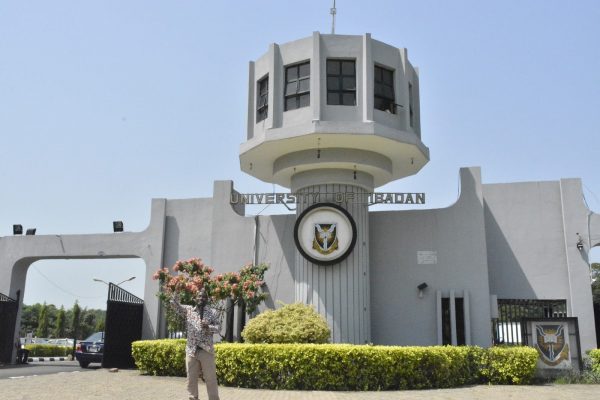
According to the 2026–2027 Best Global Universities rankings released by U.S. News & World Report, the University of Ibadan was the only Nigerian institution to make Africa’s top 10 list, ranking fourth on the continent behind South Africa’s leading universities and Egypt’s top institutions.
The rankings, which assess universities based on academic research performance and global reputation, placed the University of Cape Town first in Africa, followed by Cairo University and the University of the Witwatersrand.
Other institutions in the continental top 10 include Mansoura University, Al-Azhar University, University of Johannesburg, Ain Shams University, Stellenbosch University and Alexandria University.
The dominance of South African universities in the rankings has renewed concerns about Nigeria’s underinvestment in education and human capital development.
A report by the Development Research and Projects Centre (dRPC), titled Nigeria’s Education Budget in a Time of Fiscal Stress: Allocations, Execution, and Policy Implications, revealed that although federal education allocations increased from N1.83 trillion in 2023 to a proposed N3.59 trillion in 2026, the sector’s share of the national budget declined from 7.82 per cent in 2025 to 6.15 per cent in 2026.
Read also: US, Iran talks show progress but Lebanon violence threatens fragile truce
The report noted that Nigeria continues to allocate between six and 7.9 per cent of its national budget to education, far below the 15 to 20 per cent benchmark recommended by UNESCO. As a result, the country’s education funding gap expanded from N1.89 trillion in 2023 to N5.18 trillion in 2026 despite overall budget growth.
The report attributed the trend largely to rising debt service obligations, which increased from N6.56 trillion in 2023 to N15.91 trillion in the 2026 budget proposal, limiting resources available for critical investments in education.
The report further identified unstable capital funding as a major obstacle to educational development. Capital releases to the Federal Ministry of Education reportedly declined significantly, while execution rates remained relatively high whenever funds were made available, suggesting that fiscal constraints rather than institutional inefficiency are responsible for many stalled projects.
Concerns were also raised over shrinking investments in basic education. Funding for the Universal Basic Education Commission (UBEC) fell by more than 31 per cent between 2025 and 2026, while allocations for school infrastructure, learning materials, ICT and water, sanitation and hygiene projects remained relatively low compared to expenditure on school feeding programmes.
Read also: Tinubu under fresh certificate spotlight as group petitions INEC
Also, the report found that funding for early childhood education remains largely focused on administrative activities, curriculum reviews and assessments, with little provision for expanding access through the construction of new learning centres.
Digital and artificial intelligence investments were also described as limited and concentrated mainly in post-basic institutions, with insufficient attention given to improving access and learning outcomes at foundational levels.
Comparatively, South Africa continues to allocate between 21 and 23.7 per cent of its government budget to education, surpassing the UNESCO benchmark and significantly outperforming Nigeria. Analysts say the country’s sustained investments in foundational learning, early childhood education and skills development have contributed to the strong performance of its universities on the global stage.
Sonny T. Echono, Executive Secretary of the Tertiary Education Trust Fund (TETFund), recently warned that Nigeria risks squandering its demographic advantage unless urgent reforms are implemented.
According to him, although thousands of graduates are produced annually, unemployment and underemployment continue to rise because the education system is failing to equip learners with skills demanded by industry.
Echono identified inadequate infrastructure, shortages of qualified teachers, weak policy implementation, corruption, low digital literacy and unequal access to technology as some of the factors undermining the quality of education in the country.
Read also: NCC, CAC mandate approval for 10% telecom equity transfers
He advocated increased funding for the rehabilitation of institutions, expansion of digital and physical infrastructure, improved teacher welfare and enhanced professional development programmes to address brain drain and improve learning outcomes.
The TETFund boss also called for a comprehensive review of curricula at all levels to incorporate digital literacy, entrepreneurship, artificial intelligence, data science, renewable energy technologies and financial literacy.
He stressed that Nigeria must significantly increase education spending to meet the UNESCO benchmark, noting that countries such as Rwanda and Kenya, which have consistently devoted larger shares of their budgets to education, are already witnessing positive development outcomes.
Education experts argue that unless Nigeria addresses its funding deficits and aligns academic training with labour market needs, the country may continue to lag behind its African peers in global university rankings and human capital development indicators.
Stephen Sule, a lecturer at the Joseph Sarwuan Tarka University, described chronic underfunding as the root cause of the country’s educational challenges.
“Our budget allocation to education is still around 7 per cent, far below UNESCO’s recommendation of 15-20 per cent for developing countries. Students graduate without strong skills, laboratories lack basic equipment, and public schools have collapsed at the primary and secondary levels,” he said.
While commending government-led teacher training initiatives and interventions by TETFund, Sule argued that more needs to be done to address the sector’s widening deficits.
“Of course, I must give kudos to the government for this teacher training. There are a lot of TETFund initiatives, but the scale of the challenge requires much greater investment,” he noted.
According to him, the weaknesses within the education system have created a ripple effect across the labour market and the broader economy.
“Employers spend heavily retraining graduates who leave school without adequate knowledge. Even artisans struggle, as they often lack basic cognitive training from early schooling,” he added.
Sule pointed to Egypt’s progress as evidence that sustained investment can transform educational outcomes. He noted that Egypt has expanded access to free public education, invested heavily in teacher development and modernised learning infrastructure, contributing to stronger human development outcomes and higher-performing universities.
He argued that Nigeria must prioritise strengthening primary education, where foundational learning gaps often begin, while also addressing severe shortages of classrooms, laboratories and teaching materials across the education system.
Without urgent intervention, he warned, Nigeria risks widening the disconnect between its rapidly growing youth population and the skills required to drive economic growth and national development.
Similarly, Aderinwale Samuel, Director of Sam Citadel International School, said the effects of underinvestment are visible across all levels of learning.
“In many government schools, children sit on the floor or window sills to learn because classrooms are overcrowded and dilapidated. Teachers are poorly paid, sometimes going unpaid for months, and morale is at rock bottom. Under these conditions, we cannot expect high literacy or meaningful learning,” he said.
Samuel noted that Nigerians spend an average of just 6.2 years in school, compared with the global average of 8.6 years and Egypt’s 10.2 years, while adult literacy remains around 62 per cent, with lower rates among women and rural communities.
He said Egypt’s Education 2.0 reform programme has helped improve learning outcomes through competency-based curricula, digital learning tools, smart classrooms, adult literacy campaigns and expanded vocational training programmes.
“Egypt invests deliberately in teacher training, incentives and modern digital tools. These policies have boosted youth literacy to over 90 per cent, compared to Nigeria’s 62 per cent.
“We must move beyond rhetoric and treat education as the foundation of national growth,” he said.

Join BusinessDay whatsapp Channel, to stay up to date
Open In Whatsapp