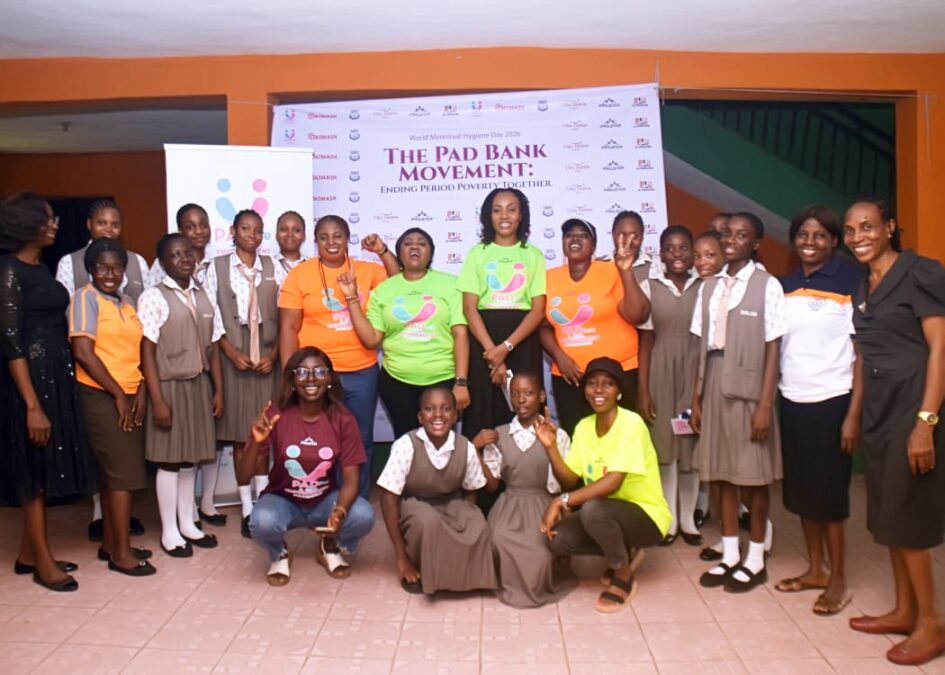
As concerns grow over the impact of period poverty on girls’ education and well-being, advocates are increasingly turning to school-based Pad Banks as a sustainable solution to a challenge that continues to affect thousands of young Nigerians.
At the 2026 World Menstrual Hygiene Day celebration held at Isolog College, Akute, Ogun State, Theresa Moses, the founder of Pad Me A Girl Empowerment Foundation, called for stronger support from governments, schools, businesses and development partners to expand access to menstrual products and ensure that no girl is left behind because of her monthly cycle.
Read also: UNICEF warns health workers against diversion of supplements meant for child nutrition
Speaking during the event themed, “The Pad Bank Movement: Ending Period Poverty Together,” Moses said menstruation remains a hidden barrier to education and personal development for many girls who lack access to sanitary products and menstrual health information.
According to her, period poverty continues to force many girls to miss classes, withdraw from social activities and, in some cases, adopt unsafe alternatives during menstruation.
“The Pad Bank is more than a storage facility for sanitary pads. It is a symbol of hope, dignity, inclusion and empowerment. It ensures that no girl has to suffer in silence because of her period,” she said.
Her remarks reflect a growing shift in menstrual health advocacy from one-off sanitary pad donations to more sustainable support systems that provide continuous access to menstrual products within schools and communities.
Moses explained that the Foundation established the Pad Bank Movement to address recurring challenges faced by girls who often struggle to obtain sanitary products when they need them most. By placing menstrual products within schools, the initiative seeks to ensure that girls can continue learning without interruption.
The Foundation said it has already reached more than 10,000 girls and women across schools, rural communities and underserved areas through menstrual health education, advocacy campaigns, sanitary pad distribution and empowerment programmes.
The campaign comes at a time when stakeholders are increasingly drawing attention to the wider economic and social consequences of period poverty. Beyond the inability to purchase sanitary products, experts note that the challenge also includes limited access to clean water, sanitation facilities, menstrual health education and social support.
Delivering an educational session during the programme, Amina Omoike, media expert and life coach stressed that period poverty extends far beyond the cost of sanitary pads.
“There are girls who stay home for several days every month because they have no menstrual products. Imagine missing classes every month through no fault of your own,” she said.
Omoike warned that the consequences can include school absenteeism, reduced self-confidence, anxiety, health risks and social isolation.
She also challenged long-standing myths surrounding menstruation, urging students to reject stigma and view menstruation as a normal biological process rather than a source of shame.
“Your period is not a sickness. It is not a punishment. It is not something that should stop you from achieving your dreams,” she told the students.
For many advocates, changing public attitudes remains as important as improving access to menstrual products. Despite increasing awareness, menstruation is still treated as a taboo subject in many communities, making it difficult for girls to seek help or obtain accurate information.
Moses encouraged students to speak openly about menstrual health and seek support whenever necessary.
“Your period should never stop you from achieving your dreams. Speak up when you need support, ask questions and take pride in who you are,” she said.
The event also highlighted the growing role of private sector organisations in supporting menstrual health initiatives. Several corporate partners were recognised for contributing to the programme, including ProStar Sports International, which provided customised jerseys for volunteers and foundation team members.
Other supporters acknowledged at the event included BL Consulting and Vitabaites Foods, while media organisations were commended for helping to amplify conversations around menstrual health and girls’ empowerment.
According to the Foundation, the collaboration between schools, businesses, civil society groups and community stakeholders demonstrates increasing recognition that ending period poverty requires collective action rather than isolated interventions.
Read also: How America’s second-richest Black woman took $400m from a divorce and built a $1.3bn empire
The management of Isolog College was also praised for providing a platform for discussions on menstrual health and supporting initiatives aimed at improving the welfare of young girls.
Beneficiaries described the programme as educational and empowering, with many students expressing appreciation for the opportunity to learn more about menstrual hygiene and reproductive health.
For campaigners, however, awareness alone is not enough. They argue that achieving lasting progress will depend on expanding sustainable initiatives such as Pad Banks, strengthening menstrual health education and ensuring that every girl has access to the products and support needed to remain in school and reach her full potential.
As the movement gains momentum, advocates believe the conversation is gradually shifting from charity to dignity, and from occasional donations to long-term solutions designed to eliminate period poverty permanently.

Join BusinessDay whatsapp Channel, to stay up to date
Open In Whatsapp