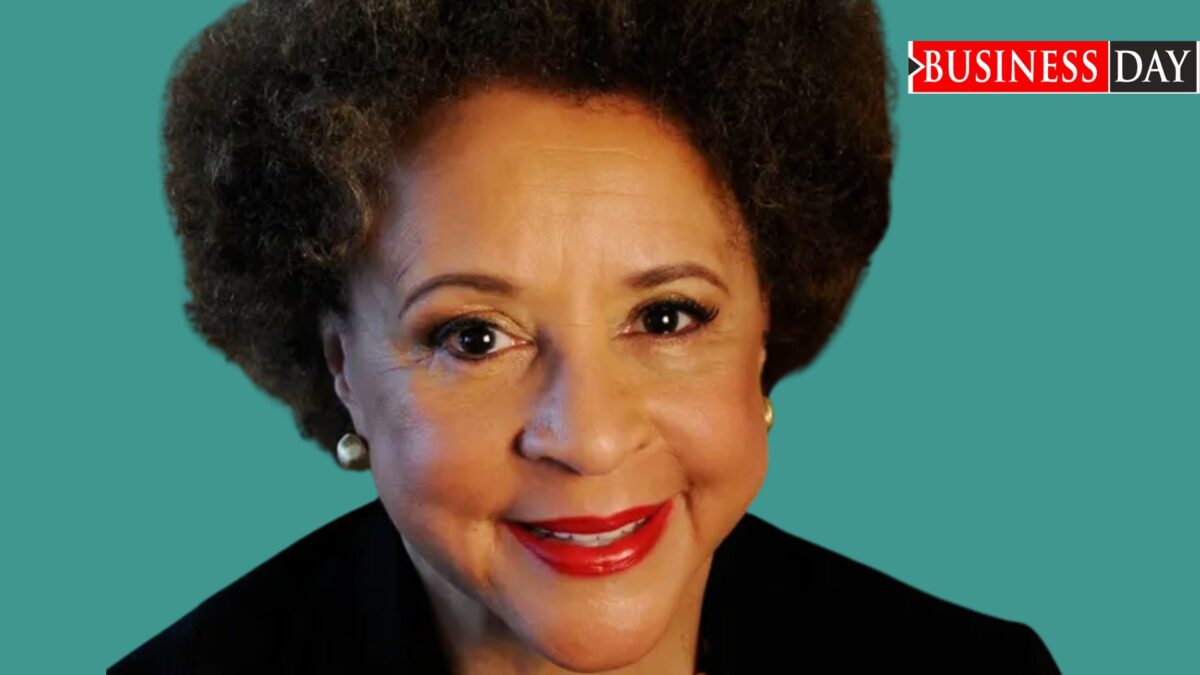
Sheila Johnson co-founded one of America’s most influential television networks, got almost none of the credit, and then used the settlement to build something entirely her own
In 2002, a Virginia judge dissolved Sheila Johnson’s 33-year marriage to Robert Johnson, the man she had helped build Black Entertainment Television with from the basement of their Washington home. She walked out with $400 million, her share of the $3 billion that Viacom had paid for BET the year before. Most people in her position would have invested quietly and let compound interest do its work.
Sheila Johnson looked at $400 million and saw a starting point.
Twenty-four years later, Forbes puts her net worth at $1.3 billion, ranking her the second-wealthiest Black woman in America behind Oprah Winfrey. She is the only African American woman in history to hold principal ownership stakes in three major professional sports franchises at the same time. She built a luxury hotel group from scratch in a sector where Black women rarely get the financing, the regulatory goodwill, or the five-star ratings. She did all of it after fifty, after divorce, and, in early 2026, after the death of her second husband, William T. Newman Jr., the very judge who had presided over her separation from Robert Johnson and whom she later married.
Before BET, before the settlement, before any of it, Sheila Crump was a concert violinist. Born on 25 January 1949, in McKeesport, Pennsylvania, to a neurosurgeon father and an accountant mother, she studied music at the University of Illinois at Urbana-Champaign and became the first African American to win a statewide violin competition in Illinois. She founded Young Strings in Action, a 140-member youth orchestra that performed internationally, including in Jordan, where King Hussein personally awarded her the country’s highest educational honour.
That musical chapter of her life was almost completely erased when the BET story was told publicly.
She met Robert Johnson at Illinois. They married in 1969. He eventually became a lobbyist for the National Cable Television Association in Washington D.C., and in 1980 they launched BET from their home with a $15,000 personal loan and a $500,000 investment from cable entrepreneur John Malone. She wasn’t a background figure in any of this. As executive vice president, she ran programming. In 1989, she created Teen Summit, a show addressing the real concerns of Black teenagers that became one of BET’s most socially meaningful programmes. She was an operational and creative force behind a network that was rarely described that way when she came up in coverage.
BET grew into a cultural institution, the first television network targeting African-American audiences specifically, and in 1991, the first Black-controlled company listed on the New York Stock Exchange. When Viacom bought it for $3 billion in 2001, the Johnsons became the first African-American billionaires in United States history. Robert Johnson got the magazine covers and the public credit. Sheila Johnson got an executive VP title and, eventually, a divorce settlement.
She retained her BET shares through the Viacom sale and divested them in 2002 after the marriage ended. Between the settlement and the share proceeds, she had roughly $400 million in liquid capital. What she chose to do with it is the part of the story most coverage has never told properly.
In 2002, Johnson bought a 340-acre horse farm in Middleburg, Virginia, a small hunt country town in Loudoun County, populated by old money and an establishment that was not immediately welcoming of a Black woman with plans to build a luxury resort on the land. She met the kind of institutional friction that women and people of colour routinely face when seeking financing, approvals and community acceptance that white male developers rarely have to earn. She built it anyway.
Salamander Hotels and Resorts was formally founded in 2005. The flagship property, the Salamander Resort and Spa in Middleburg, didn’t open until 2013, eleven years after she bought the land. What opened was one of the most decorated luxury resort properties in the country: a 168-room, Forbes Five-Star property with an equestrian centre, a 22,000-square-foot spa, multiple dining venues, a cooking school, a wine cellar, and the Blue Ridge Mountains as the backdrop. The resort has won the Forbes Travel Guide Five-Star award for both accommodation and spa repeatedly since opening. For someone who had been told, in various ways, that she was building in the wrong place, the recognition landed differently.
From that one property, she moved with speed and discipline. Salamander Collection now encompasses the Innisbrook Resort and Golf Club in Palm Harbor, Florida, host of the PGA TOUR’s Valspar Championship; Hotel Bennett in Charleston, South Carolina; Aspen Meadows Resort in Colorado; Half Moon in Montego Bay, Jamaica; Aurora Anguilla in the Caribbean; and Salamander DC, the former Mandarin Oriental Washington D.C., which Salamander rebranded and now manages in partnership with Henderson Park following a deal struck in September 2022.
The numbers are real. Salamander generated $212 million in revenue in a recent reporting period. Johnson has built what is now the most significant Black-owned luxury hospitality management company in the United States, from a horse farm in Virginia that nobody thought she should be building on.
Johnson holds principal shareholder stakes in the Washington Wizards of the NBA, the Washington Capitals of the NHL, and the Washington Mystics of the WNBA, all through Monumental Sports and Entertainment, the holding company that controls Washington D.C.’s dominant professional sports portfolio. She is the only African American woman in history to hold that distinction across three major American professional sports leagues at once.
Her entry into Monumental Sports came through her relationship with Ted Leonsis, the technology entrepreneur who controls the group. The timing has been commercially favourable: the Capitals won the Stanley Cup in 2018, and the combined value of Monumental Sports and Entertainment has appreciated considerably since she joined as a principal. Her role with the Mystics goes well beyond passive minority ownership, she serves as president and managing partner, and has been a persistent public voice for serious institutional investment in women’s sports, a position that carries more weight coming from someone who sits at the table rather than outside it.
Johnson produced the 2013 film The Butler, starring Forest Whitaker as Cecil Gaines, a Black man who served as a White House butler across eight presidential administrations. With a cast that included Oprah Winfrey, Cuba Gooding Jr. and Robin Williams, the film grossed more than $116 million worldwide against a $30 million budget. It established her as a credible film producer and extended her cultural reach well beyond hospitality and sports.
She serves as a Global Ambassador for CARE, the humanitarian organisation focused on poverty reduction, and her Sheila’s I Am Powerful Challenge raised over $8 million in 2007 to support women’s economic empowerment. She co-founded the Sheila C. Johnson Center for Clinical Services at the University of Virginia, which provides mental health services to the public.
Her annual Family Reunion culinary festival at Salamander Middleburg, which she has run since 2021 in partnership with acclaimed Black chefs including Kwame Onwuachi, has become one of the most talked-about events in American luxury hospitality. It takes place on a property she was told she shouldn’t build, featuring food prepared by chefs who look like her, in a corner of Virginia that wasn’t expecting her. The woman who taught herself to master the violin, then built a cable network, then built a hotel empire, has turned that horse farm into something that could not have existed without her.
The fortune Forbes now attributes to Sheila Johnson is not the product of a single windfall or a fortunate market cycle. The BET sale was a moment. The divorce settlement was a payment. What she built with that payment, across two and a half decades, through a luxury hotel group, three sports franchises, a film production, and a philanthropic infrastructure, is a portfolio that does not depend on any single asset performing well at any particular time.
She is 77. She has outlasted the marriage that funded the beginning. She has outlasted the narrative that cast Robert Johnson as the architect of BET and her as the accompanying spouse. She has outlasted the scepticism of the Middleburg establishment that doubted what she was building. She lost William Newman in February 2026, quietly, at the start of a year in which her empire has reached its most widely recognised valuation.
The empire keeps running. Salamander keeps expanding. The sports stakes keep appreciating. The billionaire who started with a violin, co-built a television network, walked away from a marriage with $400 million, and turned it into $1.3 billion remains the most consequential wealth-building story in American hospitality.

Join BusinessDay whatsapp Channel, to stay up to date
Open In Whatsapp