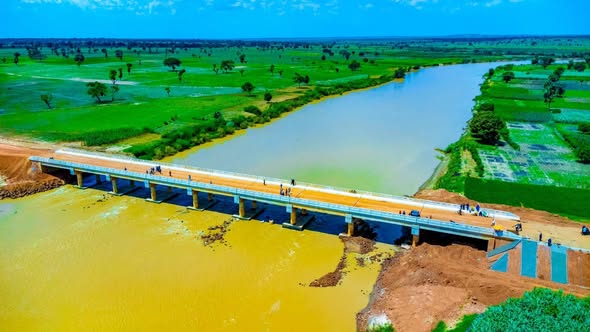
Residents of Giwa Local Government Area have said the reconstruction of the Store Bridge along the Marabar Yakawada–Kaya Road by Governor Uba Sani has ended more than two decades of hardship, restoring access to markets, healthcare facilities and farmlands while reviving economic activities across several communities.
The residents, who spoke to journalists during a media tour of government projects, described the bridge as a critical lifeline that has reconnected communities previously cut off during the rainy season and improved the movement of people and goods.
They noted that the collapsed bridge had for years disrupted farming, commerce, transportation and access to essential services, particularly during periods of heavy rainfall.
Malam Shehu Muharazu, a commercial driver from Kaya village, said motorists and commuters faced enormous difficulties before the bridge was reconstructed.
According to him, the route serves as a strategic link between the northern and southern parts of Giwa Local Government Area and also connects neighbouring communities in Katsina State.
“Whenever the rains came, transporting passengers and goods to the major market in Giwa became a nightmare. In many cases, we had to travel through Sabuwa and Funtua in Katsina State to reach our destination, increasing fuel costs and exposing us to additional risks,” he said.
Muharazu added that the situation significantly affected the income of transport operators as many residents avoided travelling due to high transportation costs and safety concerns.
A farmer from Marabar Yakawada, Malam Ibrahim Muhammadu, recalled that the failed bridge frequently stranded farmers returning from their farms.
“After a day’s work, you could get to the bridge and discover that rainfall upstream had made it impossible to cross. Many people spent hours waiting for the water level to subside before continuing their journey,” he said.
Another resident, Malam Muhammad Aminu of Gadagau community, said the collapsed bridge had also posed serious challenges to healthcare delivery in the area.
He explained that referrals from Primary Healthcare Centres in communities around Gadagau and Maraban Fatika were often delayed or disrupted, contributing to avoidable maternal and infant deaths.
“The reconstruction of this bridge has significantly improved access to emergency healthcare services and reduced the challenges faced by pregnant women and other vulnerable residents,” Aminu said.
Speaking during the tour, Kaduna State Commissioner for Information and Culture, Malam Ahmed Maiyaki, said the media visit was organised to provide journalists with first-hand information on the impact of ongoing government projects across the state.
Maiyaki described the reconstruction of the Store Bridge as a reflection of Governor Uba Sani’s commitment to inclusive rural development and improved welfare for citizens.
“Governor Uba Sani is deliberately investing in infrastructure that directly impacts the lives of citizens. The Store Bridge is not just a crossing point; it is a lifeline that has restored economic activities, improved access to healthcare and eased the movement of people and goods after more than two decades of hardship,” he said.
He added that the administration would continue to prioritise strategic infrastructure projects aimed at stimulating economic growth, strengthening social services and improving the quality of life of residents, particularly those in rural communities.
Residents said the completion of the bridge has already begun transforming the local economy, boosting agricultural activities and easing transportation challenges that had hindered development in the area for over 20 years.

Join BusinessDay whatsapp Channel, to stay up to date
Open In Whatsapp