Nigeria says it is expanding port capacity and pacing maritime reforms with West Africa in a phase of large-scale port investment, igniting competition for regional trade flows.
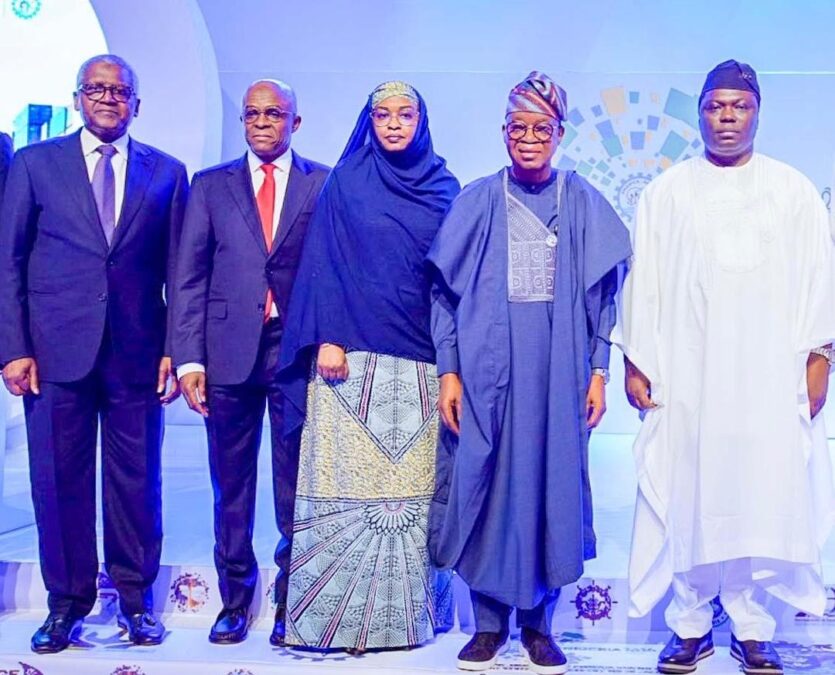
Opening the mid-year session of the board of directors of the Port Management Association of West and Central Africa (PMAWCA) in Lagos on Monday, Adegboyega Oyetola, Nigeria’s minister of marine and blue economy, said the government had approved additional deep seaports to the east alongside upgrades to existing facilities to the west as part of efforts to strengthen supply chains and facelift Nigeria as a choice for international investors eyeing West and Central Africa.
The remarks came against the backdrop of an estimated $27 billion worth of port-related investments either underway or recently announced across the sub-region, spanning projects in Guinea, Côte d’Ivoire, Senegal and Ghana, as well as Nigeria’s own Lekki Deep Sea Port, completed in 2023, and ongoing rehabilitation works at Apapa and Tin Can Island scheduled for the second quarter of 2026.
Most of these projects, including the Simandou-Morebaya port project in Guinea tied to the broader Simandou iron ore megaproject, remain in various stages of construction or expansion, but collectively they point to a gradual increase in regional handling capacity and a shift in the competitive dynamics of West African maritime trade.
Read also: Brewers push back on Customs tax stamp plan for excise reform
Nigeria’s response is a set of long-running reforms aimed at easing congestion and improving predictability at its ports, where inefficiencies have historically raised logistics costs and encouraged cargo diversion to neighbouring countries.
Oyetola pointed to infrastructure modernisation, digital integration of port processes and improved inter-agency coordination as key elements of the reform agenda, arguing that recent interventions have begun to reduce bottlenecks and improve cargo evacuation.
A central plank of the programme is the National Single Window, designed to consolidate regulatory agencies into a unified digital platform for cargo clearance, reducing manual procedures that have slowed trade flows. Though the platform ran into early problems that stalled port operations in its first 6 weeks of going live.
Oyetola also said ongoing channel deepening and terminal upgrades are intended to prepare Nigeria’s ports for larger vessels and rising trade volumes, in line with global shipping trends towards scale and consolidation.
Abubakar Dantsoho, managing director of the Nigerian Ports Authority and president of the Port Management Association of West and Central Africa, said the region was witnessing a “resurgence” in maritime infrastructure investment, with billions being deployed across multiple countries to expand port capacity.
He said ports were increasingly evolving beyond cargo handling into broader platforms for industrial and blue economy”development, including fisheries, coastal tourism and marine services.
Years of congestion, manual processes and infrastructure strain in Nigeria have already weakened the relative competitiveness of its ports, even as it remains the largest economy in the region.
The latest wave of investments across West Africa is therefore less a sudden surge than a gradual tightening of competitive pressure, one that is forcing Nigeria to move faster on reforms if it is to retain its authority in the region.

Join BusinessDay whatsapp Channel, to stay up to date
Open In Whatsapp