For years, Nigeria’s Pentecostal movement has been subjected to intense criticism, largely centred on two recurring themes—the doctrines of prosperity and tithing. While robust theological debate is healthy, much of the public discourse has degenerated into ridicule, with some portraying pastors as charlatans and dismissing prayer and fasting as a waste of productive time.
The criticism often extends beyond doctrine. Clergymen are blamed for converting abandoned factories into churches, as though they were responsible for the economic decline that forced those businesses to shut down.
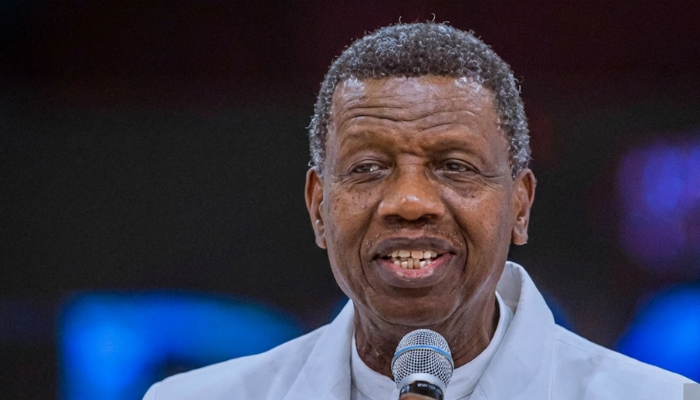
Among the most frequent targets of these attacks is Pastor Enoch Adeboye, general overseer of the Redeemed Christian Church of God. Regardless of how measured or sincere his interventions may be, they are routinely interpreted through political, ethnic or partisan lenses.
His recent comments on Nigeria’s worsening insecurity generated another wave of controversy. Critics accused him of shielding President Bola Ahmed Tinubu because they are both Yoruba, while others pointed to the fact that the First Lady, Oluremi Tinubu, is a pastor in the RCCG. To many detractors, these associations automatically invalidate his opinions.
That conclusion, however, ignores his long-established record.
During the administration of Goodluck Jonathan, when Boko Haram unleashed unprecedented bombings, mass killings, kidnappings and territorial occupation, Pastor Adeboye publicly urged the President to act decisively to restore security. Contrary to claims repeatedly circulated on social media, the Redeemed Christian Church of God (RCCG) submitted a petition in 2010 to Jonathan over rising insecurity and threatened to stage a one-million-man protest, there is no credible evidence that march took place against that government, because it never did.
What he did was exactly what many Nigerians expected from influential national figures—he spoke against the bloodshed and urged the government to protect lives. Given that churches, pastors and worshippers were themselves victims of terrorist attacks, silence would have amounted to indifference.
Under President Muhammadu Buhari, insecurity evolved into a broader national crisis involving banditry, mass kidnappings and multiple insurgent groups. Pastor Adeboye again maintained the same position. He openly urged the President to replace security chiefs if they were unable to halt the killings. He also participated in nationwide prayer walks organised by the Christian Association of Nigeria in 2020, calling for urgent action to end the violence.
His message under President Tinubu has been remarkably consistent. He again urged the President to remove security chiefs if they fail to deliver results. Yet this identical position has been portrayed by some as evidence of bias simply because the current President shares his ethnic background.
The controversy largely stems from one aspect of his remarks. Pastor Adeboye observed that the President had issued directives and that the military and security agencies must now execute their constitutional responsibilities effectively. Critics interpreted this as absolving the President of responsibility. That interpretation overlooks an important distinction.
In a presidential system, ultimate responsibility for national security rests with the President. He appoints the service chiefs, determines strategic direction and bears the political consequences of success or failure. The buck ultimately stops at his desk.
However, operational military decisions are executed by professional commanders in the field, not by the President. No democratic leader—not even Donald Trump or any other head of government—personally commands battlefield operations. Presidents formulate policy, allocate resources and appoint competent leadership; military professionals prosecute the war. That is a fact that no unbiased critic can refute.
Recognising this operational reality does not diminish presidential accountability. Both propositions can be true simultaneously.
Throughout decades of escalating insecurity, Pastor Adeboye has remained largely consistent. He has repeatedly urged successive administrations, irrespective of political party or ethnicity, to fulfil their constitutional obligation to protect Nigerians. He has neither presented himself as a political activist nor sought to become one. He has never demanded any sitting president to resign because of the country’s insecurity problem.
His calling is pastoral—to pray, counsel, admonish and speak truth to those in authority when circumstances demand and President Tinubu has not been an exception.
Criticism of public figures is legitimate in any democracy. But criticism should be anchored in facts rather than selective outrage or distorted narratives. Reducing every intervention to tribal loyalty or political calculation neither advances public debate nor strengthens democratic accountability.
Perhaps, the most ironic demand is that an 84-year-old clergyman should lead mass street protests because he once publicly challenged government over insecurity. In a nation of more than 200 million people, with millions of energetic youths, expecting an octogenarian pastor to become the face of political mobilisation says less about him than it does about our collective reluctance to shoulder civic responsibility ourselves.
Nigeria’s insecurity crisis demands honest engagement, institutional reforms and sustained accountability—not selective memory or manufactured outrage. On that score, Pastor Adeboye’s record deserves to be assessed on the evidence rather than on sentiment.

Join BusinessDay whatsapp Channel, to stay up to date
Open In Whatsapp