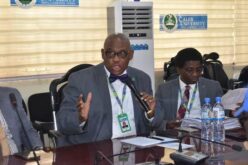
When Governor AbdulRahman AbdulRazaq of Kwara, the chairman of the Nigeria Governors’ Forum (NGF), in May urged President Bola Ahmed Tinubu to begin discussions on raising Nigeria’s minimum wage from N70,000 to N100,000, the proposal quickly reopened conversations about workers’ welfare.
Yet, for many economists, the debate extends beyond how much workers should earn. They argue that unless Nigeria tackles inflation, improves productivity and addresses the reality that over 90 percent of its workforce is employed informally, higher minimum wages may have only a limited impact on the country’s widening cost-of-living crisis.
The renewed conversation reflects an uncomfortable reality. The 133 percent increase approved in 2024, after months of negotiations between the Federal Government, labour unions and the organised private sector, has been overtaken by inflation, rising rents, expensive transportation and persistently high food prices.
In Lagos, where housing costs rank among the highest in Africa, the state government acknowledged this reality by fixing its minimum wage at N85,000, arguing that the national benchmark could hardly meet the cost of basic survival. Rivers and Imo also pay above the national minimum, while several states, particularly in northern Nigeria, are yet to fully implement even the existing N70,000 wage, citing revenue constraints.
“I urge Your Excellency, let’s have a discussion on moving the minimum wage to a minimum of N100,000,” AbdulRazaq said during an NGF meeting with President Bola Ahmed Tinubu in Lagos.
Labour unions, however, argue that N100,000 would still leave workers struggling. The Nigeria Labour Congress (NLC) insists that even the proposed increase “falls far below the realistic figure,” with labour leaders floating a minimum wage of N1million.
But economists say the debate may be asking the wrong question. For many analysts, the issue is no longer simply how much workers earn. It is whether the economy allows whatever they earn to translate into a decent standard of living.
Nigeria’s two economies
The minimum wage debate often assumes that most Nigerians are salary earners whose incomes are determined by government policy. In reality, the overwhelming majority of workers fall outside that framework.
Nigeria operates two parallel labour markets. One is the formal economy, where salaries are regulated, taxes are deducted, pensions are paid and labour laws, including minimum wage legislation, can be enforced.
The second is the informal economy, where millions survive through petty trading, farming, transport services, artisan work, domestic services and countless small businesses. Earnings fluctuate daily and government wage policies rarely have any direct effect.
The National Bureau of Statistics’ Labour Force Survey found that 92.93 percent of employed Nigerians worked in the informal economy in 2023. The Nigerian Economic Summit Group (NESG) reached almost the same conclusion in its 2025 report, From Hustle to Decent Work, estimating that 93 percent of Nigerian workers operate outside the formal economy.
Any increase in the national minimum wage directly affects only a small fraction of the workforce.
“A workforce that is 93 percent informal means minimum wage increases benefit relatively few Nigerians,” an economist observed.
Official labour data further illustrates the imbalance. While the public sector accounts for 25.6 percent of formal employment, the private sector employs 74.4 percent of workers within the formal economy, making businesses the largest employers expected to absorb higher wage costs.
The inflation dilemma
For workers, a higher minimum wage promises immediate relief. For employers, especially small and medium-sized businesses already struggling with high energy costs, foreign exchange pressures and weak consumer demand, it represents another increase in operating expenses.
Many analysts fear that businesses may simply pass these higher labour costs on to consumers through increased prices.
The result could be another inflationary cycle in which workers receive higher salaries only to find that food, transport, rent and healthcare become even more expensive.
Nigeria has experienced similar episodes before. Wage adjustments have often been followed by price increases that gradually erode the purchasing power the new salaries were meant to provide.
This explains why some economists argue that the conversation should move beyond nominal wages.
Simon Samson, chief economist at ARKK Economics and Data Limited, believes policymakers should prioritise improving purchasing power rather than simply increasing salaries.
“Nominal increases would not give results as long as cost of living continues to skyrocket,” he said.
“Hence, the focus should be on living instead of minimum wages. That way, it would guarantee a decent life for an average Nigerian.”
According to Samson, addressing inflation through the supply side of the economy would produce more lasting results.
“So, to address economic problems in a high inflationary environment, the authorities should address the cost of living through the supply-side of the economy instead of hiking minimum wages. Agriculture, logistics, and core aspects of inflation should be addressed. They should set their sights on purchasing power by increasing production, productivity and growing the economy.”
Why a million-naira minimum wage may still fail
The NLC’s proposal of a N1 million minimum wage may sound ambitious, but some analysts argue that even such a dramatic increase would not automatically solve Nigeria’s cost-of-living crisis.
The reason is straightforward. If production remains weak while wages rise sharply, businesses would likely increase prices to stay afloat. Inflation would accelerate, weakening the purchasing power of the higher salaries.
For workers outside the formal sector, who make up more than nine out of every 10 employed Nigerians, there would be no wage increase at all. They would simply face higher prices without earning more.
This means that raising the minimum wage alone cannot address widespread poverty in an economy where most workers are self-employed or employed informally.
Beyond wages
Economists increasingly argue that improving workers’ welfare requires policies that extend beyond salary adjustments.
Samson noted that concentrating solely on minimum wage risks excluding the overwhelming majority of Nigerians.
“Yes, focusing on the minimum wage risks overlooking the majority of Nigerians because only a tiny fraction of the population have access to a formal setting where minimum wage laws are enforceable.
“So, complementary policies like formalisation of the informal sector, access to credit irrespective of status of businesses, social safety nets, improved infrastructure would all help lift all Nigerians from despair to a state of hope.”
Formalising businesses would broaden access to finance, improve tax collection and extend labour protections to more workers. Expanded access to affordable credit could help small businesses invest, grow and create better-paying jobs.
Infrastructure improvements, particularly electricity, roads and digital connectivity, could reduce production costs while boosting productivity.
Linking pay to productivity
Another concern is how employers, especially micro, small and medium-sized enterprises (MSMEs), would absorb another wage increase.
MSMEs account for the overwhelming majority of businesses in Nigeria and employ millions of workers. Many already operate on thin margins.
Rather than introducing across-the-board wage increases without corresponding productivity gains, Samson advocates linking higher wages to improved performance.
“To strike a balance between improving workers’ welfare on one hand and causing inflation and job losses amongst MSMEs would require that increased minimum wages be attached to performance, productivity and results.
“That way an employer is not paying more for the same or even less. And if output increases and workers are paid more, the businesses can afford it.”
Such an approach, economists argue, could allow wages to rise alongside productivity, making higher pay more sustainable for businesses while limiting inflationary pressures.
The cost-of-living question
Underlying the minimum wage debate is a broader question: why do Nigerians need significantly higher salaries just to maintain their standard of living?
Food inflation continues to consume a large share of household income. Transport costs remain elevated despite recent moderation in fuel prices. Housing remains out of reach for many urban workers, particularly in cities such as Lagos, where annual rent for modest accommodation can equal several months, or even an entire year’s, earnings for low-income workers.
Analysts therefore, argue that government efforts should focus on reducing the everyday costs that households face.
Among the measures frequently suggested are increasing agricultural production to lower food prices, improving logistics and transport networks to reduce distribution costs, sustaining crude oil sales to the Dangote Refinery in naira to moderate fuel prices, and expanding compressed natural gas (CNG) public transportation programmes already introduced in cities such as Lagos.
If inflation falls and essential goods become cheaper, workers’ purchasing power improves even without dramatic wage increases.
The bigger challenge
Higher wages can improve living standards for formal workers, provided inflation remains under control. But with more than 90 percent of the workforce outside formal employment, wage policy alone cannot transform livelihoods.
The bigger task lies in creating an economy where productivity rises, businesses expand, prices remain stable and more Nigerians transition into decent formal employment.
Until then, every new minimum wage negotiation may provide temporary relief for some workers while leaving the vast majority of Nigerians still searching for something more fundamental than a bigger pay cheque, a cost of living they can actually afford.

Join BusinessDay whatsapp Channel, to stay up to date
Open In Whatsapp