Questions about ethics, credibility and public trust have become central to discussions about journalism as newsrooms respond to digital disruption, artificial intelligence and the rapid spread of misinformation.
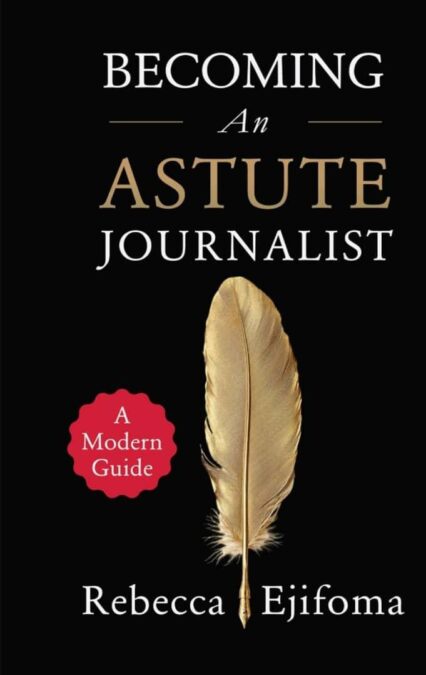
A new publication titled ‘Becoming an Astute Journalist: A Modern Guide’ attempts to contribute to ongoing discussions about journalism education and the changing role of the media in the digital age. The book presents journalism as a profession that requires both technical competence and ethical judgment.
The book written by Rebecca Ejifoma, examines newsroom practice alongside established professional standards and contemporary challenges. The book also places these issues at the centre of a broader discussion on the practice of journalism.
The book is written in straightforward language and follows a structured progression from foundational concepts to specialised topics. Practical exercises, reporting toolkits and case studies are incorporated throughout the text, giving readers opportunities to apply the concepts discussed in each chapter.
As developments in artificial intelligence and digital publishing continue to reshape journalism, some sections dealing with emerging technologies will inevitably require revision over time. The book’s discussion of ethical principles, however, addresses questions that remain central to journalism regardless of technological change.
Viewed primarily through the lens of professional ethics, Becoming an Astute Journalist examines how traditional journalistic principles intersect with the demands of a rapidly changing media landscape. It contributes to the ongoing conversation about the standards, responsibilities and skills expected of journalists in the digital age.
The 197 page publication is arranged into 12 chapters that discuss both the traditional principles of journalism and the realities of contemporary news production. While the book addresses reporting, writing, multimedia journalism and digital skills, its recurring focus is the place of ethics in today’s complex media environment.
Chapter Two, titled ‘Core Values and Ethics’, outlines principles commonly associated with professional journalism, including truth, accuracy, fairness, independence, accountability and transparency. Drawing on recognised ethical frameworks and newsroom practice, the chapter examines how these standards apply to modern reporting, particularly at a time when misinformation, political polarisation and commercial pressures continue to challenge public confidence in the media.
Rather than discussing ethics in the abstract, the book includes practical scenarios and case studies that illustrate the consequences of ethical decisions in reporting. These examples are used to examine issues such as verification, conflicts of interest, responsible sourcing and the balance between the public’s right to know and the potential harm that publication may cause.
Beyond ethics, the publication explores a broad range of subjects including the evolution of journalism, reporting techniques, storytelling, multimedia production, data journalism, audience engagement, entrepreneurship and career development. Together, the chapters reflect the expanding range of skills expected of journalists working in digital newsrooms.
One section that reflects current industry concerns is Chapter Seven, ‘Safety, Security and Well-Being.’ The chapter discusses the risks journalists may encounter while covering protests, disasters, elections and conflict situations. It also considers digital security, online harassment and the psychological demands associated with reporting traumatic events, subjects that have become increasingly prominent in journalism education and newsroom training.
The book also emphasized the relationship between technological innovation and journalistic ethics. It acknowledges the increasing role of digital tools and artificial intelligence in newsrooms. It also argues that developments in technology do not alter the profession’s core responsibilities of accuracy, verification, fairness, independence and accountability.
Similarly, the author discussed these principles in Chapter Two and referenced established ethical frameworks, such as the Society of Professional Journalists’ Code of Ethics and UNESCO’s media development guidelines. The discussion places contemporary reporting practices within widely recognised professional standards and examines how those principles apply to present-day journalism.
Becoming an Astute Journalist also gives attention to journalist safety, mental well-being, and cross-cultural reporting. These subjects are often overlooked in introductory journalism texts, yet they have become important as journalists navigate conflict, online harassment, threats, and the demands of a global information ecosystem. Their inclusion broadens the book’s relevance beyond technical reporting skills.
In addition to discussing professional principles, the book includes practical elements such as reporting toolkits, case studies and newsroom scenarios designed to illustrate how concepts can be applied in practice. The combination of explanatory text and practical exercises makes the book suitable for classroom instruction as well as self-directed learning by early career journalists and seasoned professionals.
The author adopted a straightforward writing and accessible technique, which avoids unnecessary jargon while maintaining sufficient depth for academic and professional audiences. Each chapter builds logically on the previous one, creating a structured learning experience that can easily serve as a university text or a newsroom reference.
Given the pace at which digital technologies continue to develop, sections dealing with artificial intelligence, algorithms and emerging newsroom tools will inevitably require periodic revision to remain current. However, the broader discussions on ethics, reporting standards and public accountability are less dependent on technological change and provide continuity across the book.

Join BusinessDay whatsapp Channel, to stay up to date
Open In Whatsapp