…Says ‘NYSC reforms will promote skills acquisition, provide employment’
Innocent Eleazu, a professor and former president of Nigerian Association of Economists (NAE), has advised the federal government, to withdraw its plan to scrap the 6-3-3-4 system of education policy.
Eleazu said that there was nothing wrong with the basic 6-years primary, 3 years in junior secondary and another 3 years at the senior secondary level.
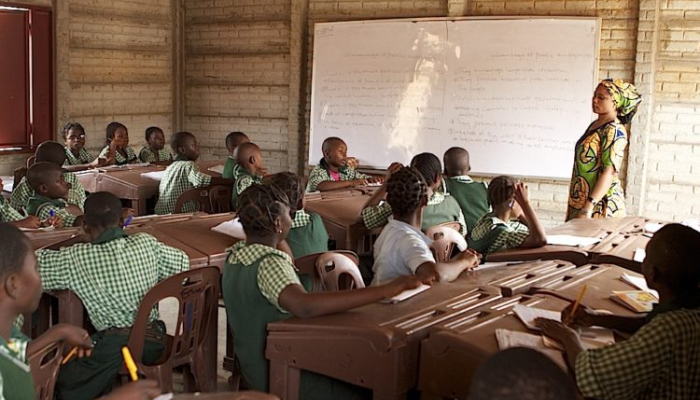
The Federal Government on July 1, 2026, announced plans to abolish the long-standing policy separating junior secondary schools from senior secondary schools after revealing that more than 20 million pupils are dropping out before reaching senior secondary education.
Eleazu argued that while planners of the system made good policy proposals and spent huge public funds in building structures, acquiring equipment, computers and setting up laboratories and workshops in schools, poor management and zero security arrangements with no maintenance policy, led to the stealing and vandalism of the facilities, thereby rendering the system impotent.
Read also: NGO reaffirms commitment to restoring dignity in education system
“I have just read that the President Bola Ahmed Tinubu administration is scrapping 6-3-3-4 education system. They want to replace it with a straight 12-year primary and secondary education system.
“Right now, the problem of primary and post primary education in Nigeria, is not restructuring, it is the provision of better learning environment, laboratory, infrastructure, qualified teachers, among others, as most of the schools are dilapidated and lacks teachers.”
The former lecturer and school proprietor, regretted that Nigeria lacked prioritised economic policies to employ its scarce resources for the overall benefits of reaching the highest use value, blaming policy makers of prioritising politics in place of socio economic wellbeing of the citizens.
He posited that as an emeritus principal and proprietor, versed in secondary education management, he was in a better position to provide quality counseling to the government on the issues at hand, stressing that abandoning the current system was akin to one joining others to make the same mistake twice.
“I was a proprietor of a post-primary institution, a principal emeritus in Imo Sate. Unfortunately, Nigeria doesn’t have a prioritisation policy, an economic policy that prioritises the proper use of the nation’s scarce resources, so that limited resources can reach the highest use value. Our policy makers allow political consideration to override their economic decisions.
“In this circumstance, why should the federal government want to reform the 6-3-3-4 education system now, when it has pressing multiple economic and political problems? I recommend rather that government make provisions for budgetary allocation on how to secure the laboratories, equipment, computers and locations, where these schools and workshops exist instead of bringing in another programme,” he said.
He further spoke on the proposed reforms to reposition the National Youth Service Corps, giving the government a pass mark. He also emphasised that the new concept, when in place, would create enabling environment for the school leavers/corps members to acquire skills and engage in meaningful trades after service without waiting for white collar jobs.
He however, pleaded that the military training aspect of the programme be retained, to instill discipline and ensure good health habits on the corpers.
“I can understand the reform of the NYSC, because it is skill acquisition-oriented. The reform will most likely, increase productivity and employment.
“Let me quickly add that I strongly suggest that the military training aspect should not be scrapped. It should be retained, because it is good for the youth Corps members,” he said.

Join BusinessDay whatsapp Channel, to stay up to date
Open In Whatsapp