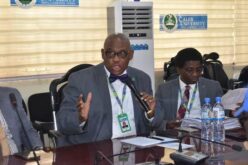
A renowned technocrat, Umar Buba Bindir, has urged students in tertiary institutions to embrace innovation, research and entrepreneurship as tools for tackling poverty and accelerating economic development.
Bindir made the call on Friday while delivering a guest lecture at Sokoto State University (SSU), Sokoto, ahead of the institution’s combined 8th convocation ceremony.
He challenged the widespread perception of Sokoto as Nigeria’s poorest state, describing the label as inconsistent with the state’s abundant human and natural resources.
According to him, the poverty narrative will only change when universities produce graduates who create practical solutions, establish businesses and generate employment, rather than relying solely on academic qualifications.
He encouraged students, researchers and policymakers to identify Sokoto’s comparative advantages through research and transform them into commercially viable ventures capable of boosting the state’s economy.
He highlighted agriculture as one of the state’s greatest opportunities and urged students in agriculture and soil science to conduct research on Sokoto’s soil composition and recommend crops with the highest productivity and market potential.
He stressed that universities around the world have become engines of economic growth by linking research with innovation and industry, adding that Nigerian institutions should adopt a similar approach.
Using the University of Cambridge as an example, Bindir said the institution contributes more than £300 million annually to the United Kingdom’s economy through research, innovation and enterprise, noting that Nigeria possesses even greater resource potential.
He expressed confidence that with sustained investment in research, innovation and entrepreneurship, Sokoto and Nigeria could significantly transform their economic fortunes.
In his remarks, the Vice-Chancellor of Sokoto State University, Prof. Mohammed Bello Yerima, said the institution is strengthening entrepreneurship education to equip graduates with the skills needed to become employers of labour rather than job seekers.
He revealed that the university has submitted proposals to the National Universities Commission (NUC) for the approval of new academic programmes in Artificial Intelligence, Cybersecurity, Entrepreneurship and Engineering as part of efforts to align its curriculum with emerging global demands.

Join BusinessDay whatsapp Channel, to stay up to date
Open In Whatsapp