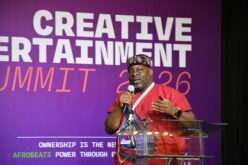
A reformed copyright levy is set to allocate 50 percent of collections directly to rights owners, including artists and labels, under changes completed by a joint ministerial team. Obi Asika, Director-General of the National Council for Arts and Culture, announced the outcome at the Africa Music Business Roundtable 2026, describing it as a key structural win that ensures creators receive earnings they have previously missed, with an additional 20 percent going to the new Creative Infrastructure Trust Company.
Asika said the reform resulted from collaboration with the Minister of Justice and Attorney General of the Federation, the Solicitor General, and the Minister of Arts, Culture, and the Creative Economy. “We are a joint working ministerial team looking at that copyright levy to reform it. We have completed that mission,” he stated. He added that this is the first time such collections have been legislated at this level.
The Creative Infrastructure Trust Company, known as CITco, operates as a special purpose vehicle created from the minister’s office. It functions through a public-private partnership model. “CITco is an SPV, a special purpose vehicle, created from the minister’s office. But again, because we are mindful of public-private partnerships, it’s a PPP,” Asika explained. Funding for CITco will come from sources such as the African Development Bank and Afrexim Bank. The entity stands as a standalone institution that is government-adjacent rather than directly government-operated.
This reform forms part of wider efforts to address revenue gaps in the creative economy. Asika pointed to domestic touring as one of the biggest standout opportunities. He called for support for promoters, who take on the risks involving logistics, insurance, technical requirements, and venues.
Read also: Spotify rolls out conversational AI feature for Premium users
“We have a big base. We have 12,000-plus hotels nationally. All those hotels have halls in them,” Asika said. He noted that Nigeria also has over 600 tertiary institutions with stadiums, student unions, and gyms, along with at least 40 stadiums. Artists can start in small bars and clubs with 100 to 200 people and scale up to larger paid performances as they build their brands.
He highlighted existing talent in the country. “Some of the greatest musicians are sitting in hotel bars around the country playing cover songs every night. And they’ve got incredible voices,” Asika observed. Success, he added, requires artists to develop defined properties and brands that audiences want to connect with.
On the touring business, Asika referenced data showing 13 million tickets sold since 1989. “This is a business. It’s about selling tickets,” he said. He called for more arenas and venues to support growth in live events and sync licensing opportunities.
Collective Management Organisations will see reformed oversight in the new Gazette, with increased use of technology for transparency. This includes dashboards that allow artists and labels to monitor activity without intermediaries. The National Music Business Council will handle ancillary rights, particularly around merchandise and products.
Asika encouraged aggregation of rights to help independent artists negotiate better deals. He pointed to an ongoing partnership with Selar.com. “Registration for the On-Site Informal Economy Partnership with Selar.com, the largest creative platform on the continent,” he noted. The platform already enables podcasters, authors, and creators to sell books, courses, t-shirts, and other items. He wants similar monetisation for the music industry.
Asika also referenced earlier points on intellectual property as collateral under the new framework and the upcoming Discover Nigeria platform, which will work with telcos to reach scale. These initiatives aim to create multiple revenue streams and improve collections.
The combined measures, including the copyright levy reform and infrastructure utilisation, seek to strengthen institutions and reduce the absence of proper systems that allow money to flow out of the sector. Asika stressed the importance of transparency and private sector involvement in operations.
“More arenas, more venues, the sync licensing,” he said, outlining areas for expansion. He added that technology and reformed structures will help artists access what they have earned.
Read also: Insecurity: Kogi deploys CCTV, technology, vigilantes to protect schools from kidnappers
Implementation details for the levy and CITco will be communicated officially in the coming weeks by the Nigerian Copyright Commission. Industry participants see these changes as important steps toward building a more sustainable creative economy in Nigeria, where live performances, merchandising, and ancillary rights complement digital revenue.
The focus on domestic touring leverages assets the country already possesses rather than waiting for new infrastructure. With promoters supported and rights management improved, the sector could see increased economic impact through ticket sales, direct payments to creators, and new product lines.

Join BusinessDay whatsapp Channel, to stay up to date
Open In Whatsapp