Thousands of songs are uploaded daily by Nigerian artists with little metadata or management support, but a new government-enabled national Digital Service Provider called ‘Discover Nigeria’ hopes to change that.
Set to launch in August, the platform, described by Obi Asika, director-general of the National Council for Arts and Culture, as a creator-first service rather than just a music platform, will focus on discoverability, branding, and professionalising the flood of content entering the digital ecosystem.
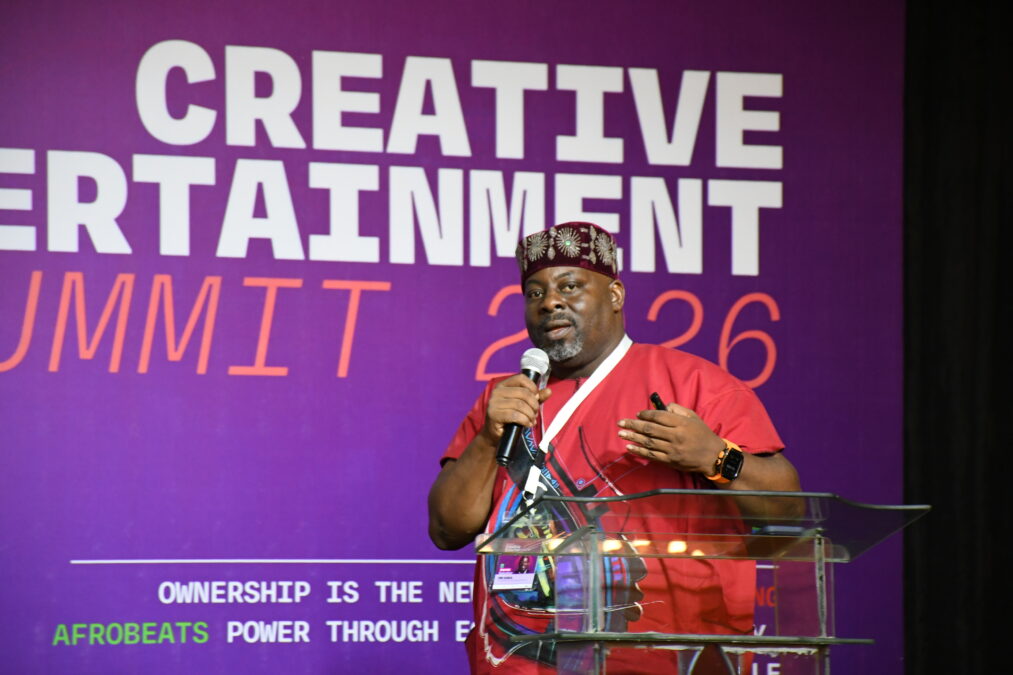
Obi Asika made these remarks during his keynote address at the Africa Music Business Roundtable 2026. He positioned Discover Nigeria as part of broader efforts to address structural gaps in Nigeria’s creative economy.
“The question is, how do we look at it in terms of mindset? If you see the point we made at the bottom, the fight for value is a fight against absence. Absence of metadata, of collection infrastructure, of institutions. Because of the absence, the money flows,” Asika said.
He noted that South Africa collects about six times more in music revenue than Nigeria despite having a much smaller market. This disparity exists because South Africa possesses better structure, institutions, and transparency.
Asika identified several revenue lines that require attention. These include publishing, which covers sync licensing for film, television, and commercials, mechanical rights, and performance rights. He observed that sync licensing sees very little activity in Nigeria. Ringtone revenue, once dominant 10 to 15 years ago, has declined, while Collective Management Organisations continue to face long-standing collection challenges.
One area that remains largely untouched holds significant potential. “There is an area that we really haven’t touched at all, which I think is a big conversation: merch, products, toys, and digital goods,” Asika stated. He pointed to the success of Selar.com as evidence of what structured platforms can achieve.
Selar.com operates as a marketplace for Nigerian and African creators across about 11 countries. Asika said the platform paid out close to 25 billion naira to creators in 2025. “For me, we’re always looking to partner strategically. When I say ‘we,’ I’m talking from the government perspective, as the sector, but we want to partner strategically with private sector players who can really help drive scale,” he added.
He emphasised that the Afrobeats economy has generated substantial intellectual property, yet opportunities in toys, products, games, and related merchandise remain undeveloped. “This does not mean it cannot happen. It just means that we have not yet entered that space. And typically, in the entertainment industry, that is a big multiplier in terms of revenue,” Asika explained.
A major policy development aims to change how creators access capital. Nigeria approved a new intellectual property framework in 2025 through the Federal Executive Council. The framework, developed jointly by the Ministry of Trade and Investment and the Ministry of Arts, Culture, Tourism, and the Creative Economy, will allow valuable IP such as music catalogs and content to serve as collateral for financing.
Asika highlighted the economic weight of intellectual property by referencing remarks from Michael Nash, Chief Digital Officer of Universal Music Group, whom he met at the World Intellectual Property Organisation annual meeting. “When you look at the U.S. economy, 41 percent of the U.S. economy is driven by the IP industries,” Asika quoted Nash as saying. He connected this to California’s economy, driven by agriculture, Silicon Valley innovation, and Hollywood entertainment.
In Nigeria, the new framework will enable banks to finance ideas using IP as security once implementation reaches the Bankers Committee. Asika contrasted this with past practices. He recalled telling John Legend during the WIPO panel that Nigerian creators have historically been asked to provide family members as collateral. “The unfortunate truth is that in Nigeria, they’ve asked you to bring your grandmother as collateral,” Asika said.
The Nigerian Copyright Commission will implement the framework across sectors. Asika stressed that government’s role remains that of an enabler. “I am not a believer that government can operate anything. I think the private sector always has to operate. Government can help, it can enable, it can direct, but it cannot operate businesses efficiently,” he said.
Discover Nigeria forms part of this enabling approach. Nigerian artists upload between 5,000 and 10,000 songs online every day, most without budgets, management, or proper track registration and metadata. The platform will help address these issues and extend beyond music to support creators through playlists and branding.
Asika’s address underscored the need for transparency and infrastructure to capture value in the creative sector. Partnerships with platforms such as Selar.com and initiatives like Discover Nigeria represent steps toward scaling operations and improving collections. The combination of policy reform on IP financing and practical digital tools aims to strengthen Nigeria’s position in the African creative economy.
Industry observers during the event note that success will depend on effective implementation of the IP framework and collaboration between public institutions and private operators. With Afrobeats gaining global attention, addressing metadata gaps, collection systems, and new revenue streams such as merchandising could significantly increase the sector’s contribution to the national economy.

Join BusinessDay whatsapp Channel, to stay up to date
Open In Whatsapp