

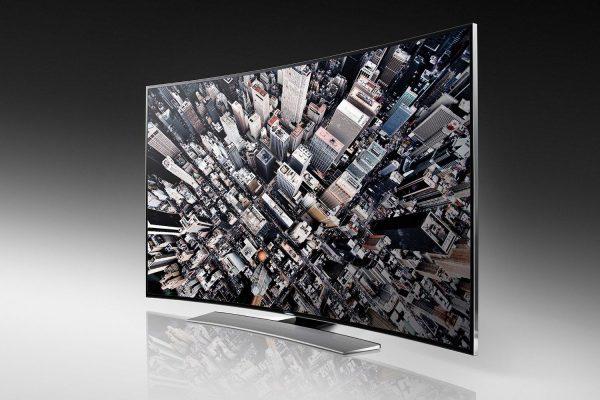
First 3D, now bendy screens. Technologies that turned out to be unwanted gimmicks rather than consumer crazes are being abandoned by leading TV makers, with sales of curved screens beginning to flatten, just three years after they were launched at the Consumer Electronics Show.
Instead, manufacturers are looking at cheaper and more conventional ways of improving picture quality to lure TV buyers – from 4K ultra-high-definition to new “HDR” sets, for “high dynamic range”, which promise more rich and vibrant pictures.
Four years ago, Samsung and LG both unveiled prototypes at CES of what they claimed were the “world’s first” curved televisions, successors to the flat panels that replaced bulky cathode ray tube sets. When they went on general sale in 2014 the two market leaders promised that concave screens would make movies more immersive, bringing the flavour of Imax cinemas to the home.
Consumers, however, never saw the benefits – if there were any – of a bent screen. Market researchers IHS Markit Technology say curved screens made up just 4 per cent of total TV sales globally in the third quarter of 2016.
At this week’s CES in Las Vegas, LG has already given up on the technology entirely, removing curved screens from its 2017 TV line-up in favour of slimmer sets with sharper pictures.
Samsung is also stepping back from earlier efforts to force the technology on high-end customers, giving the option of both flat and curved sets in its premium range, after offering only curved in that category a couple of years ago.
“Curved when it first came out was very unique and different,” said Tim Alessi, LG’s senior director of home entertainment. “But when we looked at the overall demand, there wasn’t a huge outcry for curved . . . It really didn’t do anything to enhance picture quality.”
Both companies, which together make up about a third of the global TV market, have also dropped 3D from their ranges, with LG removing the last models from sale this year.
These abrupt technology shifts highlight the risks inherent in the cut-throat TV market, where any innovation that might squeeze out some extra profit is seized upon faster than consumers can even understand the latest acronym.
“TV margins are terrible,” said Paul Gagnon, at IHS Markit. “So [manufacturers] basically throw a bunch of stuff at the wall to see if something will stick.”

Join BusinessDay whatsapp Channel, to stay up to date
Open In Whatsapp


