

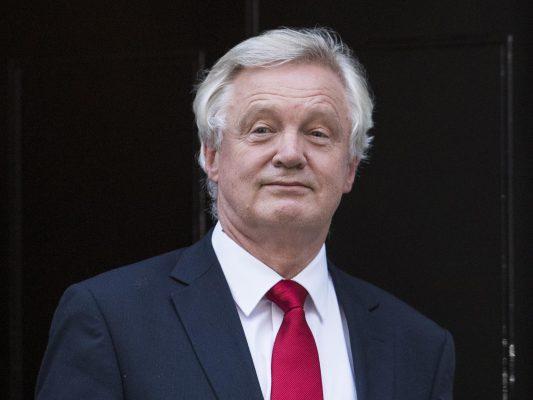
The government has acknowledged it is willing to pay Brussels for maintaining access to Europe’s single market, opening the door for the first time to British contributions to the EU budget for years after Brexit.
Both David Davis, the Brexit secretary and a proponent of EU divorce, and Philip Hammond, the chancellor, who campaigned to remain, conceded a trade deal that exchanged EU budget payments for remaining inside the common market – a financial arrangement similar to Norway and Switzerland – was an option under consideration.
“The major criteria here is that we get the best possible access for goods and services to the European market,” Mr Davis told the House of Commons. Mr Hammond later said that Mr Davis was “absolutely right” not to rule out “the possibility that we might want to contribute in some way to some form of mechanism”.
Until now, senior ministers have refused to say whether they would seek to remain in the single market as part of negotiations with the EU’s other 27 members. Some Brexiters, including in the Cabinet, have urged a “hard Brexit” that would cut ties completely.
EU leaders have warned Downing Street that staying inside the common market would require Britain to accept free movement of labour, a red line for many Brexiters in government.
The UK is one of the biggest contributors to the EU, paying about £8bn net every year. Norway paid €306m in 2014, rising to €550m in 2020. In net terms, it is similar to the UK’s current payments, according to estimates by Zsolt Darvas of the Bruegel think-tank.
As a percentage of national income, Norway contributes 0.16 per cent, compared to Britain’s 0.25 per cent. On a per capita basis, Britain currently pays €79 per person, a figure significantly lower than Norway’s €115 contribution.
The stance is likely to anger Eurosceptics who believe Britain has the clout to negotiate a deal that would not involve payments to Brussels beyond 2020, when the current EU budget expires.
But Steve Baker, who chairs the pro-Brexit European Research Group of Conservative MPs, said: “Paying for market access would not be free trade but the government is right not to speculatively rule ideas in or out, however left-field those ideas may be.”
During the referendum campaign, Vote Leave said taxpayers gave £350m a week to the bloc and suggested that cash could be spent domestically after Brexit.
Downing Street said yesterday that the government wanted the “best possible access” to the European market for British businesses. “What [Mr Davis] said in the House this morning is consistent with what we have said to date: it will be for the UK government to make decisions on how taxpayers’ money will be spent.”
Additional reporting by Alex Barker in Brussels.

Join BusinessDay whatsapp Channel, to stay up to date
Open In Whatsapp


