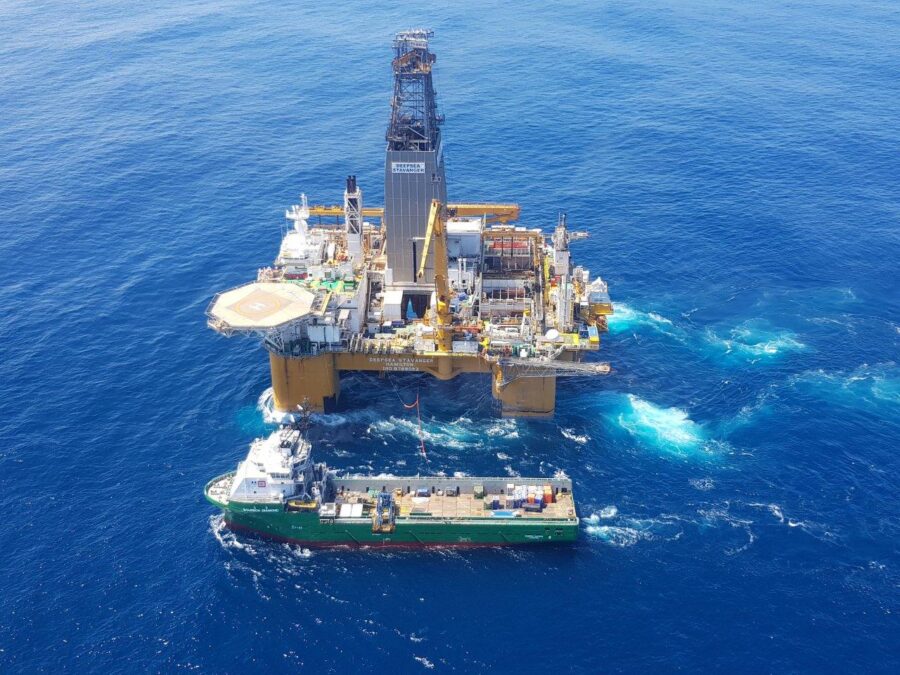
Canada’s Meren Energy has accelerated drilling activity at two Chevron-operated offshore Nigeria oil fields, moving the work forward by roughly six months as international operators scramble to arrest a steep decline in deepwater production.
Appraisal and infill drilling at the Ikija and Agbami fields will now begin in the fourth quarter of this year, Meren said, pulling the campaign forward from its previously scheduled start in the first quarter of 2027. The company holds an 8 percent stake in both the undeveloped Ikija prospect and the producing Agbami field.
The acceleration comes as Nigeria’s deepwater sector grapples with a prolonged output slump. Combined production from the seven deepwater leases operated by international oil companies fell to 352,000 barrels per day in the first four months of 2026, a decline of 20 percent on the year, according to data from upstream regulator Nigerian Upstream Petroleum Regulatory Commission.
That compares with 704,000 bpd in the first half of 2020, when the regulator began publishing the figures, a collapse of roughly half in under six years.
Agbami’s own output has felt the pressure. Production of the ultra-light crude, which Argus Media classifies as crude but Nigerian authorities designate as condensate, averaged 63,000 bpd in January through April, down 20 percent from a year earlier.
Meren attributed part of the shortfall to maintenance work on the field’s floating production, storage and offloading vessel carried out in November and December, saying output had “yet to recover” from that work.
The drilling campaign is set to open with an appraisal well at Ikija, an undeveloped discovery that Meren has previously said could see first oil in 2032, developed as a subsea tie-back to the existing Agbami FPSO. Beyond Ikija, the broader infill program targeting Agbami itself remains on schedule, with six infill wells planned across 2027 and 2028, Meren said.
Read also: Venezuela-BP gas deal signals LNG-led comeback amid global demand surge
Infill drilling, targeting bypassed or undrained pockets of a reservoir, has emerged as the favoured instrument for international operators seeking to reverse Nigeria’s offshore production slide without committing to the longer timelines and heavier capital outlays associated with greenfield development.
Meren’s portfolio extends well beyond the Chevron-operated assets. The company holds a 32 percent interest in a cluster of TotalEnergies-operated fields, Akpo, Akpo Far East, Akpo South, Egina and Preowei, and said TotalEnergies remains on track to mobilise a rig for a major drilling campaign in the second half of this year, beginning with the Akpo Far East exploration well.
Akpo Far East is estimated to contain around 144 million barrels of oil equivalent, with the target liquids comparable in quality to the condensate already being produced from Akpo. A commercial discovery would be developed using existing infrastructure tied to the Akpo FPSO, potentially limiting development costs and accelerating the path to production.
TotalEnergies paused infill drilling at Akpo and Egina in the third quarter of 2025 to review seismic data. That work has now concluded, and the company plans to restart drilling at both fields. Meren said production additions from the infill program are expected to come onstream from early 2027, with well intervention work at the fields providing a near-term production boost this year.
The numbers underscore the urgency. Akpo condensate production averaged around 46,000 bpd in the first four months of 2026, an 18 percent year-on-year decline, while Egina crude output averaged approximately 51,000 bpd, off 25 percent. Meren added that an appraisal well at Egina South is also planned for this year.


Join BusinessDay whatsapp Channel, to stay up to date
Open In Whatsapp