…launches new payment plan of N729 bn bond
The Federal Government said it has disbursed N333 billion to eight electricity Generation Companies (GenCos) operating 17 power plants, completing the initial tranche of its power sector debt settlement programme.
The government has also launched the second tranche of a bond valued at about N729 billion for the settlement of verified legacy debts owed to Gencos.
This payout also aims to boost operational capacity, marks a significant step toward relieving severe illiquidity across the electricity value chain and restoring investor confidence in the domestic power market.
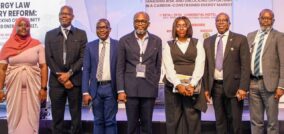
Olu Verheijen, Special Adviser to the President on energy stated this at the Nigerian Bulk Electricity Trading Finance Company Plc Series II Bond Issue Investors’ Forum held in Abuja on Tuesday.
According to her, President Bola Tinubu’s administration has demonstrated its commitment to making a clean break from the fiscal dysfunction that once defined Nigeria’s power sector, adding that through bold policy decisions and disciplined execution, the government is converting an unsustainable liability into a bankable, well-governed investment opportunity that the market can trust.
Read also:Africa overtakes Asia in hunger levels, 309m face food shortages – Report
“We are converting yesterday’s liabilities into today’s liquidity and tomorrow’s investment capacity. That liquidity, if sustained, will strengthen the entire electricity value chain, improve operational performance, and restore confidence across the sector. That is precisely what the Presidential Power Sector Financial Reforms Program was established to achieve under the renewed hope agenda.
“Markets do not reward promises, they reward performance and that is why we deliberately chose execution before expansion. Series 1 delivered on its promise, in February 2026, the federal government deployed approximately N501 billion, N300 billion in cash and N201 billion through non-cash-bond instruments, addressing approximately 22 per cent of the settlement obligations under executed settlement agreements, with the balance to be covered through Series 2 and subsequent issuances.
“To date, N333 billion has been settled to eight participating generation companies, covering 17 power plants, and they have executed those participation agreements. We have met our obligations on schedule. Thank you to DG DMO. The first Series 1 coupon, was paid in full on 14 July 2026,” she said.
She argued that the prompt payment had strengthened investor confidence in the government’s commitment to reforming the electricity market.
According to Verheijen, participating generation companies are now meeting their gas obligations, while lenders, operation and maintenance contracts that had previously gone unmet are now being met.
She said, “In sovereign finance, trust compounds just as powerfully as interest does. Governments that expect private capital to invest must also demonstrate their own commitment and that those commitments will be honoured. That is exactly what this programme has done.
“Bankability doesn’t begin in financial markets. It begins with governments that honour their contracts, that meet their obligations, that create predictable rules. Capital follows credibility.”
Speaking further, Verheijen noted that the second issuance would extend the settlement of verified legacy debts while strengthening the financial foundation of the electricity industry.
She explained that while the first series has proved the model, the second series is going to scale it. This issuance she said, extends the settlement of verified legacy obligations and deepens liquidity through the electricity value chain.
“By participating, you are not simply purchasing a financial instrument. You are investing in a reform programme that is designed to restore payment discipline, strengthen cash flows, crowd in private capital, and accelerate Nigeria’s economic transformation,” Verheijen added.
In his remarks, Johnson Akinnawo, Acting Managing Director and Chief Executive Officer of the Nigerian Bulk Electricity Trading Plc explained that the success of Series I had demonstrated that Nigerian power sector debt instruments could attract investor confidence.
He recalled that the first issuance was presented as a test of whether legacy debts in the power sector could be resolved through transparent capital market instruments.
Akinnawo said, “When we came to the market with Series I, we did not present it as a routine capital raise. We presented it as a test of a proposition: that Nigerian legacy power sector debt, the kind that has sat on generation company books for years, distorting investment decisions and starving the sector of confidence, could be resolved through disciplined, transparent capital market instruments rather than endless promises.”
“You answered that call. The N501billion answered that call. And we met the promises. When the coupon and principal repayments fell due on July 14, we met the promises. The Federal Government of Nigeria ensured that the coupon and principal repayments were made on time.”
“It is in that spirit that we welcome you to Series, sized at approximately N729 billion, carries the same discipline, the same rigor, and frankly, the same humility that Series 1 bore.” he added.
Also speaking, Joseph Tegbe, Minister of Power said that resolving the liquidity crisis in the electricity market was critical to achieving reliable power supply and sustainable economic growth.
According to him, the debt reduction programme is not merely a financing transaction but a key economic reform designed to restore the commercial viability of Nigeria’s electricity market.
He urged pension funds, insurance firms, banks and other institutional investors to support the bond programme, describing it as an opportunity to partner with the Federal Government in transforming Africa’s largest electricity market.
Read also: FG rolls out consumer credit scheme for laptops, internet-enabled devices
“Our destination is clear: a financially sustainable, investment-led electricity market that powers Nigeria’s industrial renaissance. Therefore, I encourage you to see this offering beyond a mere fixed-income instrument. It should be viewed as an opportunity to partner with the Federal Government in writing the next chapter of our economic story”, he added.

Join BusinessDay whatsapp Channel, to stay up to date
Open In Whatsapp