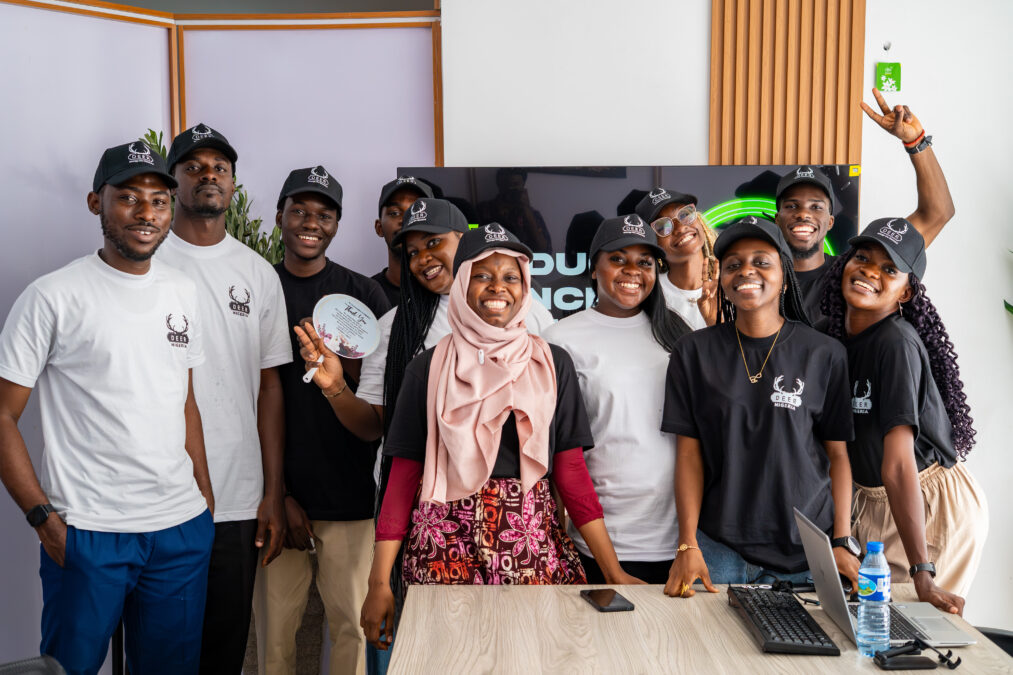
DEER Nigeria launches today into one of the most volatile energy markets in the continent’s history with an AI platform, a loyalty programme, and a bet that digital infrastructure can do what informal supply chains have never managed: make energy reliable for everyday Nigerians
In October 2025, a supply chain disruption briefly pushed cooking gas to ₦3,000 per kilogram in parts of Lagos. Households switched to kerosene. Restaurants and food vendors absorbed losses or passed them on. Within weeks, prices fell again, but the lesson stuck. In Nigeria, energy is not just expensive. It is unpredictable in a way that makes planning almost impossible.
Seven months later, the market is in the middle of another squeeze. The 12.5kg cooking gas cylinder that most Lagos households depend on has climbed to ₦18,750 this week, up from ₦16,250 in April. Only three major depots, Dangote, Ardova, and Navgas, currently hold commercial volumes.
Diesel prices have risen with global crude following the Middle East conflict that escalated in March. And Nigeria’s national grid, which has never supplied more than a fraction of Lagos’s electricity needs, contributed to a 25% drop in gas-to-power supply in Q1 2026 as producers diverted increasing output to export markets.
Today, into this market, DEER Nigeria V3 launches.
“In Nigeria, energy isn’t just a commodity; it is the heartbeat of survival for every small business and household.”
— Abdulmajeed Amussah, Founder & CEO, DEER Nigeria
The problem is not supply
The first thing Abdulmajeed Amussah, DEER Nigeria’s founder and CEO, wants people to understand about his platform is what it is not trying to fix. “Nigeria produces enough gas,” he said at the company’s physical launch event held in its Abuja office. “The problem is the last mile. Getting it to the right household at the right time, reliably, predictably, at a transparent price; that is what has never worked.”
The numbers support the diagnosis. Nigeria produces approximately 4.832 billion standard cubic feet of gas per day. The Nigerian Midstream and Downstream Petroleum Regulatory Authority estimates that domestic LPG production covers 87% of national demand. Diesel flows through the country in significant volumes. Electricity tokens can be purchased on any smartphone. The supply, in aggregate, is there.
What is missing is the system for accessing it. The average Lagos household orders cooking gas through an informal vendor; a phone number saved under ‘gas man’, responsive on weekdays, unpredictable on Sundays, with pricing that varies by his mood and the week’s market conditions. Diesel is sourced through a similar network. Electricity tokens are bought reactively, when the meter beeps, often at the worst possible time. There is no visibility, no consistency, and no mechanism for getting ahead of the problem before it becomes a crisis.
DEER’s platform is built around the proposition that this is a technology problem with a technology solution. Its V3 AI engine monitors each user’s consumption patterns across energy types (cooking gas, diesel, electricity tokens, solar) and predicts when they will run out. It then surfaces a restocking prompt before the disruption occurs. The user orders. DEER handles the rest.

What the platform actually costs, and what it saves
The commercial structure of DEER’s platform is built around repeat transactions rather than premium pricing. The company is not betting that Lagos households will pay more for convenience; it is betting that they will pay the market rate for reliability, and that keeping them on the platform through a loyalty programme is worth more than a per-transaction margin.
The loyalty architecture is specific: one point per ₦100 spent, redeemable as credit. A 5% instant credit is applied to every wallet top-up, with bonus credits drawn from the user’s cash balance in a dual-wallet structure. For a household spending ₦50,000 per month on energy, the wallet top-up credit alone returns approximately ₦30,000 per year.
₦18,750 Pulse Nigeria, May 13, 2026
Current cost of a 12.5kg cooking gas cylinder in Lagos (May 2026), up 15.3% from ₦16,250 in April
DEER’s subsidiary, Fuelonomics Hydrocarbons Innovations Limited, adds a dimension that no pure-play delivery app can offer: as an authorised Nigerian distributor of SulNoxEco™ fuel efficiency products, DEER can help businesses and households reduce their diesel consumption, not just order it more conveniently. For an SME running a diesel generator 8 to 10 hours a day, that conversation has real economic stakes.
A market in transition, and what that means for a new entrant
DEER is launching at a moment when Lagos’s and Nigeria’s energy markets are undergoing structural changes that simultaneously create opportunity and risk for a new platform.
The Lagos State Electricity Regulatory Commission (LASERC), established under the Lagos State Electricity Law 2024, is actively licensing independent power producers and mini-grid operators as part of the state’s move toward a decentralised electricity market. The first state-licensed plants are expected to begin operations between 2026 and 2027. Governor Babajide Sanwo-Olu has said reliable electricity could double Lagos’s economic output over time. The direction of travel is toward more distributed, more digital, more market-driven energy infrastructure.
DEER is positioned to grow within that transition. Its current platform handles the commodities that dominate Lagos’s energy market today. Its solar solutions offering is the earliest expression of where it wants to be as the grid expands and off-grid alternatives become more commercially viable.
The risk is the same one facing every consumer platform trying to displace an informal market: trust takes time to build, and the informal vendors that most households currently rely on have one significant advantage: they are already there. Changing that habit requires not just a better product, but a reliable one. The first time DEER fails to deliver when a household’s gas has run out, the user returns to the phone number listed under ‘gas man’ and does not come back.
“Our mission is to bridge the gap between the energy Nigeria uses today and the clean power it needs for tomorrow. DEER is the bridge that makes the transition to sustainable energy both affordable and inevitable.”
— Abdulmajeed Amussah, Founder & CEO, DEER Nigeria
Amussah’s answer to that risk is transparency. “The greatest barrier to Nigeria’s energy transition isn’t just infrastructure; it’s trust,” he said. “By building a digital marketplace that guarantees transparent pricing, verified quality, and reliable delivery, we are removing the anxiety from energy procurement.”
It is the right answer. Whether the execution lives up to it will be determined in the next six months.
DEER Nigeria is available today at deernigeria.com. The company is targeting 2,000 cumulative users by the end of June.
Stay ahead of Nigeria’s energy market
DEER Nigeria publishes the DEER Energy Report — a free newsletter covering energy prices, market movements, and practical guidance for Nigerian households and businesses managing energy costs.
Subscribe free: company.deernigeria.com/energy-report
DATA SOURCES
· National Bureau of Statistics (NBS) — LPG Price Watch, March 2026
· Pulse Nigeria — Cooking gas price surge, May 13, 2026
· NewsScroll Nigeria — Q1 2026 Energy Market Analysis
· Lagos Economic Development Update, 2025
· Nigerian Midstream and Downstream Petroleum Regulatory Authority (NMDPRA)
· Lagos State Electricity Regulatory Commission (LASERC) — Licensing updates, 2026
· GlobalPetrolPrices.com — Nigeria Diesel, May 2026
· SEforALL — Beyond Gensets: Lagos State Energy Transition, 2024

Join BusinessDay whatsapp Channel, to stay up to date
Open In Whatsapp