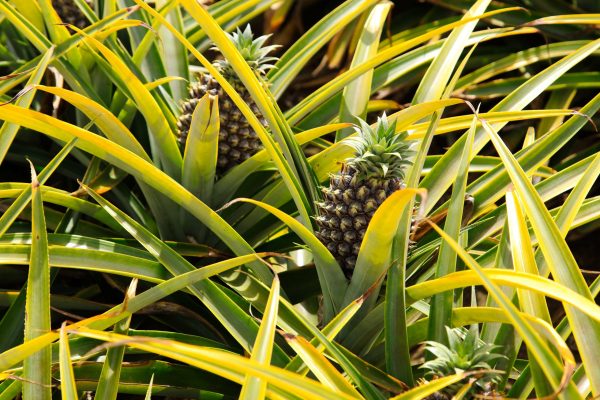
At the edge of a farm in southern Benin Republic, a pile of pineapples sits under the late afternoon sun, their rough skins glowing gold-green, their sweetness already beginning to turn.
They are ripe. Too ripe. By morning, many will be unsellable.
The farmer, a man in his forties who has spent years cultivating this crop, does not look surprised. This is the rhythm he knows: harvest, rush to market, sell what you can, lose what you cannot. There is no cold storage nearby, no processing facility within reach, no buyer waiting beyond the local traders who dictate prices with quiet certainty.
“It happens every season,” Thierry says. What he does not say – but what is visible in the fruit slowly collapsing into itself – is that this is not just waste. It is value, slipping away.
Pineapple production in Africa
Africa produces millions of tonnes of pineapples every year, with countries like Nigeria, Ghana, Benin and Kenya forming a broad belt of cultivation. Yet, like much of the continent’s agriculture, the story is less about what is grown and more about what happens after.
Globally, the pineapple market is worth over $28 billion, with processed products – juices, canned fruit, dried slices – accounting for a significant share of that value. Africa’s role in that higher-margin segment remains limited. The imbalance is stark. Raw fruit travels cheaply. Processed goods travel profitably.
In Ghana’s Central Region, the contrast is sharper. At a processing facility not far from Accra, pineapples arrive not as a problem to be sold quickly, but as input to be transformed.
Conveyor belts carry peeled fruit into slicing machines. Juice is extracted, filtered, and packaged. Some are dried into export-ready snacks, their sweetness concentrated, their shelf life extended.
Here, time behaves differently. A pineapple that would spoil in days can now last months. A fruit that might sell for a modest price at a local market can, once processed, generate five to ten times more value, depending on the product and destination.
This is not a marginal gain. It is a structural shift.
“Value is not in the fruit,” says an agribusiness investor in Accra. “It is in what you do to the fruit.” Across Africa, that realisation is beginning to take hold.
In Nigeria, where pineapple production is significant but largely informal, there is growing interest in plantation management and small-scale processing. In Benin, the prized Sugarloaf pineapple – known for its low acidity and high sweetness – is finding new markets, including China, where demand for premium fruit is rising. Reports indicate export volumes of specialty pineapples into Asian markets reaching hundreds of thousands of tonnes annually, driven by favourable trade arrangements and shifting consumer tastes.
In Uganda, development programmes are training farmers in organic cultivation, positioning them for niche export markets where certification commands higher prices.
Each example points to the same idea: the future of agriculture lies not in production alone, but in transformation.
Pineapple processing in Africa
The mechanics of that transformation are surprisingly accessible. Solar drying, for instance, requires relatively low capital investment. Farmers can slice pineapples and dry them using solar-powered systems, extending shelf life and enabling entry into higher-value markets. What was once perishable becomes portable.
Processing facilities, though more capital-intensive, create a different kind of leverage. They aggregate supply, stabilise demand and anchor jobs in rural areas. A single medium-scale plant can employ dozens directly and support hundreds of farmers indirectly.
Even waste has begun to find purpose. Pineapple peels and residues, once discarded, are increasingly being converted into organic fertiliser or animal feed. In some operations, waste streams are integrated back into production, reducing input costs and improving sustainability.
Nothing is lost. Or at least, less is. Yet, for all its promise, the pineapple value chain remains constrained by familiar limits.
Infrastructure is the most immediate. Roads from farms to processing centres are often unreliable, increasing spoilage during transport. Cold storage facilities are scarce. Power supply – essential for consistent processing – is uneven.
Finance is another barrier. Smallholder farmers, who produce the bulk of Africa’s pineapples, often lack access to credit. Without financing, they cannot invest in better inputs, irrigation or post-harvest handling. For processors, capital costs remain high, limiting expansion.
Then there is the question of standards. Global markets demand consistency – in quality, in packaging, in certification. Meeting those standards requires training, systems and oversight, all of which take time to build.
Back on the farm in Benin Republic, the sun has begun to dip. The pile of pineapples is smaller now. Some have been sold. Many remain.
It is here, at this point between harvest and loss, that the entire argument for value addition becomes visible.
What if these fruits did not have to be sold immediately?
What if they could be dried, juiced, canned?
What if the farmer could decide when – and where – to sell?
These are not abstract questions. They are the difference between subsistence and scale.
The broader economic implications are significant. Processing does more than increase income for farmers. It creates jobs – in factories, in logistics, in packaging. It stimulates investment in rural areas. It reduces the volatility that has long defined agricultural markets.
It also changes trade dynamics. Instead of exporting raw fruit and importing finished products, countries can begin to capture more of the value chain domestically. They can move from price takers to price makers.
For a continent seeking to industrialise, this matters.
Signs of momentum
Governments and private investors are beginning to recognise the opportunity. Specialised export packing centres are being developed to handle fresh produce more efficiently. Training programmes are expanding, focusing on organic farming and high-yield techniques.
But the scale remains insufficient. The gap between potential and reality is still wide.
As night falls in Benin, Thierry gathers what remains of the day’s harvest. Some will be sold tomorrow, at a lower price. Some will not. He shrugs, in the way of someone accustomed to this uncertainty. “It is how it is,” he says.
But it does not have to be. Africa’s pineapple story is not, at its core, about fruit. It is about systems.
About whether the continent can build the infrastructure – physical, financial, institutional – to hold value long enough to transform it.
Because the opportunity is clear. A pineapple is not just a fruit to be eaten. It is raw material for an industry. A unit of potential waiting to be realised.
And in the space between harvest and processing, between abundance and loss, lies one of the clearest expressions of Africa’s economic challenge – and its possibility.

Join BusinessDay whatsapp Channel, to stay up to date
Open In Whatsapp