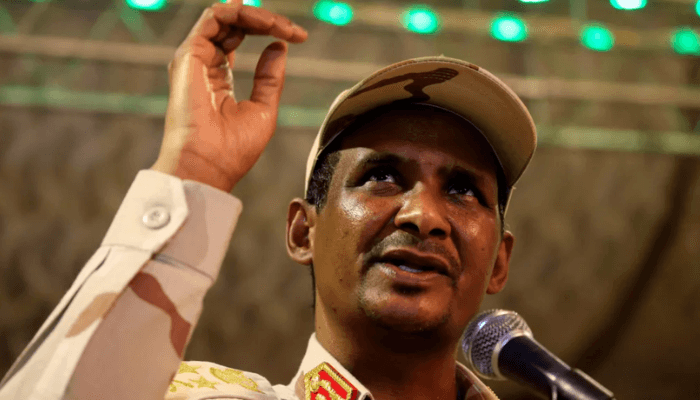
The leader of Sudan’s powerful paramilitary force has ordered an investigation into alleged atrocities committed by his own soldiers during the capture of el-Fasher, days after shocking reports of mass killings in the city drew global outrage.
General Mohamed Hamdan Dagalo, widely known as Hemedti, said his Rapid Support Forces (RSF) would look into what he called “violations” committed during the takeover of the city, which was the army’s last stronghold in Darfur.
“I am sorry for the disaster that has befallen the people of el-Fasher,” Hemedti said in a statement. “There have been violations, and a committee has already arrived in the city to investigate them.”
His remarks came as the United Nations Security Council prepared to hold a meeting on Sudan’s spiralling civil war, now in its third year. The conflict between Hemedti’s RSF and the Sudanese army has pushed the country to the brink of collapse and left millions displaced.
The UN’s health agency said earlier it was “appalled and deeply shocked” by reports that nearly 500 civilians — including hospital patients and their companions — were shot dead at el-Fasher’s Saudi Hospital after the RSF captured the city.
Read also: South Sudan tops list of African countries with highest hunger levels
The RSF has denied the killings were ethnically motivated, rejecting claims that the assault fits a pattern of Arab militias targeting non-Arab communities in Darfur. But survivors, doctors and rights groups have painted a grim picture of what they call a massacre carried out in cold blood.
The Sudan Doctors’ Network described medical facilities in el-Fasher as “human slaughterhouses” and accused RSF fighters of killing patients and abducting health workers. Local activists said six medics were kidnapped, with ransoms of more than $150,000 demanded for their release.
The attack on el-Fasher, which had been under siege for 18 months, marks a turning point in Sudan’s war. The city’s fall effectively splits the country, leaving the RSF in control of most of Darfur and parts of Kordofan, while the army remains entrenched in Khartoum and the eastern regions along the Red Sea.
Read also: Sudan’s Plea for Peace Grows Louder as Citizens Condemn SAF’s Actions
International pressure is also mounting on the United Arab Emirates, which has been accused of supplying weapons and funding to the RSF — allegations it denies despite findings in several UN reports.
Hemedti’s pledge to investigate may be an attempt to defuse that pressure, but few Sudanese trust that his forces will be held accountable.
“What is happening in Darfur is beyond words,” said Jan Egeland, a former senior UN humanitarian official. “It’s the worst place on Earth right now — people are being starved, bombed and massacred, and the world is barely watching.”

Join BusinessDay whatsapp Channel, to stay up to date
Open In Whatsapp