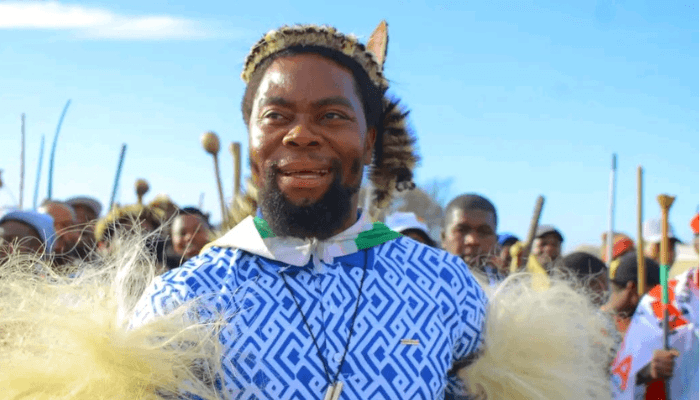
Dressed in traditional Zulu attire and carrying the authority of a cultural figure with a large online following, Nkosikhona Ndabandaba, popularly known as Phakel’uMthakathi, has emerged as one of the most recognisable faces of South Africa’s growing anti immigrant movement.
With a background spanning journalism, traditional leadership and television, Ndabandaba has built a public image around Zulu identity, discipline and cultural revival. But his recent role in campaigns demanding the removal of undocumented migrants has made him one of the country’s most controversial activists.
Read also: Meet Ngizwe Mchunu the former radio star, leading the movement to expel immigrants from South Africa
A widely shared video captured Ndabandaba approaching a man standing by the roadside and asking where he was from. After the man said he was Congolese, Ndabandaba responded: “30 June is the deadline, but it is not that you have to leave on 30 June. Leave now.”
The exchange intensified fears around the planned June 30 demonstrations, particularly after Ndabandaba warned: “On 30 June, I cannot control the people of South Africa.”
Born in Nongoma in KwaZulu Natal in 1980, Ndabandaba was raised in a community deeply rooted in Zulu customs. He studied at the University of South Africa and worked as a journalist for about a decade before becoming a public figure in cultural and entertainment spaces.
Read also: inside-the-myths-realities-shaping-south-africas-xenophobic-crisis
He gained national attention in 2023 when he led Zulu amabutho at the funeral of Prince Mangosuthu Buthelezi, displaying traditional regalia and warrior customs that earned him admiration among supporters.
His cultural work extends beyond public ceremonies. Through the Insizwa Ngobunsizwa Development Foundation, also known as the University of Ubunsizwa, he mentors young boys and teaches traditional values of responsibility, respect and discipline.
“Young boys need to be groomed properly and taught something they can see taught by someone who lives that life of being a real man. We are bringing hope to young boys and protecting them from doing bad things done by irresponsible men,” Ndabandaba said in an interview with Daily Sun.
Read also: south-africa-tightens-grip-on-africas-corporate-elite-as-banks-close-in-on-telecoms
He later moved into acting, portraying Mahlabeni in the historical television drama Shaka iLembe and appearing in other productions, including Smoke and Mirrors.
In 2026, his public profile took a sharper political turn when he joined the March and March Until We Win movement founded by Jacinta Ngobese Zuma. Alongside Ngizwe Mchunu and other activists, he helped lead demonstrations in Durban, Johannesburg and Pretoria calling for tougher action against undocumented migration.
Supporters argue that the movement is highlighting legitimate concerns about border security, crime and government failures. Critics, however, accuse some of its leaders of promoting hostility towards African migrants and creating an atmosphere of fear.
As the June 30 deadline approached, Ndabandaba insisted the campaign was not a call for violence.
Read also:
“We are not suggesting that on June 30 South Africans will demand that foreigners leave. We announced this date months ago because we know they have families, investments and lives here. But they remain in the country illegally,” he said.
He added: “We will be showing the government that we are a peaceful group of people and there will be no looting.”
Whether viewed as a defender of cultural identity and stricter immigration enforcement or a figure whose methods have heightened tensions against migrants, Nkosikhona Ndabandaba has become a powerful and controversial voice in one of South Africa’s most heated national debates.

Join BusinessDay whatsapp Channel, to stay up to date
Open In Whatsapp