


This week, Nigeria strengthened its position in continental capital markets, South Africa secured a landmark sovereign ratings upgrade, private-sector activity weakened across more economies, and investors continued to reposition portfolios amid growing uncertainty.
Together, the developments underscore both the opportunities and challenges facing African economies as they navigate a more volatile global environment.
Here are the stories shaping the week
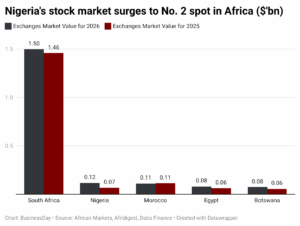
Nigeria overtakes Morocco to become Africa’s second-largest stock market
Nigeria has emerged as Africa’s second-largest stock market, overtaking Morocco after a prolonged rally that has transformed the Nigerian Exchange Limited into one of the continent’s best-performing bourses. Data compiled by Afridigest from African Markets showed the NGX was valued at $117 billion as of May 15, 2026, trailing only South Africa’s Johannesburg Stock Exchange, which remains the continent’s largest market with a capitalization of about $1.5 trillion.
Why it matters: The milestone reflects growing investor confidence in Nigeria’s reform agenda and deepening domestic participation in the equities market. It also strengthens the country’s position as one of Africa’s most important capital-market destinations ahead of major listings, including the planned Dangote Refinery IPO.
South Africa secures first Fitch upgrade in nearly 21 years
South Africa has received its first sovereign credit-rating upgrade from Fitch Ratings in almost 21 years, marking a significant turnaround for Africa’s biggest economy after years of downgrades and fiscal concerns. Fitch raised the country’s long-term foreign and local currency issuer default ratings to BB from BB- while maintaining a stable outlook, citing improving fiscal metrics and ongoing structural reforms.
Why it matters: A ratings upgrade can lower borrowing costs, improve investor sentiment and attract additional capital flows into South Africa. The move also signals growing confidence in the country’s reform programme and economic outlook.
Africa’s wealthy increase property holdings as real estate gains favour
Africa’s ultra-wealthy investors are increasing their exposure to real estate as they seek protection against market volatility and new sources of long-term income, according to a report by Standard Bank Group. The study found growing demand for residential, commercial and mixed-use developments among investors with assets exceeding $50 million, as property increasingly becomes a core component of wealth-preservation strategies.
Why it matters: The trend could drive increased investment into African real estate markets, supporting construction activity, urban development and job creation while reshaping how wealthy Africans allocate capital.
Africa’s business recovery falters as more economies slip into contraction
Africa’s private-sector recovery weakened further in May, with five of eight major economies recording business contractions, up from three in April and two in March. Analysis of Purchasing Managers’ Index (PMI) data by BusinessDay points to mounting pressure from rising fuel costs, inflation, weaker demand and growing geopolitical uncertainty.
Why it matters: The deterioration suggests economic growth may be slowing across several African markets. If sustained, weaker business activity could affect employment, investment and government revenue collections in the months ahead.
Nigeria’s United Capital expands into East Africa with Rwanda, Ethiopia licences
United Capital has deepened its pan-African expansion strategy after securing investment banking licences in Rwanda and Ethiopia, making it the first foreign institution authorised to provide investment banking services in Ethiopia. The approvals allow the group to offer financial advisory, securities brokerage and portfolio management services in two of Africa’s fastest-growing markets.
Why it matters: The move underscores growing investor interest in East Africa and highlights the increasing integration of African capital markets. It also positions United Capital to benefit from the development of Ethiopia’s emerging financial sector and Rwanda’s expanding investment ecosystem.
Chart of the Week

Join BusinessDay whatsapp Channel, to stay up to date
Open In Whatsapp


