Africa enters the second half of 2026 with reform momentum beginning to translate into stronger market signals. Ethiopia is preparing its domestic banks for foreign competition, Ghana is accelerating its debt recovery, Nigeria is drawing fresh foreign investment and several currencies are outperforming despite a turbulent global backdrop.
Here are the stories shaping the week
One year after opening banking sector, Ethiopia boosts local banks before foreign entry
A year after opening its banking sector to foreign investors, Ethiopia is focusing first on strengthening domestic lenders, deepening capital markets and addressing structural weaknesses before international banks begin entering Africa’s second most populous market.
Why it matters: The approach could give Ethiopian banks more time to build capital, improve governance and prepare for competition from global lenders. It also shows that banking liberalisation is likely to be gradual, with the government prioritising financial-system stability over a rapid influx of foreign institutions.
South Africa’s private sector returns to growth as PMI hits two-month high
South Africa’s private sector returned to expansion in June, with the S&P Global PMI rising to a two-month high as easing cost pressures and resilient hiring offset weak demand and continued declines in output and new orders.
Why it matters: The recovery offers a modest sign that business conditions are improving in Africa’s most industrialised economy. However, weak demand and fragile confidence suggest the rebound may remain limited unless inflation continues to ease and borrowing costs begin to fall.
Ghana clears $700m Eurobond payment ahead of schedule as debt recovery gathers pace
Ghana has settled a $700 million Eurobond obligation ahead of schedule, signalling further progress in its effort to restore fiscal credibility and rebuild investor confidence after its debt crisis.
Why it matters: Early repayment strengthens Ghana’s reputation among investors and could support its eventual return to international capital markets. It also demonstrates how disciplined debt management can help countries emerging from restructuring rebuild trust with creditors.
Four African currencies that outperformed in the first half of 2026
The US-Iran conflict rattled African currencies in the first half of 2026, pushing oil prices above $100 a barrel and raising import costs across the continent. Yet a handful of currencies outperformed, supported by reforms, stronger external balances and renewed investor confidence as oil prices retreated following the ceasefire.
Why it matters: Currency performance remains central to inflation, debt sustainability and investor returns across Africa. The strongest performers offer insight into which economies have built buffers against external shocks and which reforms are beginning to gain market credibility.
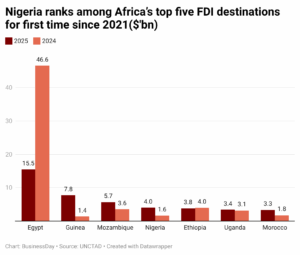
Nigeria returns to Africa’s top five FDI destinations as inflows double to $4bn
Nigeria has returned to Africa’s top five destinations for foreign direct investment after inflows more than doubled to $4.01 billion in 2025, driven largely by international project finance deals in oil and gas.
Why it matters: The rebound signals renewed investor interest in Africa’s most populous nation after years of weak capital inflows and reinforces the importance of energy-sector reforms in attracting foreign investment. The key test will be whether the country can convert oil-led project financing into broader investment across manufacturing, technology, infrastructure and services.
Chart of the Week

Join BusinessDay whatsapp Channel, to stay up to date
Open In Whatsapp