

Unable to access medicines for their animals, some livestock farmers in Lagos and Ogun States are watching helplessly as their animals die one after the other. For some, a few dozens, and for others, hundreds have died and may continue to die until the situation improves because of lockdowns across the country to curb the spread of Coronavirus.
From poultry to pig farmers, some of whom Agribusiness Insight interviewed, the tales of losses are the same, and even when there are no complaints of mortality, they are unable to sell their livestock due to reluctance of buyers to venture on the roads for fear of extortions.
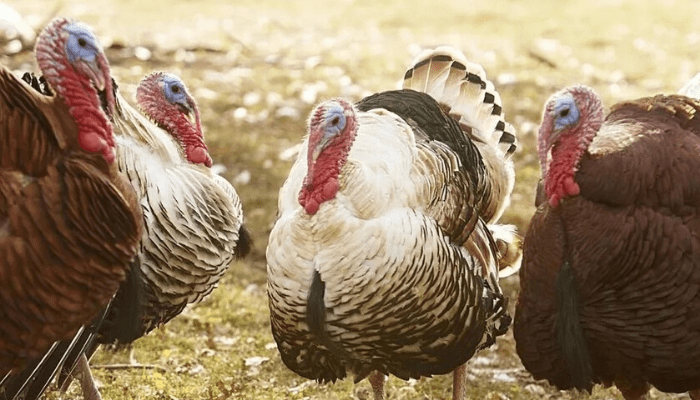
Okusanya Olayiwola, a poultry farmer in Ago Iwoye, Ogun State at the time of being interviewed last week, had lost over 300 Turkeys and 10 Broiler birds. The dead Turkeys represented more than 60 percent of his entire farm stock, as he is a smallholder farmer.
Read also: Covid-19: FCT Mobile Court convicts Islamic cleric, others over lockdown violation
His birds got sick during the lockdown, saying they were diagnosed with Chronic Respiratory Disease (CRD) and E Coli. He would usually sell a mature turkey at N10,000 and would have realized at least N3 million from the lost birds, but they died at six weeks which would cost N1,500 each if sold to others who would rear them to table size, making it a N450,000 loss.
“Due to circumstances beyond control, my birds were sick and the only drugs I could get were locally made, unlike imported ones that are more effective,” said Olayiwola, who says his company, Aare Productions Ltd is located in the Old Cooperative Building in Ago Iwoye. “The complain of the veterinary doctors was that no importation is allowed so we are left to rely on local drugs,” he said.
Olayiwola lamented that the COVID-19 lockdown has really affected him being a farmer that relied on making sales on a weekly basis for sustenance. At inception of the lockdown, he was able to stock feeds with the little money he had, hoping that the lockdown will not take long. He has now run out of feed to sufficiently take care of his remaining 200 Turkeys and 100 Broilers.
“It was a great loss to me as a small farmer. The problem now is how to feed the remaining birds with the lockdown,” he said, also saying his bank (a new generation bank popular with young people) does not give loan to farmers.
“Don’t get me wrong, the lockdown is what Nigeria needs now, but government should help me out,” he said. Asked how he is coping with the fear of surviving birds also getting infected, Olayiwola responded: “I rely on God’s mercy.”
The tales of woe are the same even for many pig farmers. Adebimpe Adisa, owner of Adisa farms in the Oke Aro Pig Farm Estate in Lagos State lost 70 animals within the first two weeks of the lockdown. The African Swine Fever had infected his animals causing him to lose 70 out of 200 pigs (35 percent of his stock), estimated at N1.75 million with each pig having a market price of N25,000.
Read also: US restaurant closings spur farmers to destroy food
Since the lockdown started, Adisa, like other farmers has been unable to get access to medicines to tend to sick animals. Even if animals infected by the virus could not be cured, with medicines, others like he explained could have their immunity boosted to resist getting infected. A helpless Adisa watched as the virus killed off his investment in bits, one animal at a time, without access to medicines to limit the vulnerability of surviving ones. Not just to the ASF but even other diseases, as other farmers have reported.
“Access to medicines is very hard because those supplying now say production is very low,” he said. For medicines that are usually imported, they have also been told those cannot come in. For instance Gentamicin, a drug he used to buy for N1,800 per 100ml bottle now is N2,800 and this he says cannot cure 20 animals at a dosage of 4 or 5 milliliters each so he has to buy up to 4 bottles. When one buys up to this, there is already a markup of N4000 on the drugs and in the end, many animals are still lost as the care in inadequate to curb diseases from spreading.
Dubbed the largest pig farm in West Africa, Adisa at the time of being interviewed said over 1,500 pigs had been lost in the Oke Aro cluster. Before losing the animals they showed symptoms, and the farmers as he explained are only just trying their best, since there is no known vaccine for ASF in particular.
Ayo, who is also a farmer in the Oke Aro cluster had lost over 100 animals which he said were all imported and had a value of over N6 million. For him, “what we need now is nothing but financial assistance from government, because a lot of us have lost our fortune.”
While acknowledging there have been sporadic reports of losses by pig farmers, Femi Malomo, secretary of the Pork Producers Association of Nigeria, however said the occurrence at Oke Aro “may be an isolated incident.” For those at the cluster, it appears to be affecting many in West Africa’s largest pig farm cluster.
Lack of buyers compound mortality woes
Stanley Chigemezu Okoro, a 400 level student of Sociology at Olabisi Onabanjo University, Ogun state had combined farming and schooling since his first year in order to see himself through school. Transportation, sales, mortality, insecurity and inability to purchase drugs had over the years made his experience as a farmer less pleasant than he may want it to be. However, with the current lockdowns across the country, all factors have gotten worse and he is stuck with livestock he can neither afford to feed nor sell.
“The Turkeys are ready for sale and I am not ready to feed them anymore because there is no more money,” said Okoro who had to hire a Sienna car for N7000 (instead of N2,000) to transport some of his birds to Ibadan where he ended up selling at what he says was a low price.
He was carrying four small cartons originally used for packaging for Apples, containing 48 turkeys of 5weeks old. As there were no buses loading in the garages, he had to charter the sienna which initially agreed to collect N6000 but along the way insisted on being paid N10,000, and threatening to go back if he did not agree. He ended up paying N7,000.
Purchase of drug is one of the major problems Okoro, like other farmers have been faced with. To get simple drugs for the birds is usually an interstate journey from Ogun to Oyo, one that is now hard to even embark on.
“Throughout last week I called all the people who buy Turkey from me but they all said they are not ready to buy because of lockdown,” said the university student trying to make ends meet. “Though I am almost discouraged but not yet,” he concluded.
For Akanimodo Korede, owner of GTG farms, while prices of table ready birds have yet to decline, there is low patronage as buyers are locked down in their respective states. However, the same cannot be said of day old Turkeys that have reduced from N550 to N270 (even N200 at some point).
Desperate resort to sharp practices
“The easiest way to get the rid of the virus is to sell the affected ones out because it is contagious to others,” said one of the pig farmers interviewed. “The ones that don’t show symptoms are given antibiotics so that they don’t react to the disease.”
The farmer had explained that infected animals are sold at a cheaper price so that it will not affect other animals. However, because of the current lockdown this particular farmer was not able to get buyers who would have purchased his infected animals, and ended up losing all of them.
“Initially we sell for N480 per kilo for live animals, though it won’t be noticeable to the buyer (that they are sick) but we know and can then sell for N460 per kilo,” he said. This way the buyers are able to clear everything and according to him, “we will be on a safer side and not lose much. Even if we are going to lose our profit, we are not going to lose our capital.”
This was the practice in getting rid of sick animals before the lockdown, but now, neither healthy nor sick animals can be easily sold and many livestock farmers are recording unprecedented losses.

Join BusinessDay whatsapp Channel, to stay up to date
Open In Whatsapp


