

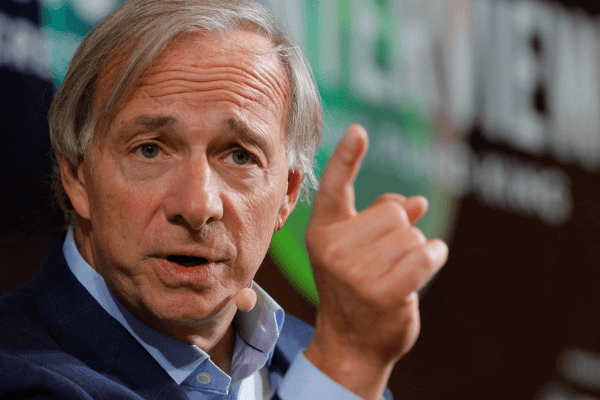
Bridgewater’s flagship Pure Alpha hedge fund notched up a gain of nearly 15 per cent last year, despite torrid financial markets that wrongfooted many other big-name investors and stirred concerns over the health of the global economy.
The $160bn hedge fund group founded by Ray Dalio has seen its performance droop since the end of the financial crisis: in 2017 its Pure Alpha fund only returned 1.2 per cent. But Bridgewater appears to have regained its momentum as markets turned increasingly rocky in 2018.
Pure Alpha returned 14.6 per cent, net of fees in 2018, according to people familiar with the matter, even as global equities sagged precipitously and many other investment groups saw their performance unravel. It was its best performance in five years.
The average hedge fund lost 2 per cent in the year to the end of November, according to HFR, and “macro” funds such as Bridgewater, which try to profit from the ebb and flow of the global economy, dropped more than 4 per cent.
Bridgewater declined to comment, but in an interview with the Financial Times in October, Bob Prince, the hedge fund group’s co-chief investment officer, said the post-crisis market regime was at an “inflection point” as central banks pared back stimulus even as global growth slowed.
“We are clearly shifting from an era of monetary easing to monetary tightening,” Mr Prince said at the time. “A lot of optimism about future earnings growth has been baked into equity valuations. But we are at a potential inflection point where the economy is moving from hot to mediocre.”
Markets were particularly torrid in December when US equities suffered their biggest monthly decline since the financial crisis. The fall, coupled with a string of poor economic data from around the world, has ramped up expectations that the Federal Reserve will pause its interest rate increases this year and triggered bets that the US central bank could begin to cut them later in 2019.
The Fed indicated it would probably lift interest rates another two times this year, but Jay Powell, the bank’s chair, last week sought to calm concerns by stressing that policymakers would be “patient” and opened the possibility that it could revisit its ongoing balance sheet shrinkage.
Mr Powell’s soothing words were coupled with better than expected US employment data that sent the S&P 500 up by 3.4 per cent on Friday and lifted the 10-year Treasury yield by 11 basis points to 2.66 per cent at the end of the day. Nonetheless, many investors and analysts remain nervous over the outlook for 2019.
“Valuation has been improving rapidly, especially in equity markets. Sentiment is cautious, but not extreme. Fundamentals, however, remain challenging, and the biggest hurdle to adding risk,” Andrew Sheets, a Morgan Stanley strategist, wrote in a note to clients on Sunday. “Chair Powell’s comments on Friday on policy flexibility are encouraging, but there is still a lot of uncertainty over the threshold at which the Fed will actually change its policy path.”
In a LinkedIn post in late December Mr Dalio indicated that he thought the combination of short and long-term financial trends meant markets would remain rocky despite the fact that the economy and corporate profits were for now still healthy.
“We are now seeing this classic late-cycle, strong profit growth and strong economic growth that is accompanied by falling stock prices due to the financial squeeze,” the hedge fund manager wrote. “That’s when the cracks in the system begin to appear and what most people never expected to happen starts happening.”

Join BusinessDay whatsapp Channel, to stay up to date
Open In Whatsapp


