Over N13 billion has been invested in major water projects in Abeokuta, the Ogun State capital, over the past 11 years, yet the projects have not translated into a reliable supply, forcing residents to rely on boreholes and vendors as key infrastructure operates below capacity. SODIQ OJUROUNGBE writes
For Adeyemi Kemi, most mornings begin the same way: the fifty-year-old walks through Ago-Ika in Abeokuta with empty plastic containers, hoping neighbours with boreholes have electricity to pump water. On some days, she buys water from vendors for chores that once required nothing more than turning a tap in her modest home.
Some years back, this was not her reality. She recalled that for decades, running water flowed regularly through taps connected to the public supply network in her neighbourhood. At dawn, water-filled buckets lined up in her bathroom and kitchen, making cooking, washing, and other household chores easier.
But that certainty began to disappear about nine years ago.
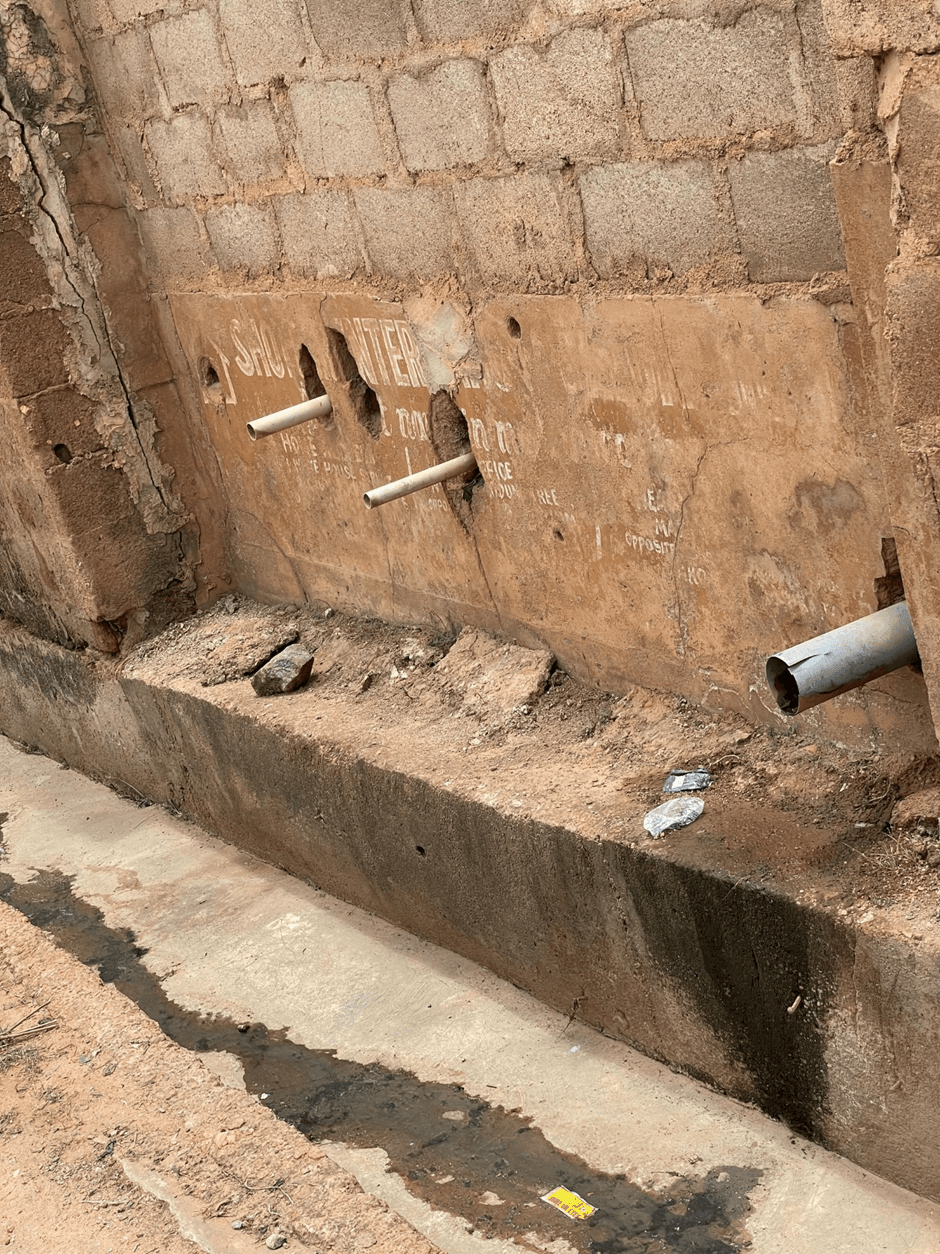
According to her, underground channels and pipes supplying water to homes in the area were disrupted during major road construction projects carried out under the administration of former governor Ibikunle Amosun.
Since then, she lamented that the public water supply had become irregular before disappearing completely in many parts of the community.
“Since the pipes were cut, getting water has become a daily struggle for us, especially during the dry season. We now wake up very early to search for water from wells and vendors because the taps no longer run in our area,” she said.
In Ogun State capital, pipe-borne water has gradually become a luxury for Kemi and many residents despite billions of naira committed to water projects intended to improve access across Abeokuta.
Dangerous alternatives
Bose Oladejo’s reality is even harsher. Unlike those who still hope for public water to return through old pipelines, she said her household stopped waiting years ago.
At her home in Soyoye, the outskirts of Abeokuta, water for cooking and washing comes mostly from a hand-dug well.
In the rainy season, she explained that she stores rainwater in drums. When the well dries or turns muddy, her children fetch water from the Ogun River for household use while buying sachet water for drinking.
“We use well water for bathing and cooking, river water when the well fails, and buy pure water to drink. Government water does not get here anymore,” she said.
Oladejo said what pains her most is that successive governments have continued to announce huge investments in water schemes, yet ordinary residents have seen little change.
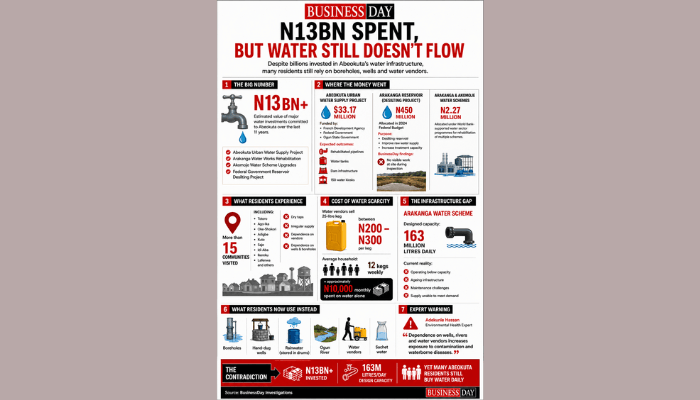
Her frustration reflects a deeper contradiction. In recent years, more than N13bn has been spent on major water projects, but many Abeokuta residents still source water as if the public supply never existed.
Over 15 communities with same fate
Kemi and Oladejo’s experiences mirror the daily reality across many parts of Abeokuta, where residents say access to pipe-borne water has become uncertain, expensive, or completely absent.
When our correspondent visited more than 15 communities in Abeokuta North and Abeokuta South, it was observed that in many homes, taps connected to the state water network had either gone dry or functioned occasionally.
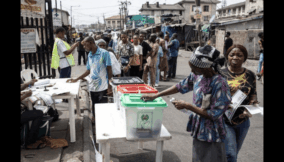
In neighbourhoods once serviced by government pipelines, residents were seen storing water in drums and plastic tanks, while others queued at private boreholes with jerrycans.
It was gathered that in areas such as Totoro, Oke-Shokori, Ago-Ika, Ikereku, Adigbe, Kuto, Saje, Idi-Aba, and parts of Lafenwa, many households have long shifted from relying on public water to wells, boreholes, and commercial water vendors fondly called Mai ruwa, with some spending thousands of naira monthly just to secure water for domestic use
Findings showed that in many of these communities, residents now depend heavily on water hawkers who supply water in 25-litre yellow kegs, commonly sold between N200 and N300 per keg, depending on the distance and period of scarcity. For an average family of five, residents said between 10 and 15 kegs could be consumed weekly for cooking, bathing, washing, and other domestic activities.
At an average of 12 kegs weekly, a household would spend about N2,400 every week on water alone, translating to nearly N10,000 monthly. In some cases, especially during the dry season when wells dry up and demand rises, the cost per keg increases beyond N200, pushing monthly household water expenses even higher.
Findings showed that in many of these communities, water scarcity is no longer treated as an emergency but as a permanent condition residents have adjusted to.
Residents told BusinessDay that before the prolonged disruption of the water network, public water supply in Abeokuta, from the Arakanga and Akomoje systems, served several neighbourhoods through an extensive reticulation network that fed homes directly.
Many of the residents recalled periods when water flowed routinely through public taps, and households depended less on private sources.
But many traced the deterioration to the years of extensive road construction under former governor Ibikunle Amosun, when sections of underground water channels and distribution pipes were reportedly damaged or displaced.
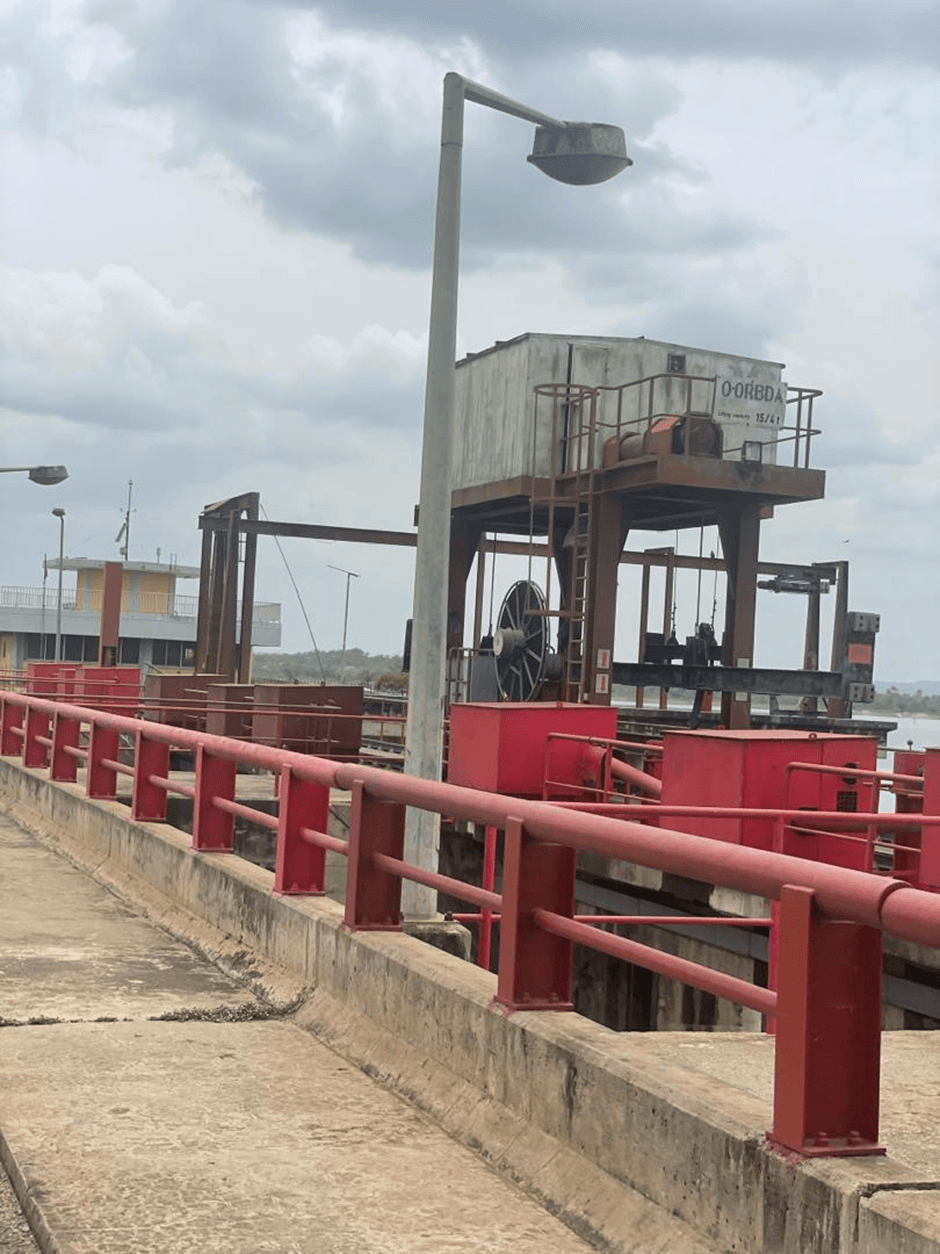
Although the state government has, over the years, announced interventions around the Arakanga waterworks, including rehabilitation of barrage gates, replacement of ageing pipes and upgrades under the Ogun Urban Water Supply Project, residents interviewed said those efforts have yet to restore a reliable supply to many homes.
Billions spent, little to show
Findings by BusinessDay show that more than N13bn has been committed to water infrastructure in Abeokuta over the years, including major projects to rehabilitate and expand supply in the state capital.
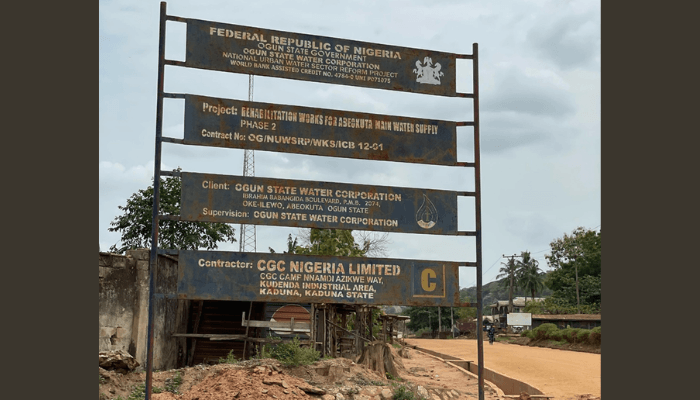
It was discovered that one of the biggest interventions was the Abeokuta Urban Water Supply Project, a multi-part funding arrangement backed by the French Development Agency, the Nigerian Government, and the Ogun State Government.
The Ogun State Urban Water Supply Project was launched in March 2015 and scheduled for completion in 2020, but implementation and final payments were extended into 2022. The $33.17m project, funded by the French Development Agency, covered rehabilitation of pipelines, water tanks, dam infrastructure, and about 150 water kiosks.
At the official exchange rate of about N199-N200/$ in 2015, the project was worth roughly N6.6bn at inception. However, by 2020-2022, when the naira weakened to between about N380 and N450/$, the project’s value translated to roughly N13bn to N15bn.
Reports at the time indicated the intervention was expected to significantly improve access to potable water in Abeokuta and surrounding communities after earlier World Bank-backed urban water reforms failed to fully address infrastructure gaps in the Ogun State capital, prompting the fresh $33.17m financing package in 2015.
BusinessDay Investigations gathered that, beyond the large urban supply project, the Abeokuta Main Water Scheme at Arakanga and Akomoje also benefited from rehabilitation funding captured under broader water sector improvement programmes.
A World Bank-supported work plan reviewed by our correspondent showed that about N2.27m was allocated for the rehabilitation of multiple schemes, including Abeokuta water systems, aimed at improving production and distribution capacity.
However, despite those allocations, an investigation by BusinessDay showed that the facilities have continued to operate below installed capacity, with ageing infrastructure and maintenance concerns affecting performance.
Similarly, the federal government, through the 2024 budget of the Federal Ministry of Water Resources and the Ogun-Osun River Basin Development Authority, made provision of N450m for desilting of the Arakanga Water Works Reservoir in Abeokuta under project code ERGP202400677.
The project was expected to restore reservoir efficiency and improve raw water availability for treatment, but when our correspondent visited the site, there was no visible evidence that work had commenced.
In total, about N13bn has been committed to water infrastructure in Abeokuta, excluding routine budget releases and maintenance spending over the years. Despite this, many residents still face persistent shortages.
Ageing systems, stalled works and dry taps
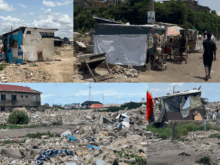
During field visits to communities in Abeokuta, our correspondent observed a widening gap between paper infrastructure and water access.
At the Abeokuta Main Water Scheme around Arakanga and Akomoje, parts of the facility were old and under strain.
Site operators and other sources familiar with the scheme told this paper that several components of the water system had deteriorated and that the facility was operating below its intended capacity, with current water output still unable to meet demand across Abeokuta.
One of the operators, identified as Taofeeq Adeyemi, said, “One of the major challenges is that many parts of the system are already deteriorating, so the scheme is not operating at the level it was designed for.”
Our correspondent discovered that the facility, which was designed to supply a significantly larger share of Abeokuta’s population, is currently operating below capacity, leaving a wide gap between expected output and actual water reaching households.
The Arakanga water scheme was designed to supply about 163 million litres of water daily, according to an International Scholars Journals study, but findings by BusinessDay indicate that the facility is operating far below that capacity, leaving a wide gap between projected supply and the volume of water reaching residents.
At locations linked to the Abeokuta Urban Water Supply Project, including areas where water kiosks were installed, it was gathered that some of the infrastructure exists physically, but the supply remains irregular.
At the Arakanga reservoir desilting project site, there was no visible sign of ongoing work as of April 13, 2026, when our correspondent visited the site, despite budgetary provisions allocated for the intervention under the 2024 federal budget.
BusinessDay’s investigation observed that the area appeared largely inactive, with no clear indication that mobilisation for the project had begun.
Across residential neighbourhoods in many parts of Abeokuta North and South, it was observed that most households have completely abandoned reliance on public water infrastructure. Instead, boreholes dominate the water landscape, while water vendors and sachet water sellers now fill the gap left by the public system.
Residents said the public water supply can be unavailable for weeks, despite making regular monthly payments of at least N5,000, while some households pay more depending on consumption levels.
Many described the service as unreliable, noting that water from government facilities was rarely available.
“For two weeks or more, no water will come, but the bills will still come. It doesn’t make sense. We have to spend extra money buying water even though we are already paying the government,” a resident said.
Beyond scarcity
Adekunle Hassan, an environmental health expert, warned that residents’ growing dependence on wells, rivers, and water vendors exposes them to waterborne diseases and contamination risks, especially in densely populated Sareas where wells are often located near septic tanks and refuse dumps.
He said the failure of the public water supply has also increased the financial burden on low-income households.
Also, Ayodeji Akinola, a development economist, questioned the impact of billions spent on water projects, stressing that investments must translate into measurable access and reliable service delivery.
Govt keeps mum
On three occasions, our correspondent reached out to the Ogun State Government’s consultant on water, Muinat Jaji, for comments on the findings of this investigation, but efforts to get an official response were unsuccessful.
Jaji, who is the immediate past General Manager of the Ogun State Water Corporation, could not be reached on May 15 and 27 as her phone numbers were not connecting.
However, when contacted on May 28, she briefly spoke with our correspondent by phone. After some of the findings of the investigation were explained to her, she said she was in a noisy environment and promised to respond later that day.
Subsequent calls made to her line were not answered, while text messages sent to her have not been responded to as of the time this report was filed.

Join BusinessDay whatsapp Channel, to stay up to date
Open In Whatsapp