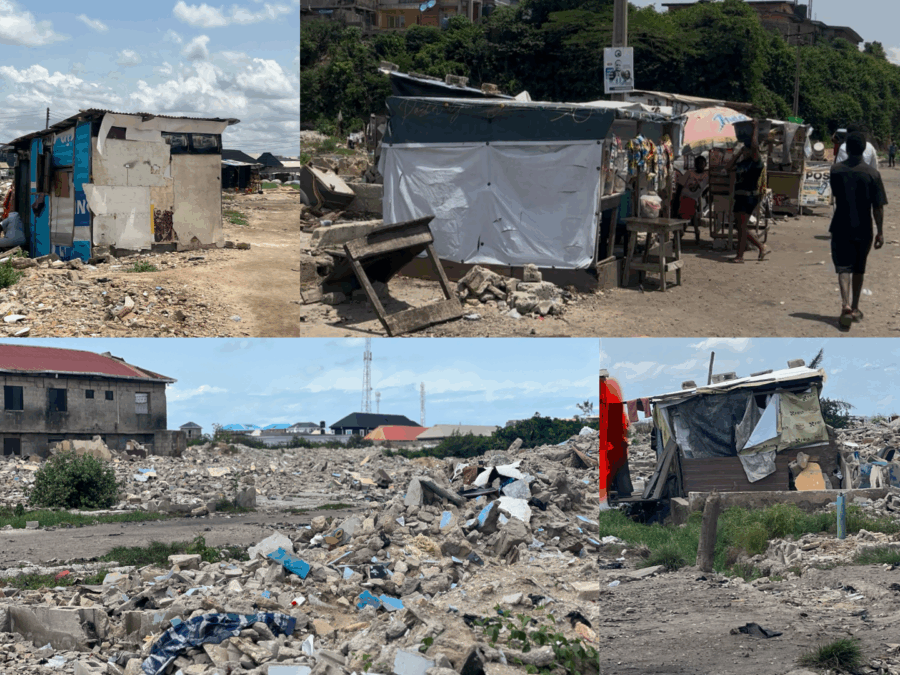
The tiled floor where Joke Olowu once welcomed visitors into her home now serves as a bed for her and her five children. Her two houses are gone, her children have turned to scavenging for survival, while school has become a distant memory. Across Oworonshoki, hers is just one of hundreds of stories emerging from a demolition that residents say robbed them not only of their homes, but also of their dignity and future. TAOFEEK OYEDOKUN reports
As dusk settled over the waterfront community of Oworonshoki in Kosofe Local Government Area of Lagos State on a September night in 2025, traders counted the proceeds from the day’s sales. Mothers prepared dinner over charcoal stoves. Children, exhausted from school and play, drifted into sleep beneath ceiling fans and mosquito nets. Men gathered outside their homes, exchanging stories about football, politics and the rising cost of living.
For decades, this had been the reality of life in one of Lagos’ oldest waterfront settlements: modest homes built gradually through years of sacrifice; tightly knit compounds where generations of families lived side by side; neighbours who knew one another by name.
Then came the sound that would change everything.
At first, it was distant, the low rumble of heavy machinery breaking the silence of the night. Soon afterwards came the arrival of heavily armed security operatives.
Within hours, bulldozers were tearing through homes, shops and schools. Panic spread through the narrow streets as residents scrambled to rescue whatever pieces of their lives they could carry.
Some fled with mattresses balanced precariously on their heads. Others ran clutching babies in one arm and bundles of clothing in the other. Many escaped with nothing at all.
Months later, long after the machines departed, the destruction they left behind remains visible across Oworonshoki.
But while the broken walls and shattered concrete are impossible to ignore, another kind of devastation lies hidden beneath the rubble, the collapse of livelihoods, the interruption of childhoods, and the quiet despair of hundreds of people abandoned in the ruins of the only home they had ever known.
The night Oworonshoki changed
“It started late last year, at Ojileri axis, towards the Third Mainland Bridge, at about 11:30 p.m., 12:30 a.m., they came in with their bulldozers,” recalled Daniel Ayomikun, a youth leader in the community.
“They started evicting people, gave them five minutes to pack out their belongings.”
The calls for help came quickly. Residents contacted youth leaders in panic as word spread that homes were being brought down.
“We started putting calls across at midnight and we confirmed it was true,” Ayomikun said. “Then we, the youth, moved down there and we saw with our eyes that they were evicting people and demolishing houses around 12:30 a.m.”
According to him, the operation did not end that night. “They started that pattern for like a week. They would work only at night.”
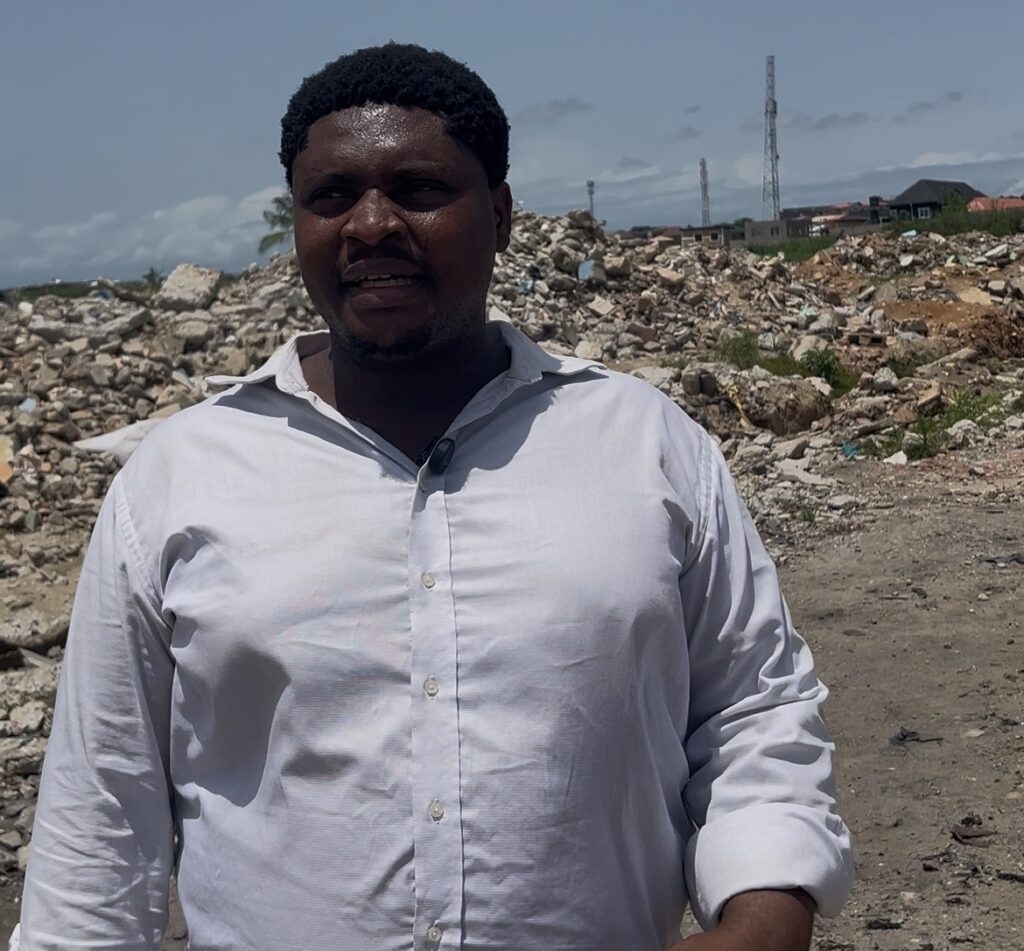
He alleged that security personnel were accompanied by thugs who exploited the chaos for personal gain.
“The task force also, they are like hired thugs,” he said. “They came with thugs and hooligans. They would start selling people’s valuables, home appliances and the likes. It was really annoying.”
As bulldozers advanced through the community, panic gave way to disbelief. Residents watched helplessly as structures built over decades disappeared within minutes.
Families were separated in the confusion. Children cried. The elderly struggled to move. Entire lives were reduced to debris before sunrise.
Living among ruins
Demolitions in parts of Oworonshoki have been gradually ongoing since 2023, displacing hundreds of households.
Earlier exercises in Araba and Koka were resisted by residents. Families complained about inadequate compensation, destruction of property and poor coordination by authorities. But the large-scale demolition of 2025 altered the community irreversibly.
A recent visit to Oworonshoki by BusinessDay revealed scars too deep to ignore. Entire stretches of land that once accommodated vibrant residential compounds now resemble abandoned construction sites.
Concrete foundations lie exposed beneath the harsh Lagos sun. Broken walls stand like gravestones marking where homes once stood.
Twisted roofing sheets are scattered across empty plots. Yet life stubbornly persists.
Tarpaulins have been tied to surviving pillars. Salvaged zinc sheets have been transformed into makeshift roofs. Wooden planks and recovered blocks serve as sleeping platforms.
These fragile structures have become home. When rain pours through the night, residents endure. When the afternoon heat becomes unbearable beneath improvised shelters, they endure that too. Many simply have no alternative.
Lagos is in the grip of one of its worst housing affordability crises in recent history. For displaced families who have lost both homes and livelihoods, renting elsewhere is impossible.
Those who remain in Oworonshoki have effectively become refugees in their own community.
“We sleep where our house used to be, I now sleep outside with my children. Even when it rains, we have nowhere to go,” Omowunmi, a mother of two, lamented.
Her children no longer attend school. The petty business that sustained her family collapsed with the demolition.
“The government should provide accommodation or return our lands to us,” she pleaded.
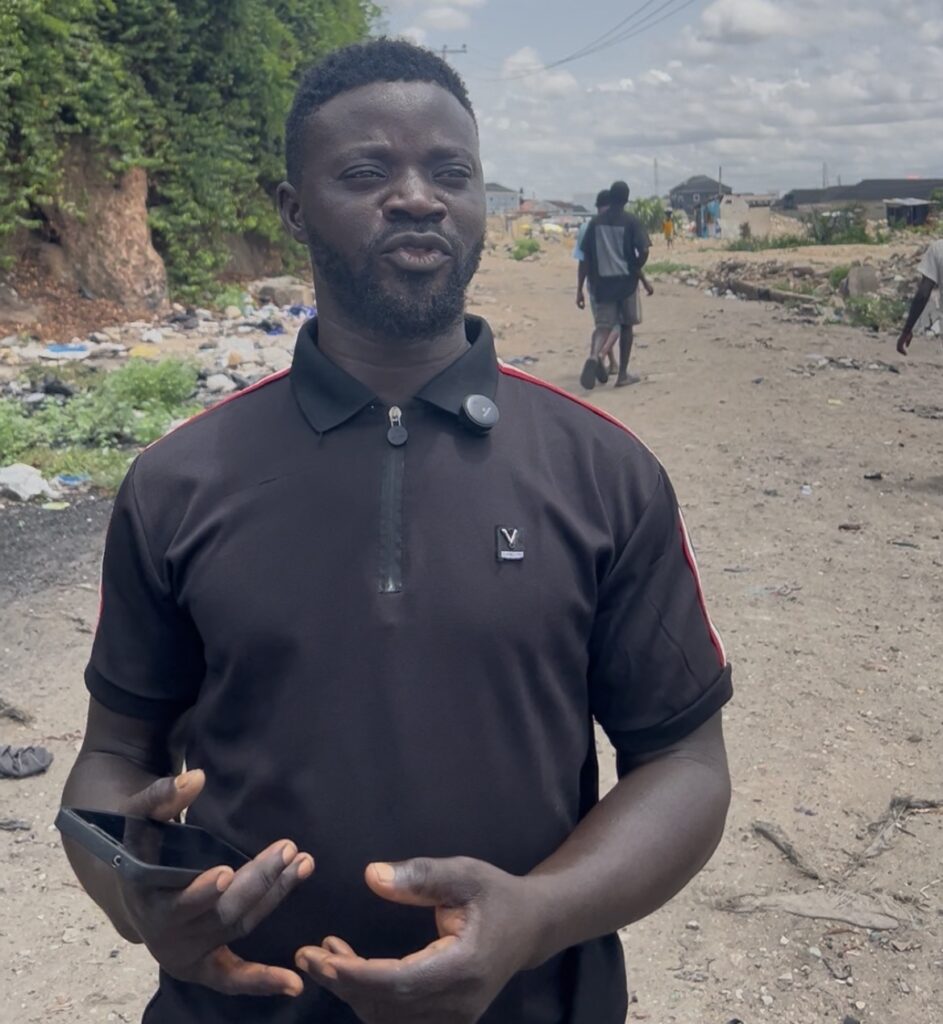
Nearby, Rotimi Sunday sat surrounded by fragments of a life he thought was secure.
“My father lived here. I was born here. My children were raised here. Now we have nowhere else to go,” he told BusinessDay. Around him, children played barefoot among broken blocks and debris.
Sunday inherited the family property from his father. He accused the Oworonshoki monarch, Oba Saliu Babatunde, of playing a major role in the events that displaced them.
“When Oba Saliu was crowned, we were all happy and felicitated with him not knowing that he had a plan to make us homeless,” he said.
“They said by pasting quit notices on our houses, asking us to come to the government secretariat. From the secretariat, we were directed to the monarch.”
He recalled the meeting that followed. “When we finally met him, he asked us to renovate our houses, saying that he wanted the community to fit into the mega city structure.
“We tired our best and renovated our buildings, but they still demolished them.”
Today, he sleeps outside. His business has suffered. His children have been scattered across Lagos. Their education has been disrupted. He wants compensation or restoration. Anything that resembles justice.
The scene feels less like a residential neighbourhood and more like the aftermath of a natural disaster. Except this disaster was man-made.
A community erased
Residents say the demolition unfolded in phases. The operation began around areas close to the Third Mainland Bridge, where hundreds of structures were flattened during overnight exercises involving heavily armed security personnel.
Many residents were caught completely unprepared. Some awoke to discover demolition teams already outside their homes. Others say they were given little opportunity to remove belongings before bulldozers moved in.
As the exercise expanded, more homes vanished. Schools disappeared, businesses collapsed and livelihoods evaporated overnight.
By the end of 2025, hundreds of houses had been reduced to rubble despite protests by residents, interventions by activists and ongoing legal disputes.
The demolitions triggered outrage across Lagos.
Femi Falana, human rights lawyer and senior advocate of Nigeria, publicly condemned the exercise despite an existing restraining order issued by a Lagos State High Court.
Justice Adegboyega Balogun had granted an interim order restraining further demolitions within parts of the affected community while disputes concerning compensation and ownership were being addressed.
Residents believed the court order would protect them. Instead, many say the demolitions continued.
For affected families, it reinforced a painful conclusion: the institutions meant to safeguard their rights had failed them.
Ayomikun, earlier quoted, said the consequences have been severe.
“This thing has really affected a lot of families. Many have died,” he said. “There were about 26 people sent to prison for about a month for a peaceful protest.”
He also alleged that an infant died during one of the operations. “While the task force was working in December, they tear-gassed an eight-month-old baby and she was choked. She died in the process.”
Childhood interrupted
Among the most devastating consequences of the demolition is the impact on children. Across Oworonshoki, stories abound of interrupted education and uncertain futures.
Parents who lost homes often lost their sources of income as well. School fees became impossible to pay and food itself became uncertain.
Many children who once attended nearby schools now spend their days wandering through demolished sites.
Teenagers have turned to scavenging. Armed with sacks and makeshift hooks, they search refuse dumps and construction waste for plastic bottles that can be sold to recycling agents. The earnings are meagre, but every naira matters.
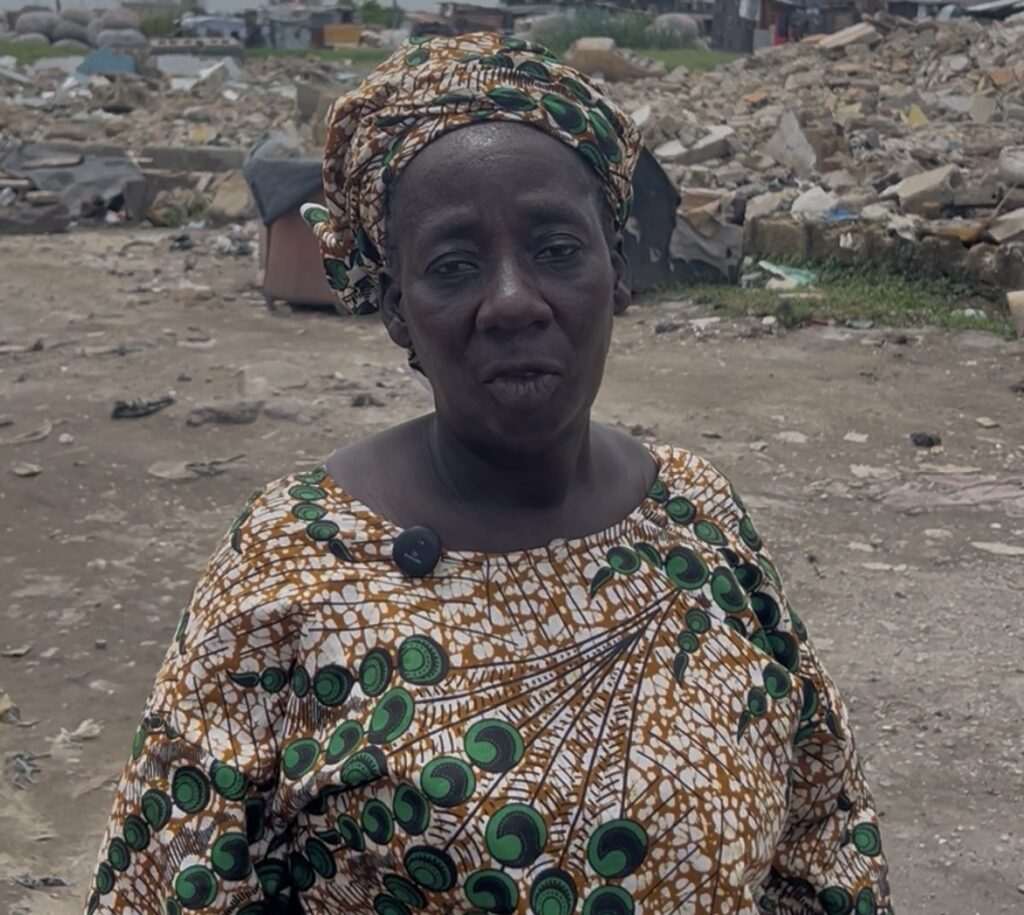
For Joke Olowu, a widow and mother of five, the demolition shattered everything she had worked for.
“My two houses were demolished,” she recounted. “I had a house at 14, Adamson Street, with seven rooms and a mini flat, it was demolished. My second house located at 10, Folorunsho, was also demolished.”
What remains is a tiled floor from a destroyed building. It now serves as a bedroom for her family.
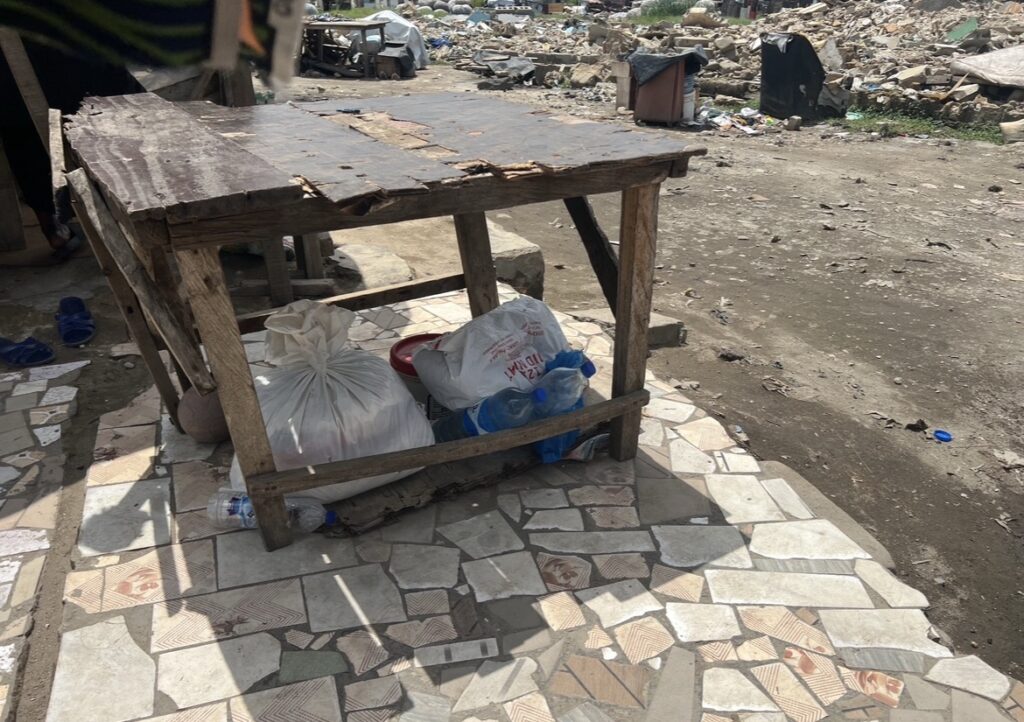
“I’m left with nothing, I can’t even afford to rent an apartment now. This is where I sleep now with my children. Is this suitable for human beings?” she asked.
Their clothes were piled nearby with a tattered mosquito net that offered scant protection against mosquitoes.
“My children have been turned into scavengers, they have gone to search for plastic waste we can sell for small cash,” she said.
Her greatest concern is not herself, it is finding shelter for her children and returning them to school.
As she prepared food over firewood beside a collapsed wall, life continued. But under conditions no family should be expected to endure.
The women left behind
Women have borne a disproportionate burden of the crisis. Many lost both shelter and income simultaneously.
Hair salons vanished beneath bulldozers. Food vendors lost customers and equipment. Tailoring businesses disappeared overnight.
For widows and single mothers, survival became even more precarious.
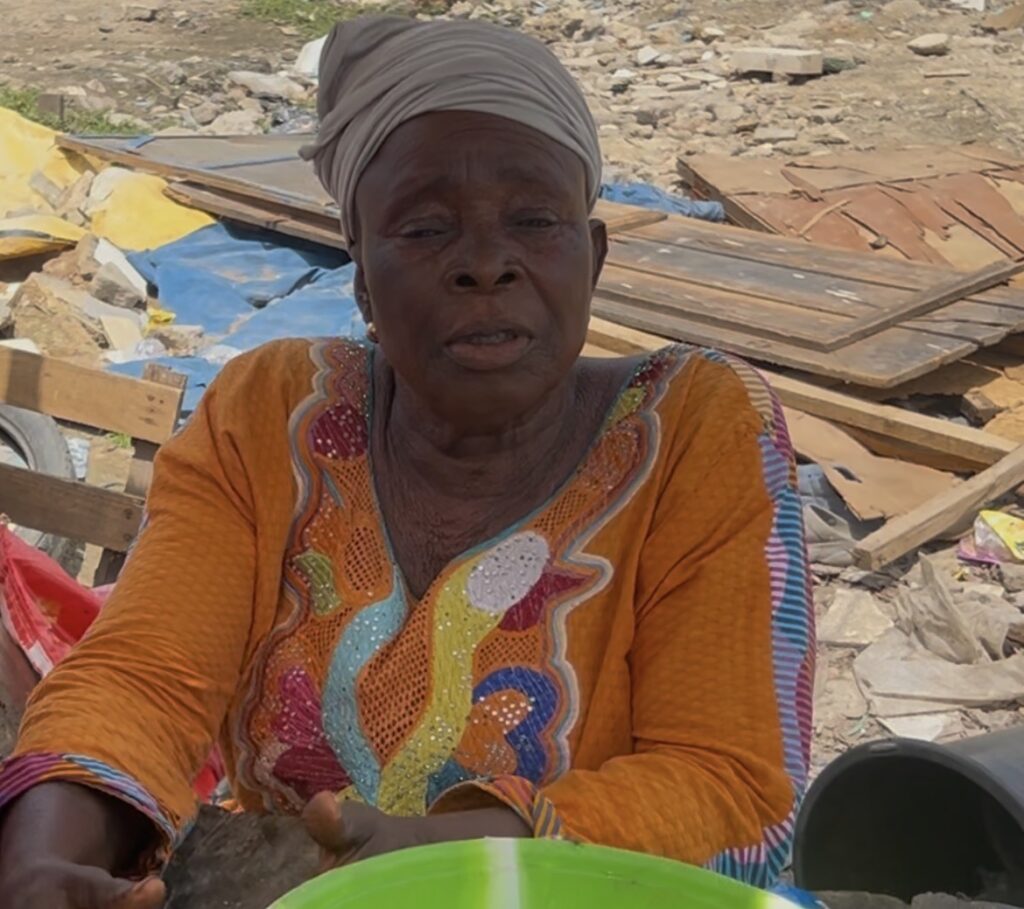
“My husband died from the shock of the demolition,” Suwebatu, a middle-aged woman, lamented.
Without compensation or meaningful support, many women have become dependent on relatives, neighbours and occasional charitable donations.
Some relocated into overcrowded rooms elsewhere in Lagos. Others remained because they could not afford even the cheapest accommodation.
One of the victims described sleeping beneath a shelter assembled from salvaged roofing sheets.
“When it rains, we don’t sleep,” she said. The roof leaks, but it is all they have.
“Our family’s house was demolished despite having the necessary approval from the government,” Bolanle Omorege said. “We now live like slaves in our own country.”
She pointed toward a makeshift shelter built from wood and recovered roofing sheets. The irony was impossible to miss.
People who once owned homes now survive in structures assembled from the remains of those same homes.
“We have nowhere else”
A recurring theme among residents is belonging. Many insist they are neither squatters nor recent arrivals. Their histories in Oworonshoki span generations.
Some inherited family compounds from parents and grandparents. Others spent decades constructing homes gradually, buying cement whenever money allowed and laying blocks one after another.
To them, Oworonshoki represents more than land. It is identity, memory, and history.
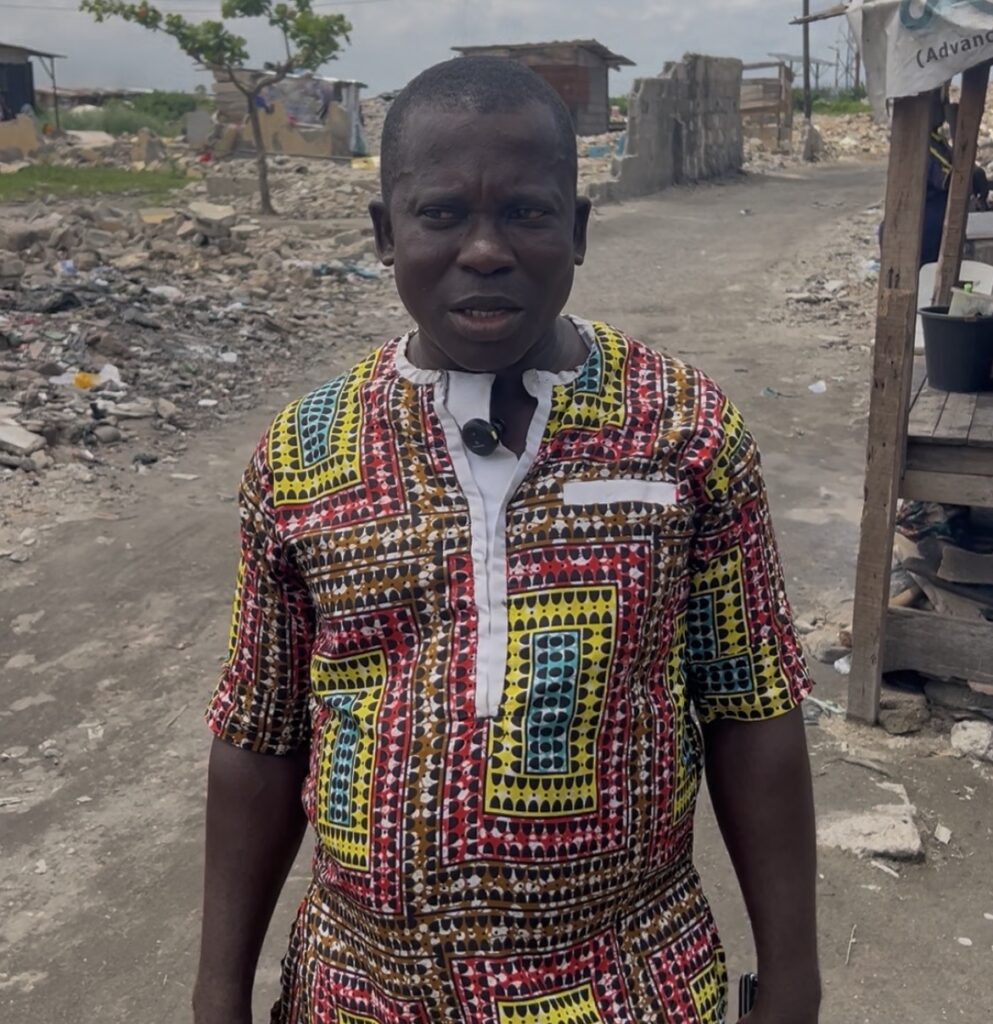
“We have nowhere else, I have been in this community for forty years,” Korede Bello said. “My families now hang around and I haven’t been able to pay my children’s school fees after the incident.”
Everything he worked for, he said, disappeared within hours. He appealed to the government to reconsider its actions.
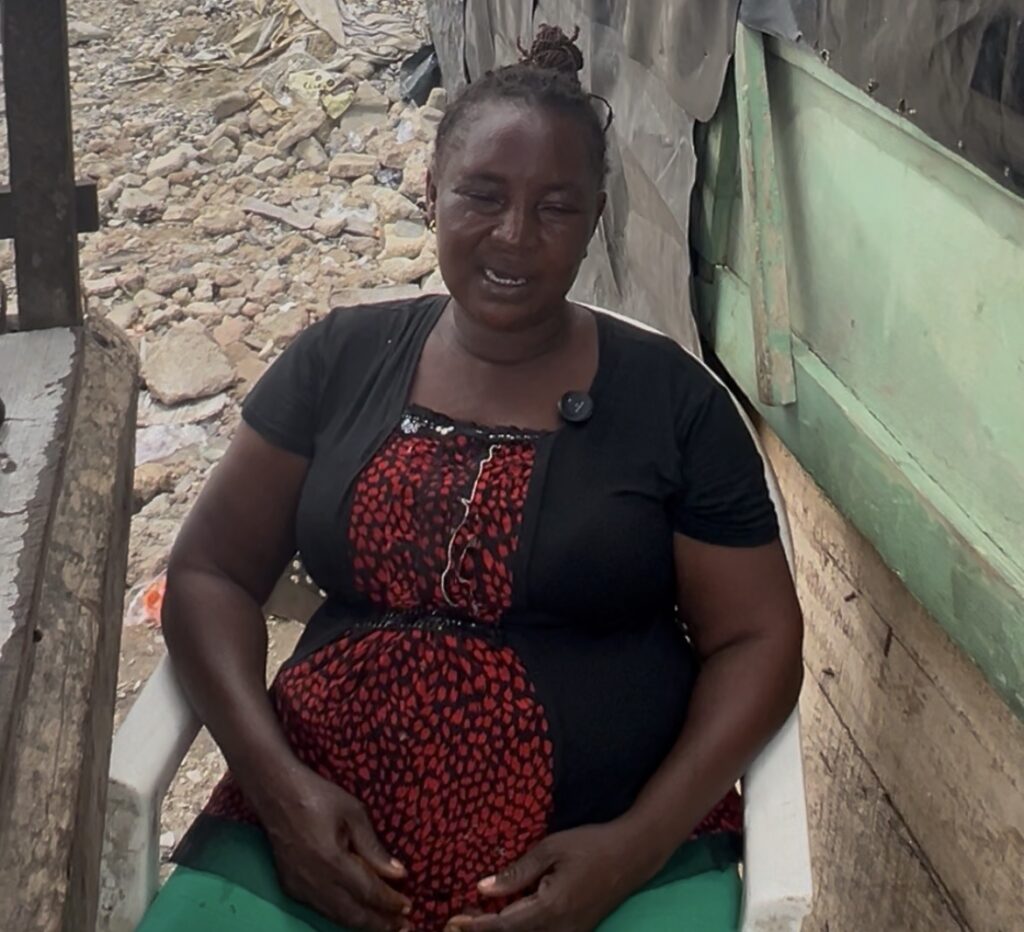
Margaret Adebayo, a tenant, remains because she cannot afford to relocate. She now sleeps in a makeshift kiosk. Her children have been dispersed across Lagos. Her greatest wish is simple: secure accommodation and reunification with her family.
For these residents, relocation is not merely changing addresses. It means abandoning support networks and starting over without resources.
Attempting to survive in a city whose housing costs increasingly exclude the poor. For many, it is impossible.
Compensation and controversy
No issue generates more resentment than compensation. Victims describe the process as inadequate, poorly managed and inaccessible.
Several residents said payments fell drastically below the value of destroyed properties and the majority of the genuine victims were left out.
Documents and images from a compensation exercise reportedly organised by the Lagos State Government in October 2025 circulated online, indicating payments ranging between N1 million and N2 million.
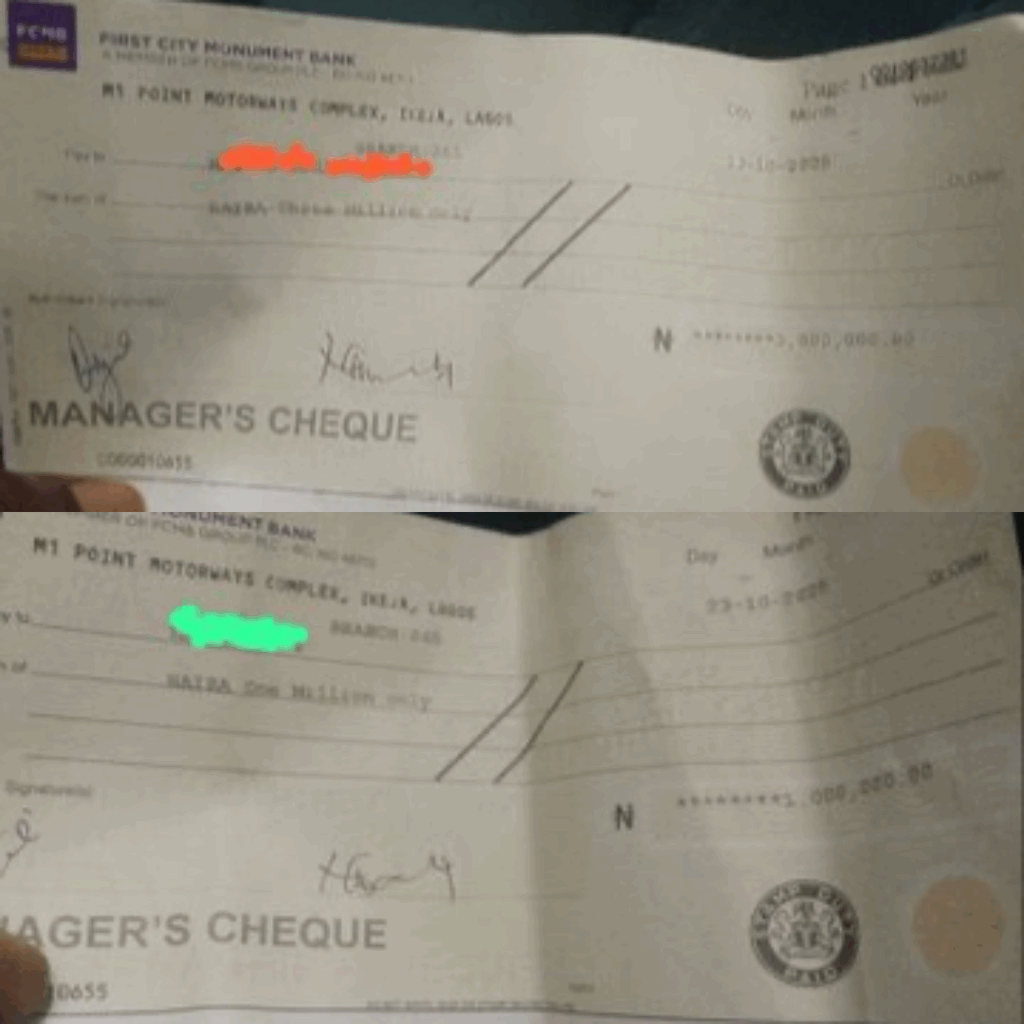
Affected families argue such amounts cannot replace homes worth tens of millions of naira. Nor can they secure alternative housing in Lagos.
Residents further allege that many genuine victims were excluded entirely. Months later, bitterness remains.
Ayomikun questioned both the process and beneficiaries.
“Those people that were compensated, if the Lagos State Government can investigate them, they are loyalists to the palace. They just arranged them.”
He struggled to understand the figures reportedly paid.
“Why would I have a property estimated at over N68 million, N120 million, and I’ll be compensated N2 million? Does that make any sense?”
He urged government agencies to engage residents directly. “If the Lagos State government was meant to compensate people, they should come to the community. It should be in a town hall.”
“Everything the government has to do is going through the palace. Something is still fishy. They’re not telling us everything.”
Accusations against the monarch
At the centre of community grievances is Oba Babatunde Saliu, the Oloworo of Oworonshoki.
Residents repeatedly accused the monarch of playing a central role in events leading to the demolitions, allegations that BusinessDay could not independently verify.
Many spoke of betrayal. They remembered celebrating his ascension. Supporting activities surrounding his coronation. Never imagining they would someday accuse him of facilitating their displacement from ancestral lands.
The monarch has become the focal point of community anger. Residents further alleged that portions of the demolished areas may eventually become luxury developments targeted at wealthy investors.
The allegations have deepened suspicion regarding the motivations behind the exercise. Many believe economic interests have taken precedence over public welfare.
Recently, residents of the Precious Seed area of Oworonshoki accused thugs allegedly linked to the palace of burning their homes and issuing eviction notices to them. Some of the residents are those who had earlier lost properties in previous demolitions.
A video shared on social media by SaharaReporters early June 2026, showed some individuals destroying and burning makeshift houses while being confronted by the occupants.
Repeated attempts to contact the monarch for comment were unsuccessful. Calls placed to his known telephone number did not connect, and messages sent through his social media account remained unanswered at the time of this report.
The monarch, however, has previously denied wrongdoing, but distrust remains widespread.
Fear of permanent displacement
Early in 2026, anxiety intensified. Residents observed that portions of demolished land around Ojileri axis near the Third Mainland Bridge were being fenced.
Community leaders accused Oba Saliu of collaborating with private development interests to prepare the sites for future projects.
The allegations heightened fears that residents may never return.
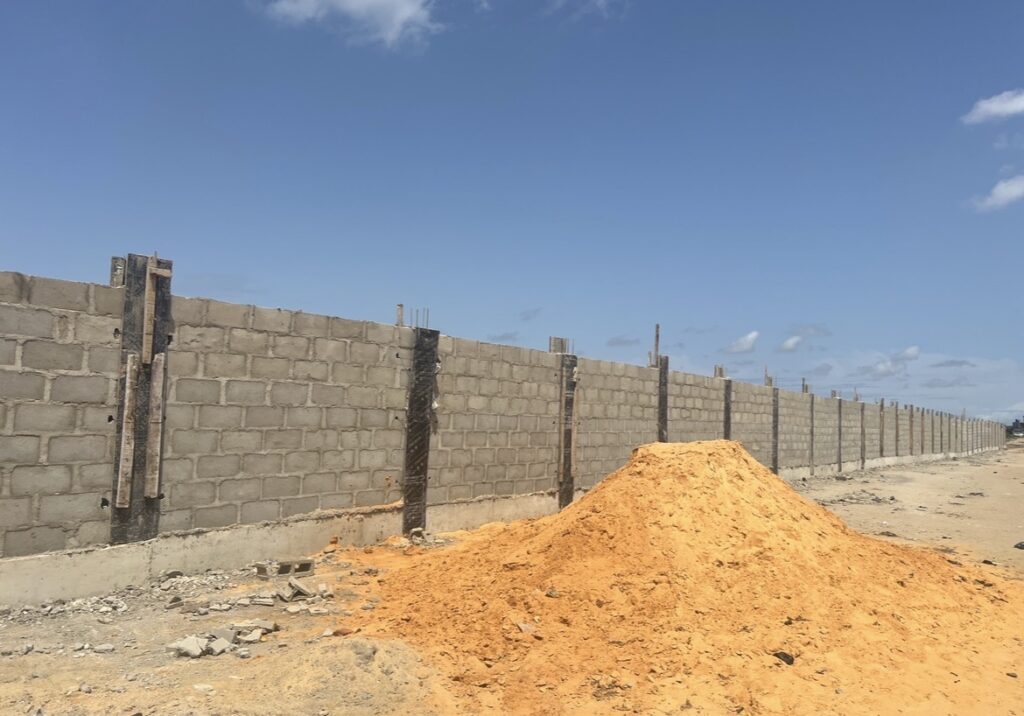
According to local leaders, court orders currently prevent further activities. Yet visible fencing already surrounds sections of the disputed area.
A recent video sighted by BusinessDay showed work continuing on site.
“Despite the court order, we can still see workers on the site. They said Oloworo gave them the contract to fence the land,” Ayomikun said.
To residents, the fences symbolise exclusion. Each newly erected barrier reinforces fears that they are being written out of Oworonshoki’s future.
“Once the demolished lands have been fenced, we won’t have access to the area anymore,” he said.
The larger question
The story of Oworonshoki raises questions extending far beyond one Lagos waterfront community.
Lagos continues to expand rapidly. Land values climb steadily. Waterfront settlements occupy increasingly desirable real estate.
At the same time, millions struggle to secure affordable housing. As redevelopment accelerates, tensions between urban renewal and housing rights become more pronounced.
Who gets to remain in the city? Who benefits from redevelopment? What protections exist for vulnerable residents? What happens when communities are displaced without adequate alternatives?
Professor Timothy Nubi of the Centre for Housing and Sustainable Development at the University of Lagos recently warned that societies ignoring housing inequality risk instability.
He pointed to the Great Fire of London and subsequent Poor Relief Act as examples of how governments historically responded to housing crises. The policy evolved into public housing initiatives and mixed-income communities.
“In some countries today, when developers build housing estates, they are required to allocate a percentage of the units for teachers, drivers and other workers who cannot afford market rents,” he said. “That is how mixed communities are built.”
Inclusive housing policies, he argued, are essential to social stability. Neglecting low-income residents carries consequences.
A city moving forward, leaving others behind
In January 2026, Dayo Bush-Alebiosu, Lagos State commissioner for Waterfront Infrastructure Development, disclosed plans to construct a N7 billion jetty at the Oworonshoki waterfront.
Bush-Alebiosu, who hails from the local government area, said the demolition was unrelated to his ministry’s activities. He nevertheless sympathised with victims.
“The Oworonshoki waterfront scheme is an amazing place,” he said. “By the time we’re done with it, you can only imagine how it will impact not just Oworonshoki’s real estate value, but also Ogudu, Magodo and the Bariga axis.”
He added that the government was considering establishing the area’s first fish market.
The vision is ambitious: A modern waterfront, improved infrastructure, rising property values and economic opportunities.
But while Lagos pursues its aspirations of becoming a world-class megacity, some of its most vulnerable residents remain trapped in conditions resembling a humanitarian emergency.
They sleep beside demolished foundations, cook beside rubble and raise children without adequate shelter, electricity or clean water.
They watch conversations about development unfold around them. Rarely are they invited into those conversations. For them, progress has arrived carrying an unbearable price.
Speaking with BusinessDay on the developments, Temilade Sesan of the African Cities Research Consortium (ACRC) says governments have a “primary obligation” to prevent displacement from becoming homelessness, stressing that housing is a fundamental responsibility of the state.
“The government has the primary obligation… to ensure and assure the right to housing, to safe and affordable housing for all citizens,” she said, adding that this duty requires deliberate interventions, including housing finance mechanisms that make accommodation more accessible.
On compensation, Sesan, a sustainable and inclusionary housing advocate, said clear professional standards and valuation formulas already exist and should guide payouts, noting that ownership status and market value must be properly assessed.
“There are established principles, formula… for calculating and assessing what is due to people,” she said, warning against undervaluing assets: “You cannot pay peanuts and then invest and reap millions of dollars from the land.”
She argued that evictions are often driven by “commercial interests” tied to redevelopment projects, calling for more humane alternatives such as mixed-income housing schemes that integrate displaced residents into new developments.
“You could create mass and build up, go up, and so you have many more units for the same amount of land and it becomes win-win,” she said. “You charge market price for the bourgeoisie that are going to buy most of the units and then a percentage of it is still available for the rightful owners of that land.”
Monika Umunna, program manager at the Heinrich Böll Foundation and inclusionary housing advocate, said government and residents must work towards preventing further forced evictions and ensuring that displaced communities are integrated into future urban development plans.
Umunna said the government’s primary responsibility should have been to avoid rendering residents homeless in the first place.
“Actually, the duty of the government would be to ensure in the first place not to make them homeless like that,” she said.
“We have to concentrate on preventing the government from continuing with these demolitions and evictions around this city. And that is a societal task.”
Umunna argued that urban development should prioritise people rather than profit, expressing concern over the lack of public information about the future of the cleared lands.
“We have to reflect on what kind of city we want. Is it a city for the people or a city for the profit?” she asked.
On the possibility of handing over the demolished areas to private investors for luxury homes, Ummuna stressed that displaced residents should be incorporated into such projects rather than excluded from them.
“Even if the government wants to give out an area for development to private investors, it is important to see how the people living there now can be integrated in those plans.”
The housing advocate proposed low-cost and mixed-income housing models that would allow affected residents to remain within their communities.
Fabulous Urban Nigeria Foundation (FUN) with support from the Heinrich Böll Foundation-Nigeria had earlier developed “Dignity in Shelter (DIS)”, a modular housing initiative that provide safe, dignified shelter for vulnerable groups, particularly women and children affected by forced evictions, residents of informal settlements and internally displaced persons.
The scheme uses reusable housing units integrated with a Mobile Dry Diversion Toilet (MDDT) sanitation system and transforms undeveloped “waiting lands” into temporary communities through partnerships with government. The homes can be relocated when formal development begins, ensuring displaced residents have stability, safety and dignity while rebuilding their lives.
Waiting for justice
As evening descends on Oworonshoki, the community prepares for another night. Small fires flicker among the ruins. Children gather around them. Men discuss rumours of government intervention. Women arrange sleeping spaces beneath leaking shelters.
Hope and uncertainty coexist uneasily. Some residents still believe justice will come. Others have stopped believing altogether.
Months have passed. The rubble remains. The promises remain. The uncertainty remains.
For hundreds of displaced families, life continues beneath the shadow of bulldozers that arrived one night and altered the course of their existence.
The physical demolition may be over. But for those who lost homes, livelihoods and their sense of belonging, the real destruction continues every day.
Until meaningful solutions emerge, through compensation, resettlement or restoration, the story of Oworonshoki remains unfinished.
A community was bulldozed. Its people were abandoned. And months later, many are still waiting for someone to remember that they exist.

Join BusinessDay whatsapp Channel, to stay up to date
Open In Whatsapp