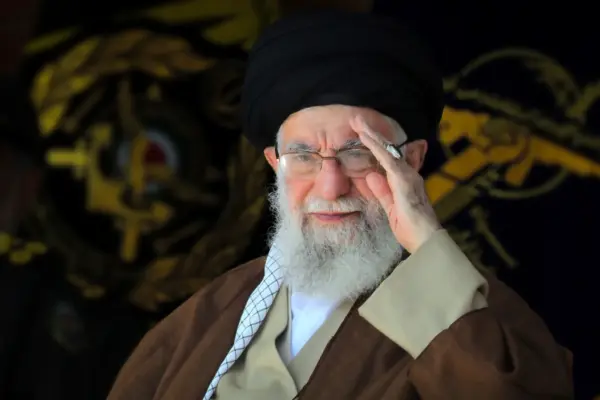
The reported death of Iran’s supreme leader has opened a moment of deep uncertainty at the centre of the Islamic Republic. The killing of Ayatollah Ali Khamenei has triggered the most consequential leadership transition in Iran since 1989.
Donald Trump, the United States president announced on Saturday that Khamenei had been killed during joint United States and Israeli air strikes on his compound in Tehran. Iran has not confirmed the claim.
Read also: Iran’s Ayatollah Ali Khamenei feared killed in Israeli airstrike
For nearly forty years, Khamenei occupied the highest authority in Iran’s political and religious system. Appointed supreme leader after the death of Ruhollah Khomeini, he held absolute powers over the armed forces, the judiciary, and key state institutions, while exercising decisive influence over Iran’s foreign policy and security strategy.
Yet even as tensions with Israel and the United States intensified in recent months, Khamenei had quietly prepared for the possibility of his death.
According to reporting by The New York Times, the 86-year-old cleric had identified several possible successors who could quickly assume the position of supreme leader if the need arose. Under Iran’s constitution, the next supreme leader must be chosen by the Assembly of Experts, a body of clerics tasked with selecting and overseeing the country’s highest authority.
Read also:US-Israeli strikes ‘wholly unprovoked, illegal and illegitimate’ – Iranian foreign minister
Among those believed to be under consideration is Gholam-Hossein Mohseni-Eje’i, the current head of Iran’s judiciary and a long-standing figure within the conservative establishment.
Another potential successor is Ali Asghar Hejazi, Khamenei’s influential chief of staff and a key gatekeeper within the supreme leader’s inner circle. Israeli officials have suggested that Hejazi may also have been killed in the strikes, though this has not been independently confirmed.
A third figure mentioned by Iranian officials is Hassan Khomeini, a cleric associated with Iran’s reformist camp and the grandson of the Islamic Republic’s founding leader.
Each represents a different current within Iran’s political landscape. Mohseni Ejei is closely aligned with hardline clerical institutions and security structures. Hassan Khomeini carries symbolic legitimacy through his family name and is viewed by some as a bridge to reformist factions.
Read also: Middle East airspace shuts as United States, Israel strike Iran, Tehran retaliates
Another influential figure often discussed in succession debates is Mojtaba Khamenei, the supreme leader’s son, who has long been considered powerful behind the scenes.
However, Khamenei reportedly told allies that he did not want the position of supreme leader to become hereditary.
Beyond clerical contenders, senior political and military figures could also shape the transition. These include Mohammad Bagher Ghalibaf, a former commander in the Islamic Revolutionary Guard Corps who now leads parliament, and Ali Larijani, a veteran political strategist who has been entrusted with significant authority in recent months.
The supreme leader is not merely a religious authority but the ultimate decision maker in Iran’s political system, with command over the armed forces and decisive influence on national security, nuclear policy and relations with the outside world.
Inside Iran, reactions to reports of Khamenei’s death appear mixed. Some residents in Tehran were said to have celebrated in certain neighbourhoods, according to accounts cited by The New York Times, while officials sought to project calm and continuity.
Iran’s foreign minister Abbas Araghchi had earlier indicated that the country’s leadership structure was prepared to function even if senior figures were lost during conflict.
Whether the reports are ultimately confirmed or denied, the question of succession has suddenly become urgent. The choice made by the Assembly of Experts will shape the direction of Iran’s political system and determine how the country confronts mounting tensions in the region.

Join BusinessDay whatsapp Channel, to stay up to date
Open In Whatsapp