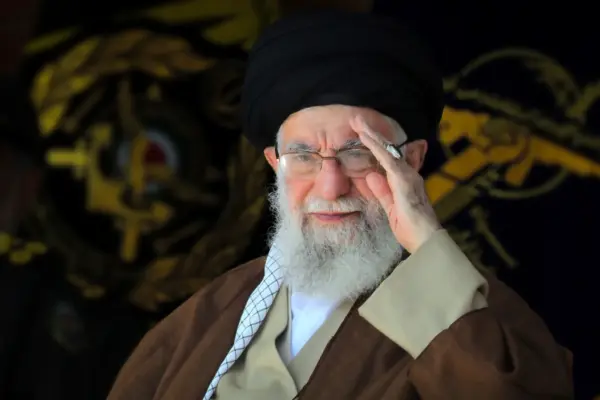
Ayatollah Ali Khamenei, Iran’s supreme leader and one of the most consequential figures in modern Middle Eastern history, was killed overnight in coordinated US-Israeli airstrikes on his compound, a senior Israeli government source has told The Independent — a claim Tehran has neither confirmed nor categorically denied.
Israeli Prime Minister Benjamin Netanyahu had earlier said there were “many signs” pointing to Khamenei’s death, whilst Khamenei’s office accused Israel of waging “mental warfare” — language that stopped conspicuously short of a direct rebuttal and has only deepened speculation about the 85-year-old cleric’s fate.
President Donald Trump confirmed that the United States had carried out what he described as “major combat operations” in Iran. The Israeli military said approximately 200 warplanes were involved in the assault, a deployment of force on a scale that marks one of the most significant military operations in the region in decades.
Read Also: Qatar Airways, Emirates suspend flight operations amid US, Iran attacks
The human cost of the strikes has been severe. At least 108 people — most of them children — were killed when a strike hit a girls’ primary school in southern Iran, according to the local governor. The Iranian Red Crescent put the overall death toll from the US-Israeli strikes at a minimum of 201, according to Iranian media.
Iran has retaliated. Iranian forces launched strikes on US and Israeli military bases across the Middle East following attacks on multiple Iranian cities, including Tehran, early on Saturday morning, setting in motion a direct military confrontation between Iran and Western powers that regional analysts have long warned could prove catastrophic in its consequences.
Khamenei, who assumed the position of supreme leader in 1989 following the death of Ayatollah Ruhollah Khomeini, had overseen Iran’s emergence as the pre-eminent non-Arab power in the Middle East, presiding over the country’s nuclear programme, its network of regional proxies, and decades of confrontation with the United States and Israel.
If confirmed, his death would represent the most dramatic single development in the Middle East since the US invasion of Iraq in 2003, with consequences for regional stability, Iran’s internal political succession, and the trajectory of the broader conflict that are at this hour impossible to fully assess.

Join BusinessDay whatsapp Channel, to stay up to date
Open In Whatsapp