The fragile ceasefire between the United States and Iran came under renewed strain over the weekend after both sides launched fresh military strikes, raising fears that efforts to end months of conflict could be slipping further out of reach.
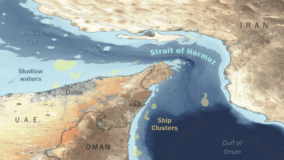
The latest escalation marks the third known military exchange in a week around the strategically important Strait of Hormuz, even as diplomatic efforts continue to secure a lasting peace agreement.
According to the BBC, the US military said it carried out what it described as “self defence strikes” against Iranian military facilities after accusing Tehran of aggressive actions, including the shooting down of an American drone over international waters.
Read also: Trump demands tougher Iran terms as ceasefire deal hangs in the balance
The strikes targeted radar installations, drone command centres and air defence systems near the southern Iranian city of Goruk and on Qeshm Island in the Strait of Hormuz, the US Central Command (Centcom) said.
In a statement posted on X, Centcom said American fighter aircraft struck military assets that “posed a clear threat to ships transiting through regional waters”. The US military added that no American personnel were injured during the operation.
Iran, however, condemned the attacks as a violation of the ceasefire.
The Islamic Revolutionary Guard Corps (IRGC) said it responded by targeting an American air base that it claimed had been used to launch attacks against Iranian territory. Iranian officials said the base had been involved in a strike on a communications tower on Sirik Island in southern Iran.
Iran’s military warned that any future American attack would be met with a stronger response.
Read also: What Nigeria must learn from Iran in an age of economic shock
“Our response will be completely different if aggression is repeated,” the IRGC said, according to remarks reported by Iran’s semi official Fars News Agency.
The tensions spread beyond Iran and the United States, with Kuwait reporting that its air defence systems intercepted what it described as hostile missiles and drones early Monday. Air raid sirens were activated across the country.
Kuwait’s foreign ministry later issued a strong condemnation of what it called “heinous and repeated Iranian attacks”, describing them as a dangerous escalation that threatens regional stability.
“The attacks undermine efforts to de-escalate tensions in the region,” the ministry said, adding that Kuwait reserved the right to take all necessary measures to protect its security.
The military exchanges come as negotiations aimed at transforming the current ceasefire into a permanent peace agreement appear to have stalled.
US President Donald Trump sought to reassure Americans that diplomacy remained possible despite the renewed violence.
“Sit back and relax. It will all work out well in the end,” Trump wrote on Truth Social on Monday. He added that Iran “really wants to make a deal, and it will be a good one for the USA”.
However, signs of disagreement remain significant.
According to the BBC’s US partner CBS News, Trump has requested changes to a proposed framework agreement. The revisions reportedly focus on reopening the Strait of Hormuz to unrestricted shipping traffic and addressing the future of Iran’s stockpile of highly enriched uranium.
Iranian officials have criticised Washington for altering its position during negotiations.
“Iran is constantly facing new and contradictory demands from the United States,” Iranian foreign ministry spokesman Esmail Baghaei said on Monday, arguing that such shifts were prolonging talks.
Read also:
Baghaei also rejected reports that negotiations had advanced on Iran’s nuclear programme.
“No negotiations have taken place on the details of the nuclear file. At this stage, our priority is ending the war,” he told reporters.
The proposed agreement reportedly includes a 60-day cessation of violence and measures to reopen the Strait of Hormuz, one of the world’s most important energy corridors. Roughly one-fifth of global oil and liquefied natural gas shipments normally pass through the waterway, and disruptions there have fuelled sharp increases in energy prices worldwide.
Despite repeated claims from Washington that a breakthrough may be close, key issues remain unresolved.
Iran insists that any agreement must fully protect its national interests, while Tehran has also linked progress in negotiations to developments in Lebanon, where fighting involving the Iran-backed Hezbollah movement has further complicated efforts to secure peace.
For now, the ceasefire that took effect in April remains in place, but the latest military exchanges underscore how quickly tensions can flare and how uncertain the path to a lasting agreement remains.

Join BusinessDay whatsapp Channel, to stay up to date
Open In Whatsapp