The ongoing confrontation between the United States and Iran offers more than geopolitical drama. It provides a sobering lesson in economic resilience, strategic patience, and national survival under pressure. While Iran faces sanctions, military threats, and economic strangulation, it continues to endure. For a nation like Nigeria, currently grappling with economic fragility, debt pressures, and overdependence on oil, there are uncomfortable but necessary lessons to absorb.
At the heart of the US-Iran standoff is a fundamental belief that economic pain automatically leads to political surrender. Iran has defied this logic repeatedly. Despite years of sanctions, isolation, and now direct confrontation, the Islamic Republic has not submitted. Instead, it has adapted, sometimes painfully, often imperfectly, but consistently. This is where Nigeria must pay attention.
Iran’s economy has been forced into resilience. Cut off from global financial systems and export markets, it has learned to survive by reducing dependence on external validation. Oil production is adjusted strategically, alternative trade routes are explored, and domestic industries, however constrained, are prioritised. Even under severe restrictions, Iran continues to find ways to store oil, reroute exports, and sustain minimum economic functionality.
Nigeria, by contrast, has struggled to demonstrate similar adaptability, despite not facing anything close to Iran’s level of external pressure.
For decades, Nigeria has relied heavily on oil revenues as its economic backbone. When prices fall, or production falters, the entire system wobbles. Budget deficits widen, the currency weakens, and borrowing becomes the default response. Unlike Iran, which has been forced to think beyond oil out of necessity, Nigeria often returns to oil dependence out of habit.
The implication is clear, as resilience is not built in comfort; it is forged in constraint.
There is, however, a cautionary dimension to Iran’s example. Its resilience comes at a significant cost. Living standards have declined, inflation has surged, and ordinary citizens bear the brunt of prolonged economic hardship. The authoritarian nature of the Iranian state allows it to absorb internal discontent without immediate political consequences, something Nigeria, as a democracy, cannot replicate and should not aspire to.
Yet, even within this contrast lies a lesson. Iran’s leadership operates with a long-term strategic mindset. Decisions are not driven solely by short-term economic indicators like GDP growth or inflation rates but by broader national interests and survival instincts. As analysts have observed, Iran does not make decisions simply because its economy is hurting; if it did, it would have conceded long ago.
Nigeria’s policy environment, on the other hand, is often reactive and short-term. Economic decisions are frequently shaped by political cycles, electoral considerations, and immediate pressures rather than a coherent, long-term strategy. This has led to inconsistent policies, abrupt reforms, and a lack of sustained direction.
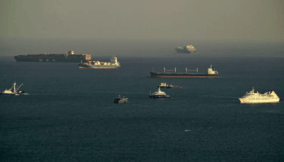
The fallout from the US-Iran conflict also highlights another critical issue – global vulnerability. The Strait of Hormuz, a strategic chokepoint, has become a lever through which Iran exerts influence. Its disruption has sent energy and fertiliser prices soaring globally, affecting economies far beyond the Middle East, including Nigeria.
In an interconnected world, economic shocks are rarely isolated. Nigeria cannot afford to remain structurally weak in such an environment. External disruptions, whether from war, trade conflicts, or financial crises, will continue to expose internal weaknesses.
So, what should Nigeria learn? Diversification is not optional but existential, first. Iran’s ability to survive is partly rooted in its forced diversification and internal capacity building. Nigeria must move beyond talks and aggressively develop its non-oil sectors (agriculture, manufacturing, technology, and services). This requires deliberate investment, policy consistency, and institutional support.
Strategic thinking must replace policy improvisation. Economic management cannot continue to be an exercise in crisis response. Nigeria needs a clear, long-term economic vision that transcends political administrations, one that prioritises stability, productivity, and resilience.
Also, self-reliance must be redefined, as this does not mean isolation, as in Iran’s case, but it does mean reducing excessive dependence on imports and external financing. Local production, value addition, and supply chain development must become national priorities.
Again, leadership matters, as Iran’s endurance, for better or worse, is anchored in a leadership that understands the stakes of its geopolitical position. Nigeria’s leaders must demonstrate similar clarity of purpose without sacrificing democratic accountability. Tough decisions will be required, but they must be guided by national interest rather than short-term political gains.
Finally, there is a lesson in patience. Economic transformation is not instantaneous. Iran’s adaptation has taken years of hardship and recalibration. Nigeria must be prepared for a similar journey, though ideally without the same level of suffering, if it is to build a truly resilient economy.
Iran’s ability to withstand pressure challenges conventional assumptions about economic warfare. For Nigeria, the message is both simple and urgent. Resilience cannot be borrowed, and it cannot be improvised in times of crisis. It must be built deliberately, consistently, and courageously. Is Nigeria ready to learn before the next shock arrives?

Join BusinessDay whatsapp Channel, to stay up to date
Open In Whatsapp