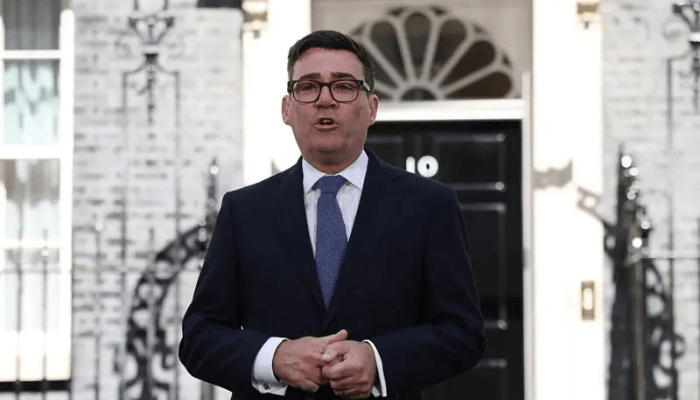
After two failed leadership bids and years championing England’s north, Andy Burnham has reached the highest office in British politics, becoming the United Kingdom’s 59th prime minister.
Read also:andy-burnham-sworn-in-as-uk-prime-ministervows-to-restore-trust-in-politics
Burnham has spent more than three decades working towards Britain’s highest political office. On Monday, that ambition became reality as the Labour leader was formally appointed the United Kingdom’s 59th prime minister by King Charles III, completing one of the most remarkable political comebacks in recent British history.
Buckingham Palace confirmed the appointment in a statement after Burnham met the King.
“His Majesty received in audience the Rt Hon Andrew Burnham MP and requested him to form a new Administration. The Rt Hon Andrew Burnham MP accepted The King’s offer and kissed hands upon his appointment as Prime Minister and First Lord of the Treasury.”
Burnham becomes Labour’s eighth prime minister, the fifth person to occupy 10 Downing Street in just four years and the fourth prime minister to serve during King Charles III’s reign, underlining the extraordinary political instability that has shaped Britain in recent years.
Although his full name is Andrew Burnham, he is widely known simply as Andy, making him the first prime minister to use that name, though Andrew Bonar Law served briefly as prime minister in 1922.
A political journey decades in the making
Burnham’s rise to power has been anything but straightforward.
He first sought the Labour leadership in 2010, finishing fourth. Five years later he tried again but lost to Jeremy Corbyn. Many believed his chances of ever leading the party had ended.
Read also:andy-burnham-and-the-africa-policy-question-why-experience-is-not-the-same-as-judgment/
Instead of remaining in Westminster, Burnham took what many considered a political gamble by leaving Parliament in 2017 to become the first elected mayor of Greater Manchester.
The move transformed his career.
As mayor, he built a national profile by championing devolution, investing in public transport and becoming one of the country’s most recognisable regional leaders. During the Covid 19 pandemic, he openly challenged the Conservative government over lockdown funding for northern England, earning the nickname “King of the North.”
That reputation helped fuel his return to Westminster last month through a by election before Labour MPs overwhelmingly backed him to replace Keir Starmer as party leader.
A proud voice for northern England
Unlike many recent British leaders, Burnham has made his northern identity central to his political appeal.
Born in Liverpool in 1970 and raised in Cheshire, he has often argued that Britain’s economic model has overlooked communities outside London.
In his victory speech, he said many of the towns and cities that built the Labour movement had been left behind.
“The people of these proud places made Labour. But we have to ask ourselves, have we been good enough for them?” he said.
Burnham has promised to shift more power away from Westminster to local communities, arguing that decisions on housing, transport and economic development should increasingly be made closer to where people live.
From newsroom to Downing Street
Before entering politics, Burnham worked as a journalist for trade publications after studying English at the University of Cambridge.
He entered politics in his early twenties as a researcher before becoming Labour MP for Leigh in 2001.
Read also: badenoch-congratulates-burnham-but-warns-new-uk-pm-faces-early-test/
Under former prime minister Gordon Brown, he held several senior cabinet positions, including chief secretary to the Treasury, culture secretary and health secretary.
His political profile grew further after he campaigned for justice for the victims of the 1989 Hillsborough disaster, following criticism he received during a memorial service marking its twentieth anniversary.
Leadership built on patience
Burnham’s path to Number 10 was defined by persistence rather than rapid success.
He twice failed to win the Labour leadership, served under different ideological wings of the party and spent eight years outside Westminster before returning only weeks ago.
Reflecting on the task ahead, Burnham has acknowledged that rebuilding Britain will take time.
“To be clear to people, it can’t be done overnight. But you’ve got to show people where we’re going, and then the steps towards it. And that’s what I’m going to try to do,” he told The Times.
He has pledged to keep Labour’s core 2024 election commitments, including not increasing the main rates of income tax, VAT or National Insurance, while pushing for greater devolution, reforms to social care and renewed investment in regional economies.
Family at the centre
Away from politics, Burnham describes his family as his greatest source of support.
He is married to Marie France van Heel, whom he met while they were students at Fitzwilliam College, Cambridge, in 1989. The couple have been together for more than three decades and have three children.
In one of the most personal moments since his election, Burnham revealed that his father, who has Alzheimer’s disease, does not know that his son is about to lead the country.
“It’s a family achievement. Although he doesn’t know it, it still makes me feel that we’ve kind of done something together,” Burnham said.
A lifelong Everton supporter and music enthusiast, Burnham has often presented himself as a politician more comfortable on football terraces and in local communities than in Westminster’s political establishment.
That image of an approachable, regional leader helped define his years as Manchester mayor.

Join BusinessDay whatsapp Channel, to stay up to date
Open In Whatsapp