Iran has entered a period of profound uncertainty following the death of Ali Khamenei, the country’s supreme leader, in what Tehran says was a joint United States and Israeli attack on Iranian territory.
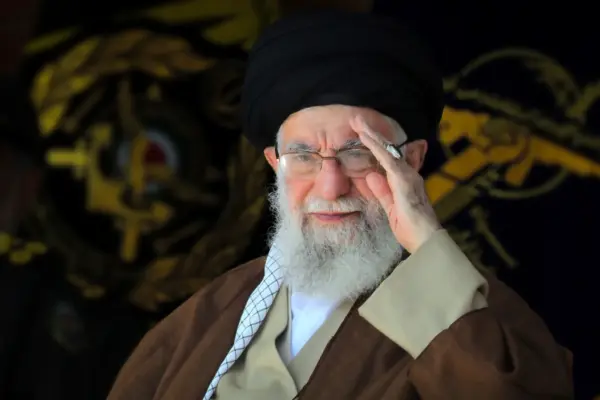
State television confirmed the 86-year-old cleric’s death early Saturday, interrupting regular programming with Quran recitations and images of Khamenei framed by a black banner. The announcement was accompanied by a statement from the Supreme National Security Council, which described his killing as “martyrdom” and blamed Washington and Tel Aviv for what it called an unprovoked act of aggression.
Read also: US-Israeli strikes ‘wholly unprovoked, illegal and illegitimate’ – Iranian foreign minister
Forty days of public mourning and seven days of national holiday have been declared across the Islamic Republic.
Donald Trump, the United States president said hours earlier that Khamenei had been killed in a coordinated operation with Israel targeting several sites in Iran. Benjamin NetanyahuIsraeli Prime Minister stated that Khamenei’s compound in Tehran had been destroyed in what he described as a powerful surprise strike, adding there were strong indications the cleric was “no more”.
Read also: Iran’s Ayatollah Ali Khamenei feared killed in Israeli airstrike
Iranian state media later confirmed the death but did not provide details of the strike itself. The semi-official Fars news agency, which is affiliated with the Islamic Revolutionary Guard Corps, reported that Khamenei was killed at his office while carrying out official duties in the early hours of Saturday. It also said that members of his family, including a daughter, a son-in-law,, and a grandchild, were among those killed. Reports suggested one of his daughters-in-law also died.
A pivotal figure in the Islamic Republic
Khamenei assumed leadership of the Islamic Republic in 1989 following the death of Ruhollah Khomeini, the architect of the 1979 revolution that overthrew the Shah. Though lacking the religious stature and popular charisma of his predecessor, Khamenei consolidated power over more than three decades, shaping Iran’s domestic politics and foreign policy with a firm hand.
Under his leadership, Iran expanded its regional influence through allied armed groups and deepened its confrontation with both the United States and Israel. At home, he oversaw a system that combined clerical oversight with limited electoral politics, often intervening decisively during periods of unrest.
Read also: Middle East airspace shuts as United States, Israel strike Iran, Tehran retaliates
His death removes the central pillar of Iran’s political structure. The supreme leader sits at the apex of power, commanding the armed forces, appointing key judicial and media figures, and holding ultimate authority over strategic decisions.
Escalation and retaliation
Iran responded swiftly to the reported strike. State media said missiles and drones were launched towards Israel and towards four Gulf Arab states that host United States military bases, including Bahrain, Kuwait, Qatar, and the United Arab Emirates. Officials in those countries did not immediately confirm the extent of any damage.
The Supreme National Security Council’s statement framed the moment as a turning point, saying Khamenei’s death would mark the beginning of “an uprising in the fight against the oppressors”. The language signals the likelihood of further escalation in an already volatile region.
Washington has not released detailed operational information about the strike. Trump said the operation was aimed at degrading Iran’s military capabilities and leadership structure. Israeli officials echoed that justification, arguing that the strike was necessary to neutralise what they described as imminent threats.
Succession questions loom
The Iranian statement confirming Khamenei’s death made no reference to how the succession process would unfold. Under Iran’s constitution, the Assembly of Experts, a clerical body, is responsible for appointing a new supreme leader. In the interim, senior figures within the political and security establishment are expected to maintain continuity.
The uncertainty over succession adds a further layer of instability. The supreme leader is not merely a ceremonial figure but the ultimate decision maker in matters of war, peace, and nuclear policy. Any transition is likely to be closely scrutinised both inside Iran and across the region.
For now, images of a black-clad nation dominate Iranian television screens. The state narrative is clear. Khamenei is being presented as a martyr of the revolution.

Join BusinessDay whatsapp Channel, to stay up to date
Open In Whatsapp