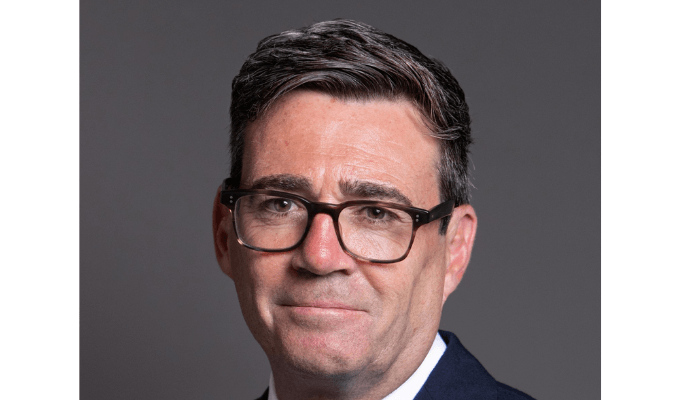
Andy Burnham will become the United Kingdom’s next prime minister after winning the Labour Party leadership, succeeding Keir Starmer at the head of the governing party.
Shabana Mahmood, the home secretary, announced Burnham’s victory on Friday after he secured 379 nominations from Labour MPs, confirming his election as party leader. Burnham will formally take office as prime minister on Monday after Starmer tenders his resignation to King Charles III at Buckingham Palace.
Read also: uk-unveils-15m-growth-plan-to-accelerate-nigerias-reforms
Following Starmer’s resignation, Burnham will be invited by the King to form a government, completing the constitutional transition of power.
In his first speech as Labour leader, Burnham declared that he was ready to lead the country and promised to restore hope and confidence in British politics.
“I am ready,” he told party members, pledging to build “a new politics” capable of delivering meaningful change.
Burnham argued that Britain needed a fresh political direction, saying his generation of politicians had failed to challenge a political culture and economic system that no longer worked for ordinary people.
“We pledge to them to be better,” he said, adding that Labour must focus on solving people’s problems rather than engaging in political point scoring.
The new Labour leader outlined five priorities for his leadership, beginning with ending internal party divisions and building “one Labour team” that respects different viewpoints across the party.
Read also: uk-expert-advises-african-leaders-on-coupling-organisational-resilience-with-trust
His second pledge was to create what he described as “a new politics”, warning that public frustration with politicians had reached dangerous levels.
“We haven’t been good enough,” Burnham said, adding that Labour had been given “a last chance” by voters and must use it to address long-neglected issues, including social care.
Burnham also pledged to lead a government that represented every part of the United Kingdom, saying he would be “a leader for the north, the south, the east and the west; for Scotland, Wales and Northern Ireland.”
Reflecting on his political journey, Burnham said his experiences campaigning for justice after the Hillsborough disaster convinced him that Britain had failed many working-class communities.
He argued that industrial towns and cities that helped build the Labour movement had been neglected for decades, citing former steelmaking, mining and shipbuilding communities across England, Scotland and Wales.
Read also:113-countries-that-need-a-uk-visa-before-travelling-in-2026
Burnham criticised the centralisation of political power and privatisation policies introduced in the 1980s, arguing that they left many people facing higher living costs while concentrating wealth and power in fewer hands.
As part of his programme, he promised to shift power away from Westminster and Whitehall to local communities, giving people greater control over housing, transport, energy and other essential services.
Describing himself as a pro-business Labour leader, Burnham also pledged to support reindustrialisation, improve education and expand opportunities across the country.
“People are looking for us to deliver and we will,” he said, adding that his mission was to “bring back the hope we have all been missing too much.”
Burnham also paid tribute to Starmer, praising him for rebuilding Labour after one of its worst electoral defeats and leading the party back into government. He thanked the outgoing prime minister for his service to both the country and the party.
Starmer announced his resignation on June 22 after months of growing political pressure, saying he had “heard the answer” from Labour members on whether he should lead the party into the next general election and accepted their verdict “with good grace”.
Burnham’s inauguration on Monday will make him Britain’s seventh prime minister in the past decade, extending a period of frequent leadership changes in UK politics.

Join BusinessDay whatsapp Channel, to stay up to date
Open In Whatsapp