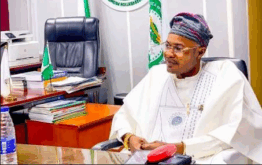
Ngozi Okonjo-Iweala, minister of finance and co-ordinating minister for the economy told a press conference weekend, in Washington that President Jonathan’s administration is leaving the Nigerian economy on a path of sustainability, having built structures and institutions to deliver long-term gains.
Okonjo-Iweala said the country’s economic fundamentals were strong to deliver those gains and that today’s ‘teething’ problems- including particularly low government revenues, are only short term hurdles that can be surmounted if the incoming administration builds on what has been put in place.
But current global divergent monetary policies in Europe, Japan and the United States mean that Nigeria needs to watch out for volatility in exchange rate because of capital flows that will result from the normalisation of monetary policy in the US.
The minister was addressing a wrap-up press conference to inform the Nigerian media of what they were taking away from the week-long 2015 spring meetings of the International Monetary Fund and the World Bank, in Washington DC.
The press meeting also had in attendance, Sarah Alade, CBN deputy governor, Economic Policy, Bright Okogu, director-general, Budget Office, Abraham Nwankwo, DG, Debt Management Office and some other government officials.
“..Now that the elections are over and things are settled, people see a lot of potential for the country to move forward.
“The Nigerian economy may have some short term difficulties to get over this year, but the fundamentals which we have been building for quite some time are strong,” said Okonjo-Iweala.
“So if we continue to build on them, we are going to have an economy down the road that is robust..Nigeria has strong fundamentals but it needs work. It is not going to happen without concerted hard work to tap into those areas and solve the challenges that exist, but we have what it takes.”
The spring meetings focused on two critical issues – weak recovery in the global economy, particularly in Europe and elsewhere in the world- and the impact for the rest of the world.
The dramatic fall in commodity prices, not just oil, but also for other commodities like iron ore and what it also means for emerging markets and low income countries which are dependent on them, and policy options were part of the discuss.
The conclusion here was that while fallen commodity prices can be beneficial to global growth, challenges remain for commodity export countries, especially Nigeria, which has had its revenue drop 50 percent on the fall in oil prices.
Okonjo-Iweala observed that Nigeria, which has enjoyed some macro economic stability for three to four years, until the recent fall in oil prices, is well prepared for the outcomes, especially as government has moved in quickly with policies for which it has also received the IMF’s commendation.
“We have built quite a few institutions and put processes in place…financial mechanism management institutions and processes have been put in place, to make managing the finances of the country robust, stronger and more transparent and we need to complete the work on implementation of the GIFMIS, TSA, IPPIS,” she further explained.
“We have built institutions in terms of the mortgage and housing sector. We have started to build institutions in terms of managing access to finance for medium and small enterprises. The Central Bank has several funds, but now we have the Development Bank of Nigeria that needs to be nurtured.”
Okonjo-Iweala also listed Nigeria’s Sovereign Wealth Fund, recently rated as second in the world, in terms of transparency, strength and return on investments, as one of those strong institutions that has done very well also in terms of returns on investments.
In the real sector, she said a lot of work has been done on diversification, by encouraging the creative industries, as well as the agriculture sector, which also needs to be built on.
She told the journalists of a process already in place to harmonise the issue of multiplicity of taxes, and that a paper has been put together by the Federal Inland Revenue Service (FIRS) in this regard.
Jonathan’s administration has helped to support the private sector to strengthen some of the manufacturing, automobile, cement, consumer goods, and so many other sectors that have moved in.
“So you can really name quite a lot. On infrastructure, some major work has been done on roads, rail, inland waterways and aviation. All of these things are work in progress.
“ I am not saying everything has been completed and delivered but there ia a very good foundation on which to continue and complete…so wrapping up all of these things together, there is a potential to realign, push and get the economy moving,” Okonjo-Iweala stressed.
The CBN’s Sarah Alade observed that the Nigeria banking sector remains strong. “Today, we have banks that are safe and sound and I think that the financial system in Nigeria generally is safe and sound and contributing quite a lot to the growth and development of the economy.”
But the current global divergent monetary policies have implications for Nigeria and Alade said, “We will still have to watch out for volatility in exchange rate because of our capital flows that will result from the normalisation of monetary policy in the US.
She said there is now need for well designed macro prudential policies, noting, “we will also be able to safeguard the financial and banking system and ensure that supervision and regulation are properly done.”

Join BusinessDay whatsapp Channel, to stay up to date
Open In Whatsapp