Nigeria’s recent scandal involving the alleged operation of a fictitious presidential investment agency could dent investor confidence by raising fresh concerns about institutional credibility, but it is unlikely to significantly slow the country’s recovering foreign direct investment (FDI) inflows, analysts are saying.
The controversy comes as Nigeria celebrates its strongest foreign investment performance in more than a decade, with FDI inflows rising by 148.4 percent to $4.01 billion in 2025 from $1.61 billion a year earlier, according to the World Investment Report 2026 released by the United Nations Conference on Trade and Development (UNCTAD).
The rebound returned Africa’s largest oil producer to the continent’s top five destinations for long-term capital after years of declining inflows and has been widely attributed to the Tinubu administration’s economic reforms, including foreign exchange liberalisation, fiscal reforms and measures aimed at improving the investment climate.
However, the controversy surrounding the Presidential Foreign Intervention Promotion Council (PFIPC), an organisation the Presidency now says never existed, has introduced an uncomfortable governance question into Nigeria’s investment narrative.
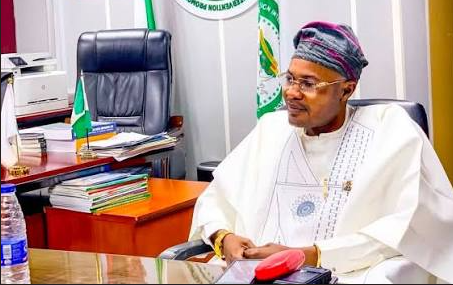
For nearly two years, Adeniyi Adeyemi moved through the corridors of power in Abuja as the self-styled director-general of the Presidential Foreign Intervention Promotion Council (PFIPC) and the Presidential Economic Advisory Council (PEAC).
He attended official functions, met diplomats, hosted conferences, engaged foreign investors and interacted with senior government officials while presenting the organisation as a presidential agency responsible for attracting investment into Nigeria.
One of the high-profile events was a pre-World Investment Summit dinner held in Abuja in 2025, attended by diplomats, politicians and security officials.
At the event, Adeyemi announced that Nigeria would host the World Investment Summit 2026, describing it as “a major international event designed to attract foreign capital and partnerships aimed at repositioning the country as a preferred destination for global investment.”
The Presidency has since distanced itself from the organisation, insisting that it was fictitious and that Adeyemi was never appointed by the Federal Government.
The development has fuelled debate over whether the incident could weaken confidence among prospective investors who depend on credible public institutions when making long-term investment decisions.
“If government institutions themselves interacted with a fictitious investment agency, what message does that send to prospective investors?” one analyst asked.
Despite those concerns, Muda Yusuf, chief executive officer of the Centre for the Promotion of Private Enterprise (CPPE), said the controversy is unlikely to materially alter foreign investors’ decisions.
“It may affect it, but not in any significant way because, of course, when you have this kind of thing, it’s very bad for the perception of the country,” Yusuf said.
According to him, the fact that the matter is already before the courts demonstrates that government institutions are responding to the allegations.
“The good thing is that even within the government, the matter has been taken to court for proper investigation,” he said.
Yusuf noted that foreign investors generally place greater emphasis on economic fundamentals than on isolated governance controversies.
“The priority of foreign investors is about safety of their investment, profitability of the investment, stability of the macroeconomic environment, and whether they’re able to repatriate their profits,” he said.
He added that the PFIPC was not among Nigeria’s recognised investment promotion institutions and therefore was unlikely to influence major investment decisions.
While acknowledging that the controversy reflects poorly on the country’s image, Yusuf cautioned against overstating its economic consequences.
“It’s not good for the government, but as far as investment or the economy is concerned, I don’t think we should ascribe too much importance to it.”
Simon Samson, chief economist at ARKK Economics and Data Limited, also agrees that the controversy could hurt investor confidence but is unlikely to significantly affect foreign direct investment (FDI) into Nigeria.
He noted that FDI rose from $1.61 billion in 2024 to $4.01 billion in 2025, attributing the increase to the federal government’s efforts to attract investors.
“That was an impressive improvement, and I think the federal government deserves accolades for that… The efforts are beginning to yield some fruits.”
Samson said the scandal could make some investors more cautious because it creates uncertainty.
“I think that is going to be a dent on investor confidence… Investment is a coward. It doesn’t want uncertainty.”
However, the economics lecturer stressed that investors consider several factors before committing capital.
“I don’t think it will affect foreign direct investment in Nigeria… It is just one out of so many other things.”
He urged the government to prevent a recurrence through stronger oversight of public institutions.
“They cannot afford for this thing to happen again. It should be the first and the last,” he said.
Nigeria’s improved investment performance comes at a crucial time for the Federal Government, which is seeking substantially higher levels of foreign capital to support its ambition of building a $1 trillion economy by 2030.
The country’s development strategy depends on sustained investment in power, transport, housing, digital infrastructure, manufacturing, agriculture, mining and the oil and gas sector.
FDI also remains the largest source of external finance for developing economies like Nigeria, accounting for about half of their external financing in 2025, according to UNCTAD. Beyond capital inflows, it supports technology transfer, productivity growth and participation in global value chains.
Analysts say that while Nigeria’s macroeconomic reforms have strengthened the country’s investment appeal, maintaining the momentum will also require continued efforts to strengthen governance, transparency and institutional credibility.
For many investors, they argue, confidence is built not only on favourable economic policies alone but also on the ability of public institutions to inspire trust and provide certainty.

Join BusinessDay whatsapp Channel, to stay up to date
Open In Whatsapp